


Spike protein mediated membrane fusion during SARS-CoV-2 infection
- PMID: 36224449
- PMCID: PMC9874878
- DOI: 10.1002/jmv.28212
Spike protein mediated membrane fusion during SARS-CoV-2 infection
Abstract
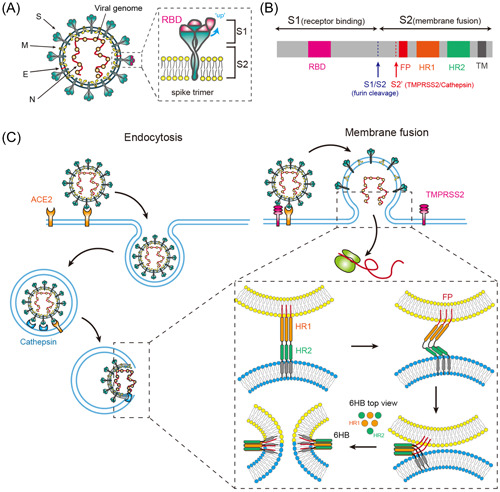
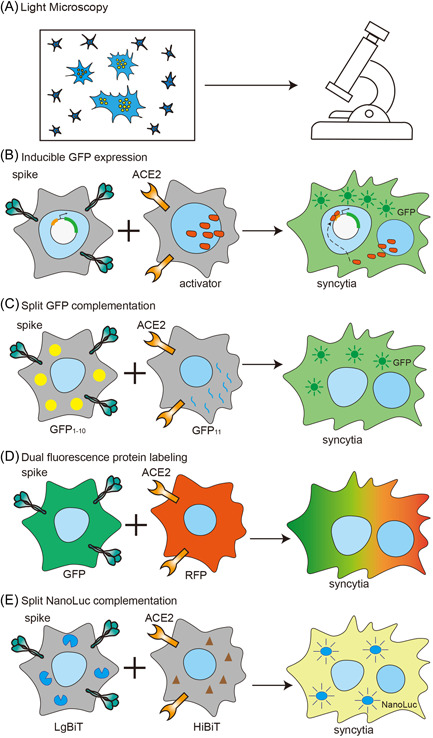
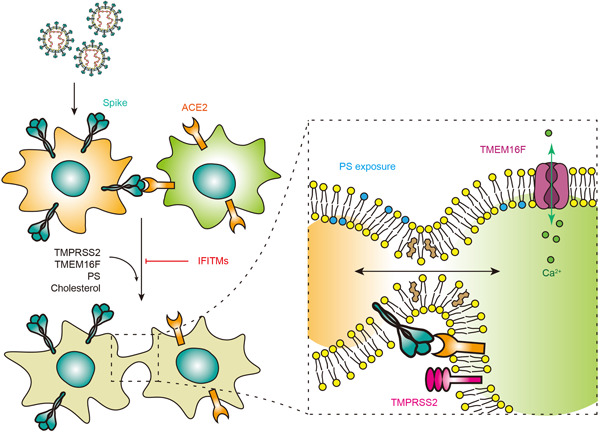
The pandemic caused by severe acute respiratory syndrome coronavirus 2 (SARS-CoV-2) has posed a serious threat to public health and has quickly become a global concern. The infection of SARS-CoV-2 begins with the binding of its spike protein to the receptor-angiotensin-converting enzyme 2 (ACE2), which, after a series of conformation changes, results in the fusion of viral-cell membranes and the release of the viral RNA genome into the cytoplasm. In addition, infected host cells can express spike protein on their cell surface, which will interact with ACE2 on neighboring cells, leading to cell membrane fusion and the formation of multinucleated cells or syncytia. Both viral entry and syncytia formation are mediated by spike-ACE2 interaction and share some common mechanisms of membrane fusion. Here in this review, we will summarize our current understanding of spike-mediated membrane fusion, which may shed light on future broad-spectrum antiviral development.
Keywords: antiviral agents; cell fusion; cellular effect; coronavirus; entry inhibitors; virus classification.
© 2022 Wiley Periodicals LLC.
Conflict of interest statement
The authors declare no conflicts of interest.
Figures
References
Publication types
MeSH terms
Substances
LinkOut - more resources
Full Text Sources
Medical
Miscellaneous
