


Effectiveness of early rhythm control in improving clinical outcomes in patients with atrial fibrillation: a systematic review and meta-analysis
- PMID: 36224587
- PMCID: PMC9558983
- DOI: 10.1186/s12916-022-02545-4
Effectiveness of early rhythm control in improving clinical outcomes in patients with atrial fibrillation: a systematic review and meta-analysis
Abstract
Background: Current guidelines recommend rhythm control for improving symptoms and quality of life in symptomatic patients with atrial fibrillation (AF). However, the long-term prognostic outcomes of rhythm control compared with rate control are still inconclusive. In this meta-analysis, we aimed to assess the effects of early rhythm control compared with rate control on clinical outcomes in newly diagnosed AF patients.
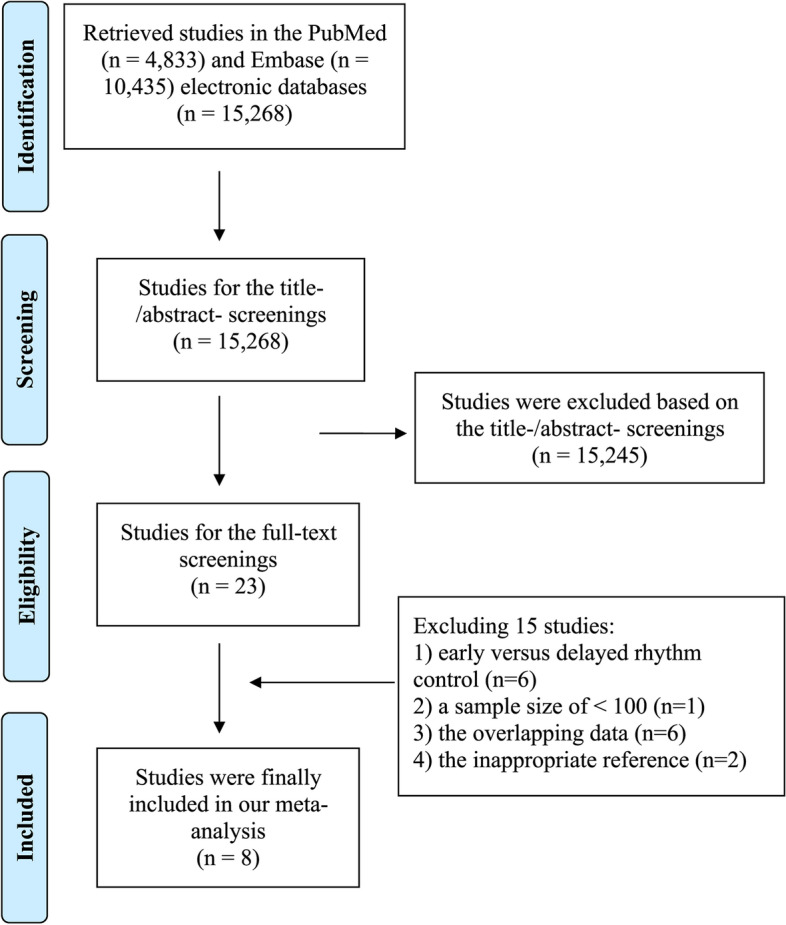
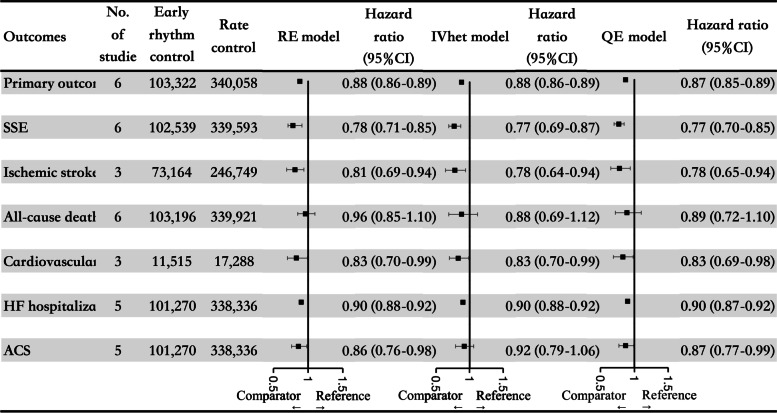
Methods: We systematically searched the PubMed and Embase databases up to August 2022 for randomized and observational studies reporting the associations of early rhythm control (defined as within 12 months of AF diagnosis) with effectiveness outcomes. The primary outcome was a composite of death, stroke, admission to hospital for heart failure (HF), or acute coronary syndrome (ACS). Hazard ratios (HRs) and 95% confidence intervals (CIs) from each study were pooled using a random-effects model, complemented with an inverse variance heterogeneity or quality effects model.
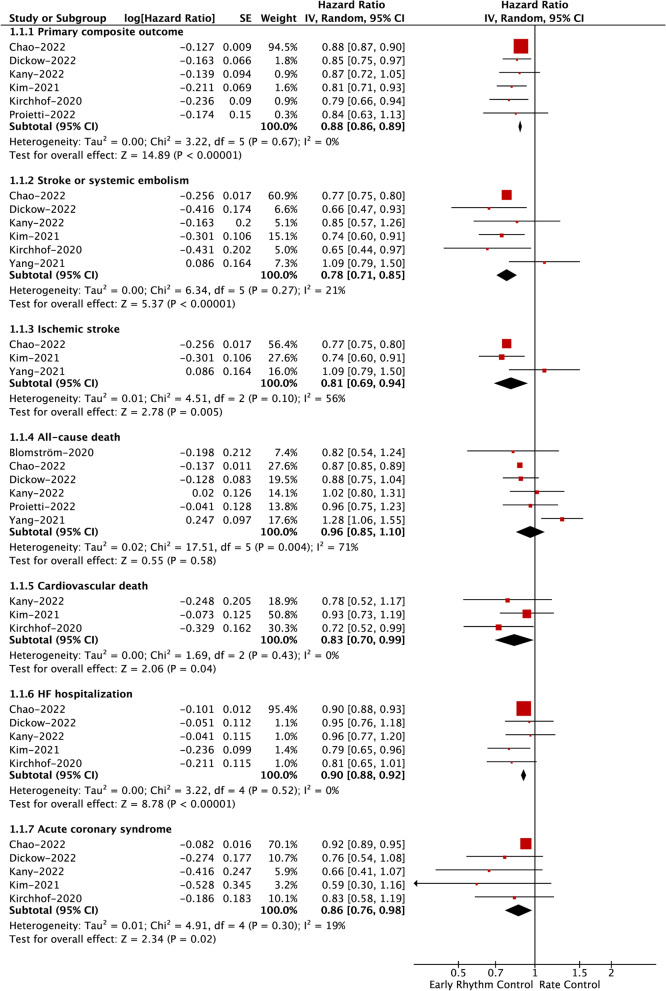
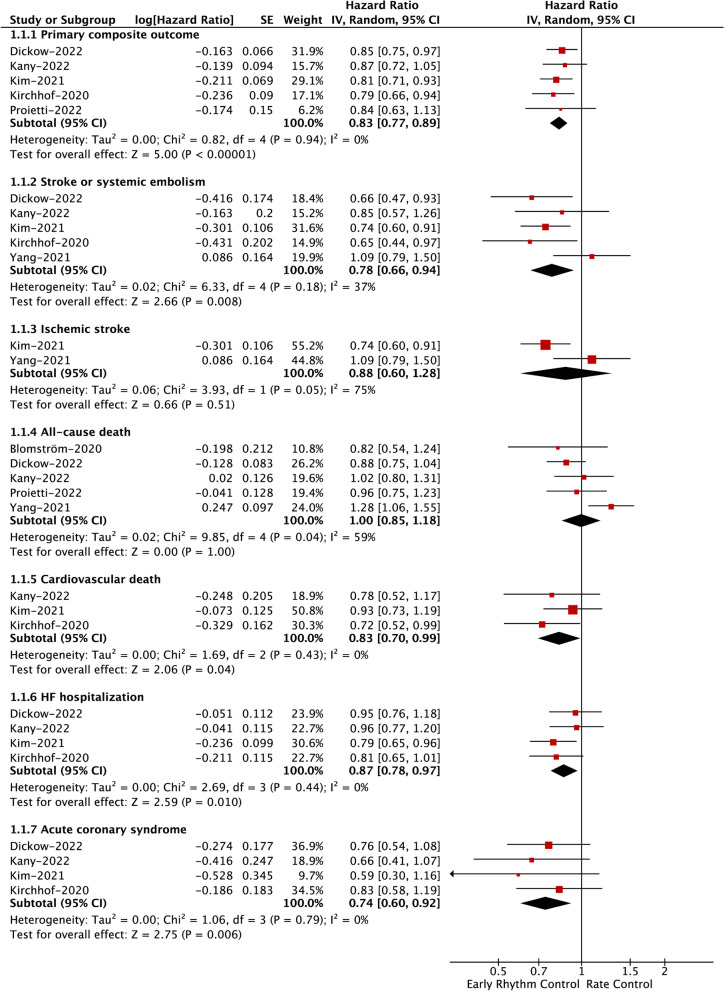
Results: A total of 8 studies involving 447,202 AF patients were included, and 23.5% of participants underwent an early rhythm-control therapy. In the pooled analysis using the random-effects model, compared with rate control, the early rhythm-control strategy was significantly associated with reductions in the primary composite outcome (HR = 0.88, 95% CI: 0.86-0.89) and secondary outcomes, including stroke or systemic embolism (HR = 0.78, 95% CI: 0.71-0.85), ischemic stroke (HR = 0.81, 95% CI: 0.69-0.94), cardiovascular death (HR = 0.83, 95% CI: 0.70-0.99), HF hospitalization (HR = 0.90, 95% CI: 0.88-0.92), and ACS (HR = 0.86, 95% CI: 0.76-0.98). Reanalyses using the inverse variance heterogeneity or quality effects model yielded similar results.
Conclusions: Our current meta-analysis suggested that early initiation of rhythm control treatment was associated with improved adverse effectiveness outcomes in patients who had been diagnosed with AF within 1 year.
Registration: The study protocol was registered to PROSPERO (CRD42021295405).
Keywords: Atrial fibrillation; Early rhythm control; Effectiveness; Meta-analysis; Outcomes.
© 2022. The Author(s).
Conflict of interest statement
The authors declare that they have no competing interests.
Figures
References
-
- Mozaffarian D, Benjamin EJ, Go AS, Arnett DK, Blaha MJ, Cushman M, et al. Heart disease and stroke statistics--2015 update: a report from the American Heart Association. Circulation. 2015;131(4):e29–322. - PubMed
-
- Ha AC, Breithardt G, Camm AJ, Crijns HJ, Fitzmaurice GM, Kowey PR, et al. Health-related quality of life in patients with atrial fibrillation treated with rhythm control versus rate control: insights from a prospective international registry (Registry on Cardiac Rhythm Disorders Assessing the Control of Atrial Fibrillation: RECORD-AF) Circ Cardiovasc Qual Outcomes. 2014;7(6):896–904. doi: 10.1161/HCQ.0000000000000011. - DOI - PubMed
Publication types
MeSH terms
LinkOut - more resources
Full Text Sources
Medical
Research Materials
Miscellaneous
