


Lived experience perspectives on a definition of eating disorder recovery in a sample of predominantly white women: a mixed method study
- PMID: 36224653
- PMCID: PMC9558402
- DOI: 10.1186/s40337-022-00670-2
Lived experience perspectives on a definition of eating disorder recovery in a sample of predominantly white women: a mixed method study
Abstract
Background: There has recently been a push for recovery-focused research in the eating disorder (ED) field, starting with a consensus definition of recovery. One definition, in particular, proposed by Bardone-Cone et al. [21] has received considerable attention given its transdiagnostic nature and validation studies. However, no studies to date have elicited lived experience views of this definition. The goal of the current study was to examine perspectives on this definition of recovery from individuals with a past or present ED and to determine whether participant agreement with the model differed based on diagnostic history or current symptom severity.
Methods: Sixty-two individuals (95.2% women; 91.9% White/European) participated in a 1-2 h interview aimed at capturing their perspectives on ED recovery. Transcripts were analyzed using qualitative content analysis and codebook thematic analysis to examine agreement with and thoughts on Bardone-Cone's definition of recovery, respectively. Chi-squared tests of independence and binary logistic regression were computed to determine whether agreement with the definition differed across diagnostic history and self-reported symptoms.
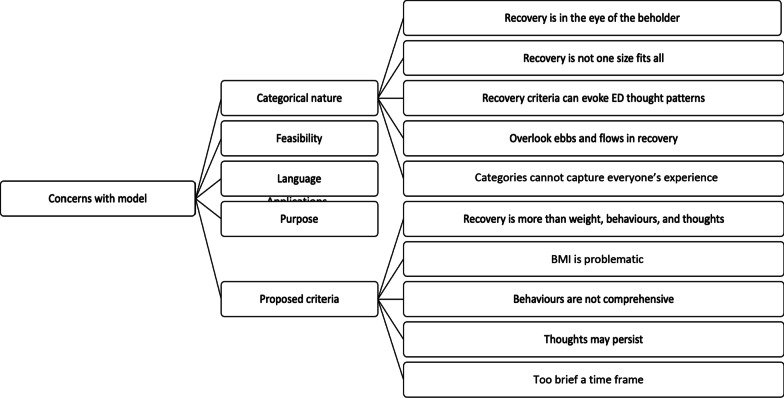
Results: Although some participants indicated acceptance of the definition, the majority expressed concerns related to its categorical nature, proposed criteria, feasibility, language, and applications. There were no differences in acceptance based on diagnostic history or current symptom severity.
Conclusion: A single definition of recovery does not seem to fit individuals' lived ED experience. Future research may benefit from distinguishing between recovery as an individually-defined phenomenon and related constructs such as remission (i.e., loss of diagnosis or absence of clinical symptoms). A more comprehensive multi-faceted, and person-centered model of recovery may have merit in clinical settings.
Keywords: Eating disorder; Lived experience; Qualitative; Recovery; Thematic analysis.
© 2022. The Author(s).
Conflict of interest statement
The authors declare no competing interests.
Figures
References
-
- American Psychological Association . Diagnostics and statistical manual. 5. Arlington: American Psychological Association; 2013.
-
- Strober M, Freeman R, Morrell W. The long-term course of severe anorexia nervosa in adolescents: survival analysis of recovery, relapse, and outcome predictors over 10–15 years in a prospective study. Int J Eat Disord. 1997 doi: 10.1002/(sici)1098-108x(199712)22:4<339::aid-eat1>3.0.co;2-n. - DOI - PubMed
Grants and funding
LinkOut - more resources
Full Text Sources
Miscellaneous
