


Digitalizing and Upgrading Severe Acute Respiratory Infections Surveillance in Malta: System Development
- PMID: 36227157
- PMCID: PMC9764153
- DOI: 10.2196/37669
Digitalizing and Upgrading Severe Acute Respiratory Infections Surveillance in Malta: System Development
Abstract
Background: In late 2020, the European Centre for Disease Prevention and Control and Epiconcept started implementing a surveillance system for severe acute respiratory infections (SARI) across Europe.
Objective: We sought to describe the process of digitizing and upgrading SARI surveillance in Malta, an island country with a centralized health system, during the COVID-19 pandemic from February to November 2021. We described the characteristics of people included in the surveillance system and compared different SARI case definitions, including their advantages and disadvantages. This study also discusses the process, output, and future for SARI and other public health surveillance opportunities.
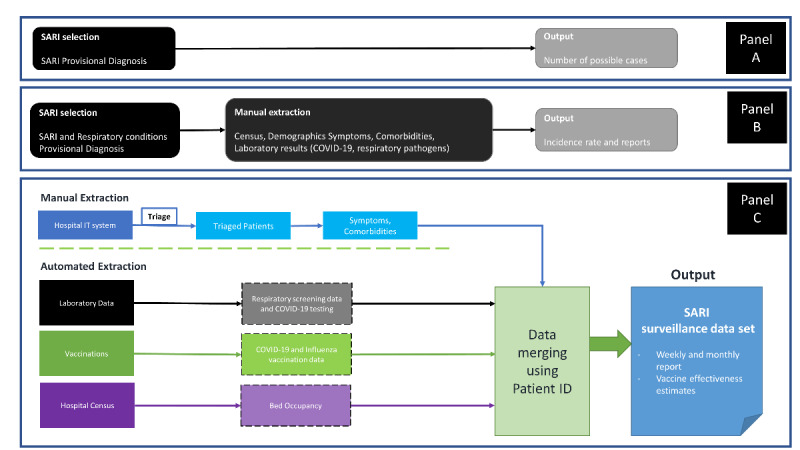
Methods: Malta has one main public hospital where, on admission, patient data are entered into electronic records as free text. Symptoms and comorbidities are manually extracted from these records, whereas other data are collected from registers. Collected data are formatted to produce weekly and monthly reports to inform public health actions. From October 2020 to February 2021, we established an analogue incidence-based system for SARI surveillance. From February 2021 onward, we mapped key stakeholders and digitized most surveillance processes.
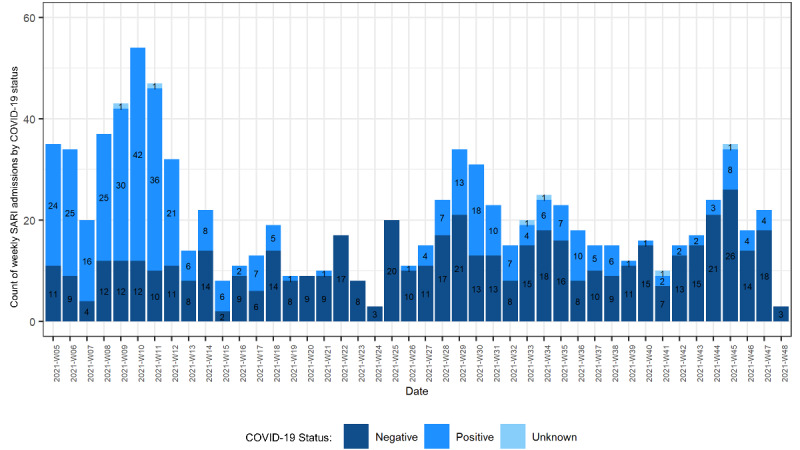
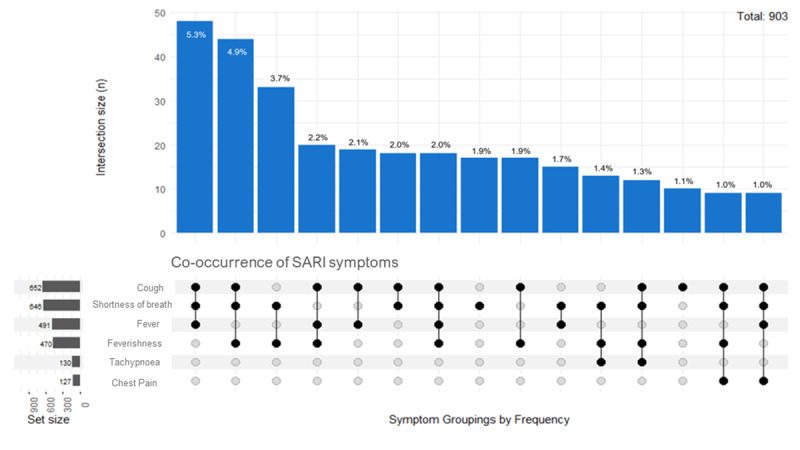
Results: By November 30, 2021, 903 SARI cases were reported, with 380 (42.1%) positive for SARS-CoV-2. Of all SARI hospitalizations, 69 (7.6%) were admitted to the intensive care unit, 769 (85.2%) were discharged, 27 (3%) are still being treated, and 107 (11.8%) died. Among the 107 patients who died, 96 (89.7%) had more than one underlying condition, the most common of which were hypertension (n=57, 53.3%) and chronic heart disease (n=49, 45.8%).
Conclusions: The implementation of enhanced SARI surveillance in Malta was completed by the end of May 2021, allowing the monitoring of SARI incidence and patient characteristics. A future shift to register-based surveillance should improve SARI detection through automated processes.
Keywords: COVID-19; digital health; disease prevention; disease surveillance; electronic record; epidemiology; health data; health system; monitoring; pandemic; patient data; public health; public hospital; surveillance.
©John Paul Cauchi, Maria-Louise Borg, Aušra Džiugytė, Jessica Attard, Tanya Melillo, Graziella Zahra, Christopher Barbara, Michael Spiteri, Allan Drago, Luke Zammit, Joseph Debono, Jorgen Souness, Steve Agius, Sharon Young, Alan Dimech, Ian Chetcuti, Mark Camenzuli, Ivan Borg, Neville Calleja, Lorraine Tabone, Charmaine Gauci, Pauline Vassallo, Joaquin Baruch. Originally published in JMIR Public Health and Surveillance (https://publichealth.jmir.org), 05.12.2022.
Conflict of interest statement
Conflicts of Interest: None declared.
Figures
References
-
- Declich S, Carter AO. Public health surveillance: historical origins, methods and evaluation. Bull World Health Organ. 1994;72(2):285–304. https://europepmc.org/abstract/MED/8205649 - PMC - PubMed
-
- Teutsch SM, Thacker SB. Planning a public health surveillance system. Epidemiol Bull. 1995 Mar;16(1):1–6. - PubMed
-
- Sentinel surveillance. European Centre for Disease Prevention and Control. [2021-12-30]. https://www.ecdc.europa.eu/en/seasonal-influenza/surveillance-and-diseas... .
-
- Epiconcept - Smart health: epidemiology - e-Health - data science. Epiconcept. [2021-12-30]. https://www.epiconcept.fr/en/
-
- Buda S, Tolksdorf K, Schuler E, Kuhlen R, Haas W. Establishing an ICD-10 code based SARI-surveillance in Germany - description of the system and first results from five recent influenza seasons. BMC Public Health. 2017 Jun 30;17(1):612. doi: 10.1186/s12889-017-4515-1. https://bmcpublichealth.biomedcentral.com/articles/10.1186/s12889-017-45... 10.1186/s12889-017-4515-1 - DOI - DOI - PMC - PubMed
Publication types
MeSH terms
LinkOut - more resources
Full Text Sources
Medical
Miscellaneous
