


Culturally adapted flowcharts in obstetric emergencies: a participatory action research study
- PMID: 36229785
- PMCID: PMC9564086
- DOI: 10.1186/s12884-022-05105-z
Culturally adapted flowcharts in obstetric emergencies: a participatory action research study
Abstract
Introduction: Maternal mortality is a health problem in developing countries and is the result of several factors such as sociodemographic and economic inequalities and difficulties in accessing the health services. In addition, training strategies in obstetric emergencies targeting the non-medical personnel such as traditional midwives are scarce. The focus of this study is to develop learning and communication bridges on the management of obstetric emergencies and on policies of patients' referral to the biomedical health system in rural areas.
Methodology: A Participant Action Research (PAR) study with a mixed methods approach was set up to elaborate culturally adapted flowcharts. The project lasted approximately 3,5 years, from September 2016 to January 2021.
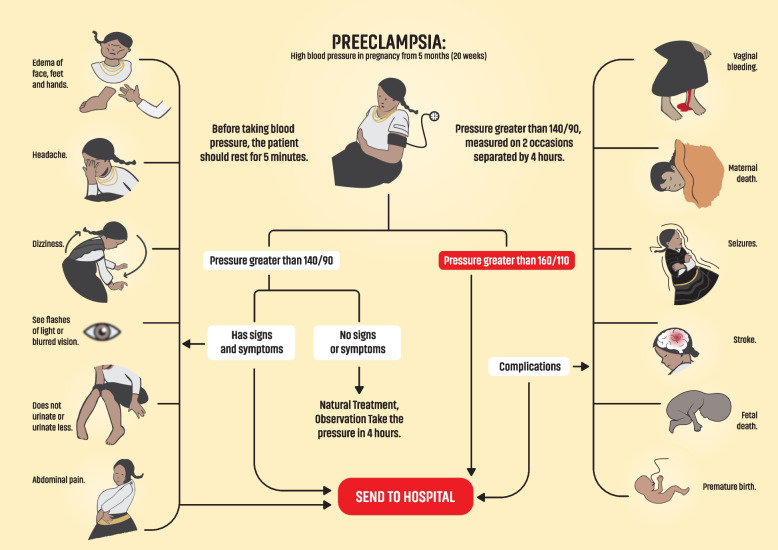
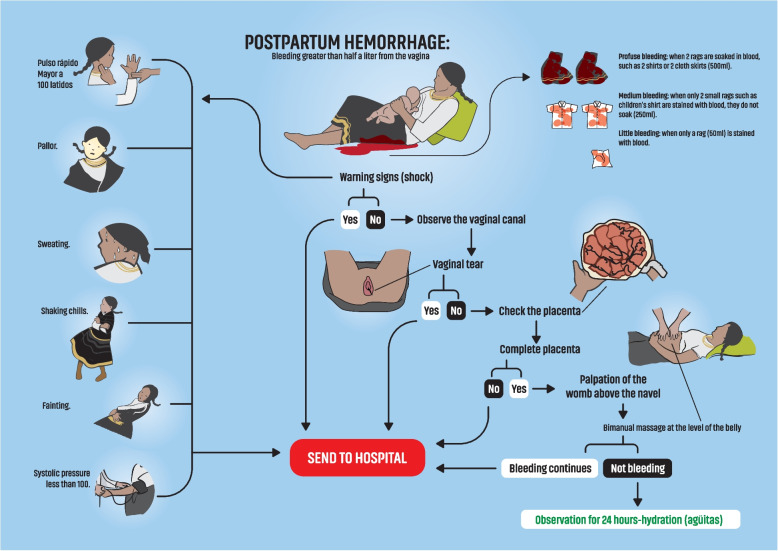
Results: The study was conducted with 94 traditional midwives from southern Ecuador and is divided into 4 phases, namely: 1) Exploration: focus groups and interviews were conducted to document the management of obstetric emergencies through the presentation of "clinical case" scenarios in three important topics, namely: pre-eclampsia, shoulder dystocia and postpartum hemorrhage, 2) Planning: a number of reflective sessions were conducted between the researchers and the healers/midwives to elaborate flowcharts. 3) Action: the training was conducted in rooms dedicated to proficiency in the aforementioned topics and using the flowcharts, 4) Evaluation: 90% of the participants reported having used the flowcharts during the first year after the training. The most frequently used flowchart was that of pre-eclampsia for the recognition of warning signs during pregnancy control.
Conclusion: This study documents common practices of pregnancy and delivery management by traditional midwives. Furthermore, cultural flowcharts were developed for and together with midwives to improve the clinical response to obstetric emergencies. The preliminary evaluation was favorable; the most frequently used flowchart concerned preeclampsia. In this process, establishing a partnership was crucial for successful intercultural collaboration.
Keywords: Flowcharts; Obstetric emergencies; Postpartum hemorrhage; Pre-eclampsia; Shoulder dystocia; Traditional midwives.
© 2022. The Author(s).
Conflict of interest statement
The authors declare that they have no financial or personal relationship(s) that may have inappropriately influenced them in conducting the research or writing this article.
Figures

References
-
- World Health Organisation (WHO). Mortalidad materna. WHO. 2019. [cited 2021 Nov 7] Available from: https://www.who.int/es/news-room/fact-sheets/detail/maternal-mortality
-
- Bauserman M, Thorsten VR, Nolen TL, Patterson J, Lokangaka A, Tshefu A, et al. Maternal mortality in six low and lower-middle income countries from 2010 To 2018: risk factors and trends. Reprod Health. 17(S3):173 Available from: https://reproductive-health-journal.biomedcentral.com/articles/10.1186/s.... - DOI - PMC - PubMed
-
- United Nations. The millennium development goals report. United Nations. 2015;72. Available from: https://visit.un.org/millenniumgoals/2008highlevel/pdf/MDG_Report_2008_A....
-
- United Nations. Salud – Desarrollo Sostenible. United Nations Available from: https://www.un.org/sustainabledevelopment/es/health/
-
- Sarmiento I, Zuluaga G, Paredes-Solís S, Chomat AM, Loutfi D, Cockcroft A, et al. Bridging Western and indigenous knowledge through intercultural dialogue: lessons from participatory research in Mexico. BMJ Global Health. 5(9). Available from: http://www.ncbi.nlm.nih.gov/pubmed/32994227. - PMC - PubMed
MeSH terms
LinkOut - more resources
Full Text Sources
