


The Microbiota-Gut-Brain Axis in Psychiatric Disorders
- PMID: 36232548
- PMCID: PMC9570195
- DOI: 10.3390/ijms231911245
The Microbiota-Gut-Brain Axis in Psychiatric Disorders
Abstract
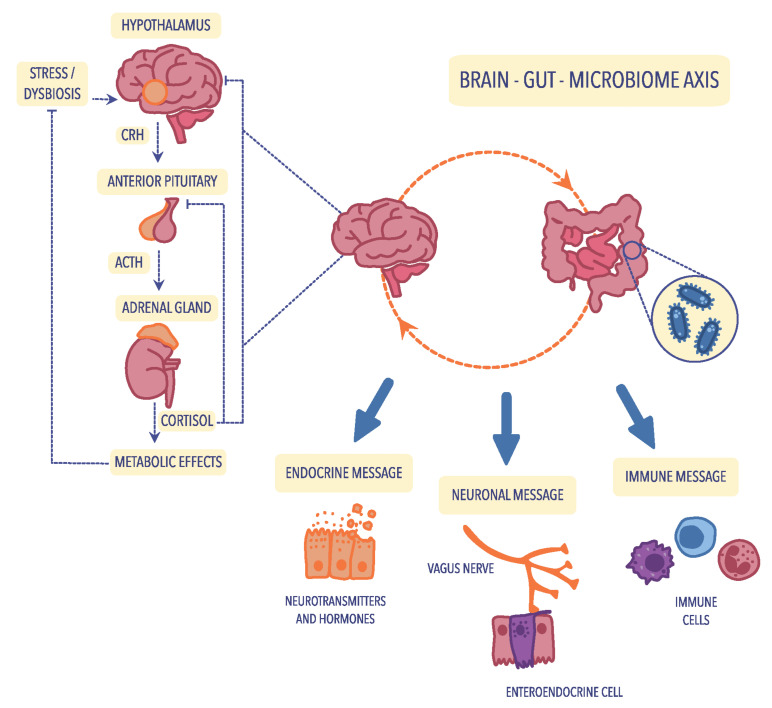
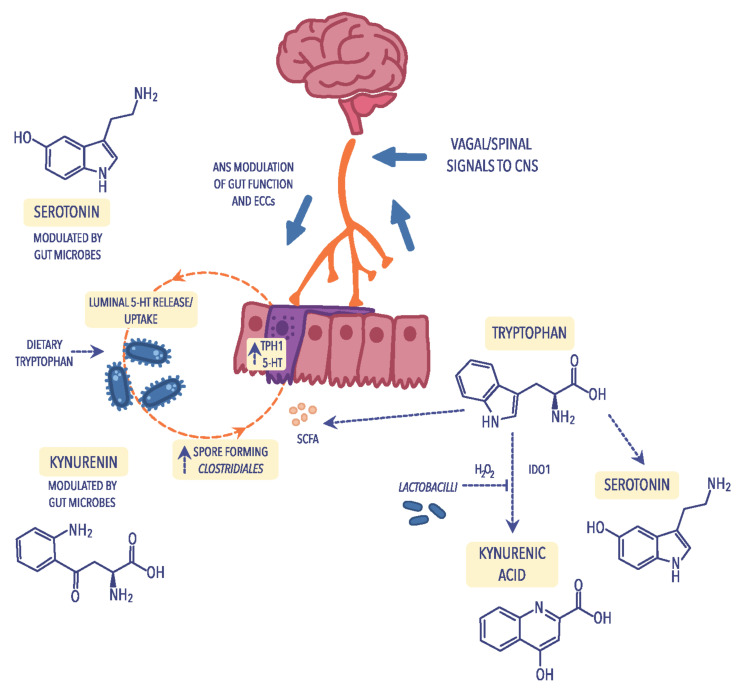
Modulating the gut microbiome and its influence on human health is the subject of intense research. The gut microbiota could be associated not only with gastroenterological diseases but also with psychiatric disorders. The importance of factors such as stress, mode of delivery, the role of probiotics, circadian clock system, diet, and occupational and environmental exposure in the relationship between the gut microbiota and brain function through bidirectional communication, described as "the microbiome-gut-brain axis", is especially underlined. In this review, we discuss the link between the intestinal microbiome and the brain and host response involving different pathways between the intestinal microbiota and the nervous system (e.g., neurotransmitters, endocrine system, immunological mechanisms, or bacterial metabolites). We review the microbiota alterations and their results in the development of psychiatric disorders, including major depressive disorder (MDD), schizophrenia (SCZ), bipolar disorder (BD), autism spectrum disorder (ASD), and attention-deficit hyperactivity disorder (ADHD).
Keywords: attention-deficit hyperactivity disorder; autism spectrum disorder; bipolar disorder; host response; major depressive disorder; microbiota; schizophrenia.
Conflict of interest statement
The authors declare no conflict of interest.
Figures
References
-
- World Health Organization. [(accessed on 5 July 2022)]. Available online: https://www.who.int/news-room/fact-sheets/detail/mental-disorders.
Publication types
MeSH terms
LinkOut - more resources
Full Text Sources
Medical
