


Investigation of Building Materials' Radioactivity in a Historical Building-A Case Study
- PMID: 36234216
- PMCID: PMC9570568
- DOI: 10.3390/ma15196876
Investigation of Building Materials' Radioactivity in a Historical Building-A Case Study
Abstract
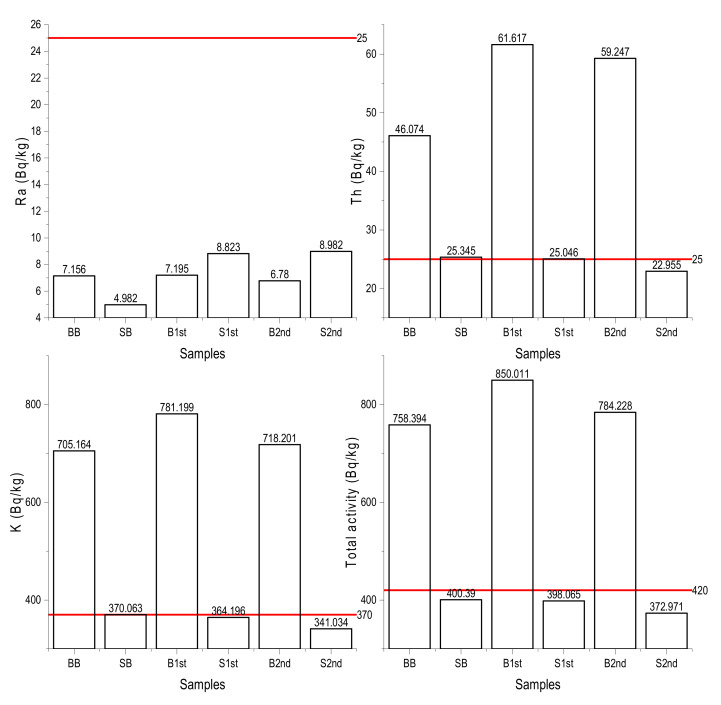
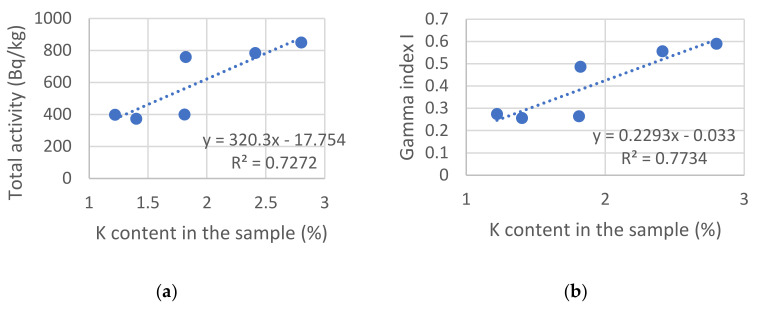
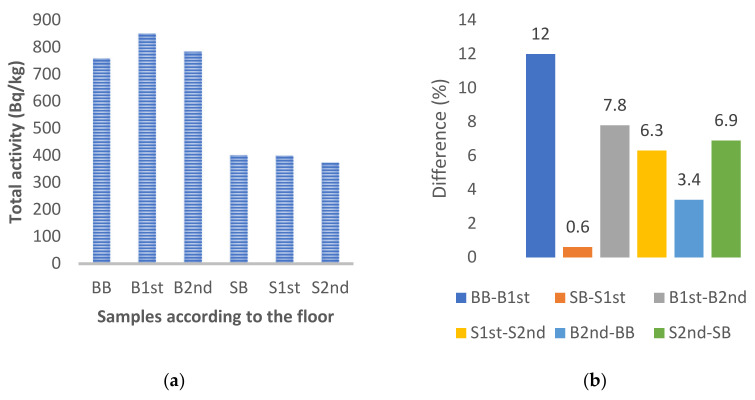
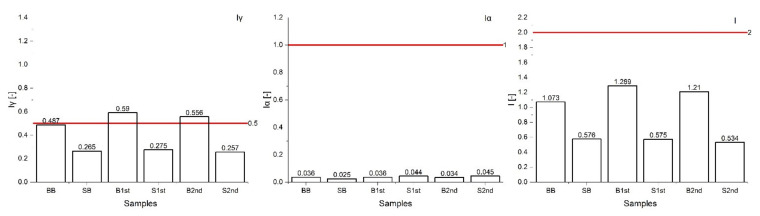
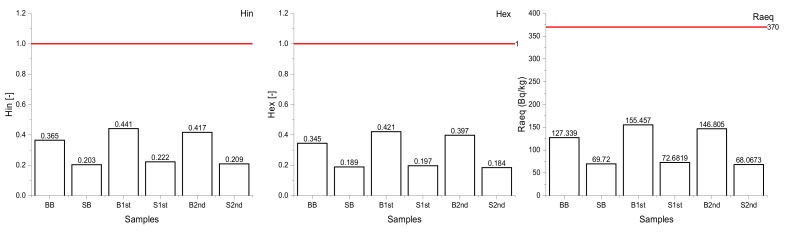
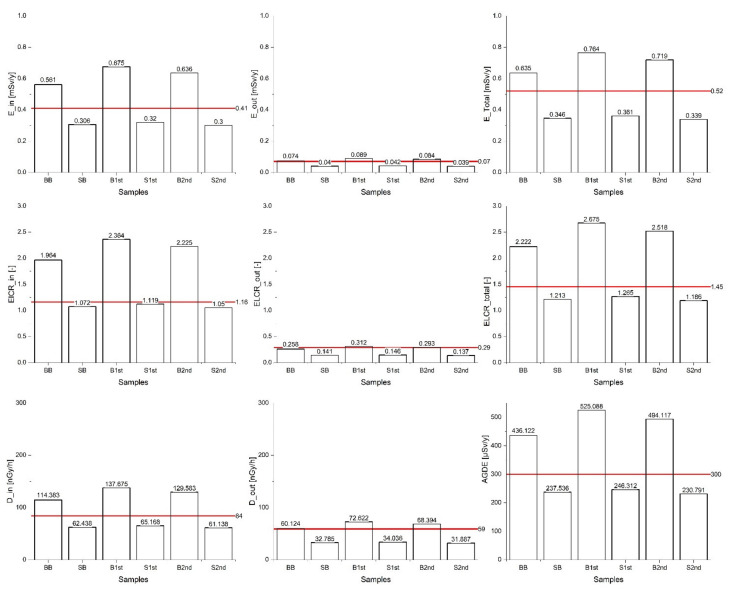
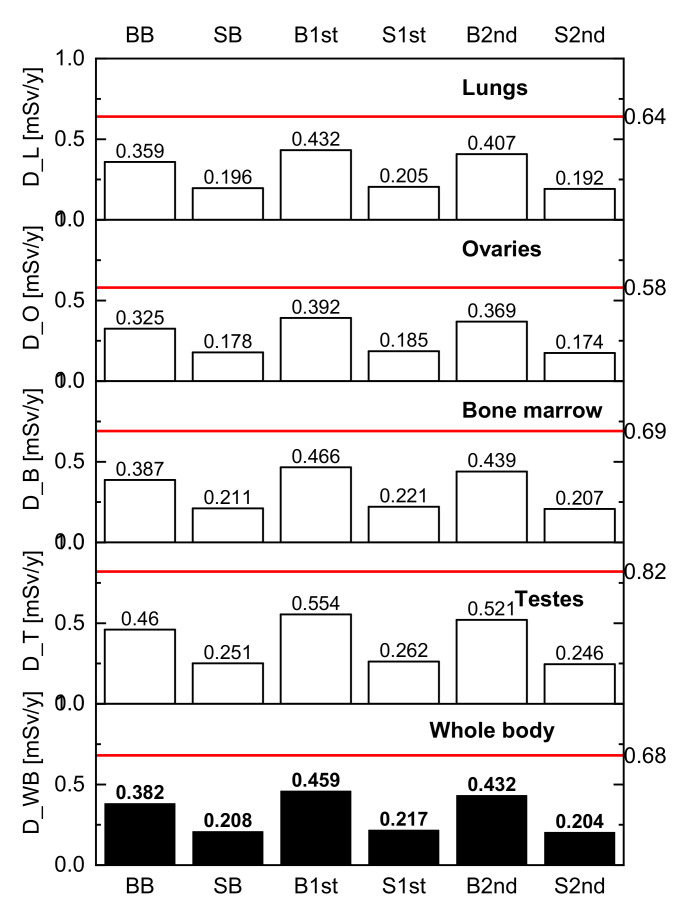
The paper investigates a possible hazard originating from natural radionuclides in building materials in a selected historical building being reconstructed for housing. Both outdoor and indoor risks were evaluated through the radiological indices and estimated doses, based on measured activities of natural radionuclides in stone and brick materials of the building. The average measured activity concentrations of radionuclides were 7.32 Bq/kg for 226Ra, 40.05 Bq/kg for 232Th, and 546.64 Bq/kg for 40K radionuclides. The average total activity concentration in building materials (594.0 Bq/kg) exceeded the world average value. A correlation was found between the potassium content in the building material samples and the total activity of radionuclides. The gamma indices, Iγ, calculated for the samples, ranged in an interval of 0.26-0.60, not exceeding the restricted limit for bulk materials Iγ = 1. The average annual effective dose due to building materials was 0.53 mSv/y, which does not exceed the limit (1 mSv/y), however, it contributes to a gamma dose excess that is higher than recommended (0.3 mSv/y at the most). The bricks were responsible for a higher level of natural radiation than natural stone material. Nevertheless, based on the radiation protection requirements, it can be concluded that the building can be used for residential purposes after the reconstruction, as no significant human health impact is expected due to the radioactivity of building materials.
Keywords: 226Ra; 232Th; 40K; NORM; building materials; gamma index; natural radiation; natural radionuclides.
Conflict of interest statement
The authors declare no conflict of interest.
Figures
References
-
- International Atomic Energy Agency Naturally occurring radioactive material (NORM V); Proceedings of the International Symposium on Naturally Occurring Radioactive Material; Seville, Spain. 19–22 March 2007; 549p.
-
- United Nations Scientific Committee on the Effects of Atomic Radiation (UNSCEAR) Sources, Effects and Risks of Ionizing Radiation. United Nations; New York, NY, USA: 2000. Report to the General Assembly with Annex B: Exposures from Natural Sources of Radiation.
-
- Ramachandran T.V. Background radiation, people and the environment Iran. J. Radiat. Res. 2011;9:63–76.
Grants and funding
LinkOut - more resources
Full Text Sources
