


Formation and Analysis of Volatile and Odor Compounds in Meat-A Review
- PMID: 36235239
- PMCID: PMC9572956
- DOI: 10.3390/molecules27196703
Formation and Analysis of Volatile and Odor Compounds in Meat-A Review
Abstract
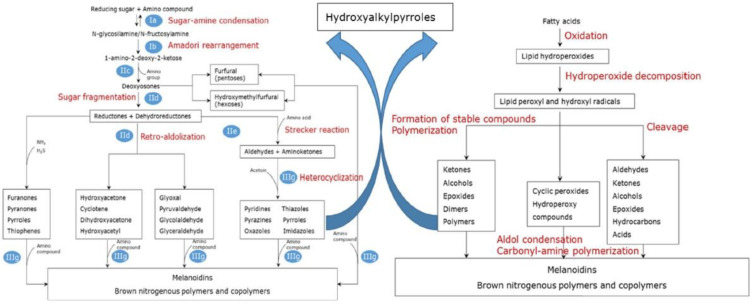
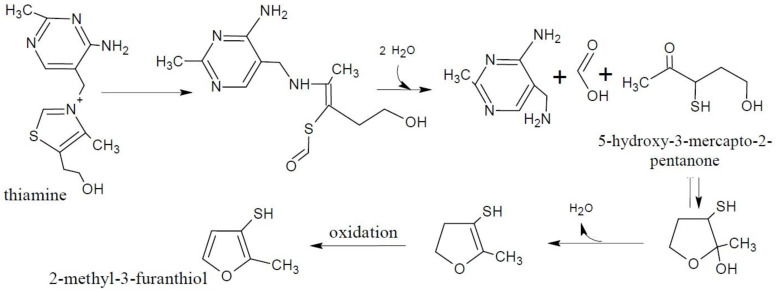
The volatile composition and odor of meat and meat products is based on the precursors present in the raw meat. These are influenced by various pre-slaughter factors (species, breed, sex, age, feed, muscle type). Furthermore, post-mortem conditions (chiller aging, cooking conditions, curing, fermentation, etc.) determine the development of meat volatile organic compounds (VOCs). In this review, the main reactions leading to the development of meat VOCs such as the Maillard reaction; Strecker degradation; lipid oxidation; and thiamine, carbohydrate, and nucleotide degradation are described. The important pre-slaughter factors and post-mortem conditions influencing meat VOCs are discussed. Finally, the pros, cons, and future perspectives of the most commonly used sample preparation techniques (solid-phase microextraction, stir bar sorptive extraction, dynamic headspace extraction) and analytical methods (gas chromatography mass spectrometry and olfactometry, as well as electronic noses) for the analysis of meat VOCs are discussed, and the continued importance of sensorial analysis is pinpointed.
Keywords: GC-MS; GC-O; SBSE; SPME; aroma; dynamic headspace; electronic nose; meat; odor; sensorial analysis.
Conflict of interest statement
The authors declare no conflict of interest.
Figures
References
-
- Sensory Analysis—Vocabulary. International Organization for Standardization; Geneva, Switzerland: 2008.
-
- Flores M. Chapter 13—The Eating Quality of Meat: III—Flavor. In: Toldrá F., editor. Lawrie’s Meat Science (Eighth Edition) Woodhead Publishing; Sawston, UK: 2017. pp. 383–417.
-
- Shahidi F. Flavor of meat and meat products—An overview. In: Shahidi F., editor. Flavor of Meat and Meat Products. Springer; Boston, MA, USA: 1994. pp. 1–3.
-
- Mottram D.S. Flavour formation in meat and meat products: A review. Food Chem. 1998;62:415–424. doi: 10.1016/S0308-8146(98)00076-4. - DOI
Publication types
MeSH terms
Substances
Grants and funding
LinkOut - more resources
Full Text Sources
Miscellaneous
