. 2021 Nov;5(11):753-772.
doi: 10.1038/s41570-021-00325-x. Epub 2021 Oct 5.

Chemical syntheses of bioinspired and biomimetic polymers toward biobased materials

Affiliations

Chemical syntheses of bioinspired and biomimetic polymers toward biobased materials

Mitra S Ganewatta et al. Nat Rev Chem. 2021 Nov.

Abstract

The rich structures and hierarchical organizations in nature provide many sources of inspiration for advanced material designs. We wish to recapitulate properties such as high mechanical strength, colour-changing ability, autonomous healing and antimicrobial efficacy in next-generation synthetic materials. Common in nature are non-covalent interactions such as hydrogen bonding, ionic interactions and hydrophobic effects, which are all useful motifs in tailor-made materials. Among these are biobased components, which are ubiquitously conceptualized in the space of recently developed bioinspired and biomimetic materials. In this regard, sustainable organic polymer chemistry enables us to tune the properties and functions of such materials that are essential for daily life. In this Review, we discuss recent progress in bioinspired and biomimetic polymers and provide insights into biobased materials through the evolution of chemical approaches, including networking/crosslinking, dynamic interactions and self-assembly. We focus on advances in biobased materials; namely polymeric mimics of resilin and spider silk, mechanically and optically adaptive materials, self-healing elastomers and hydrogels, and antimicrobial polymers.


Figures
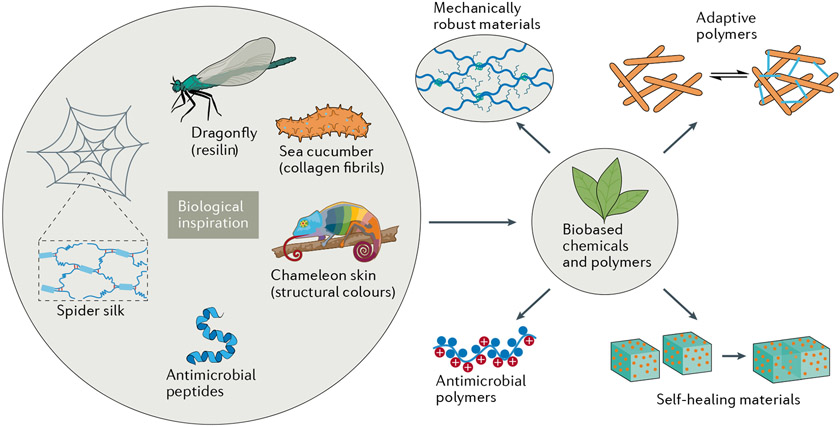
Fig. 1 ∣
Fig. 1 ∣. Chemistry of bioinspired and biomimetic polymers and their biobased mimics.
Sources of inspiration can be obtained from organisms and natural biomaterials. Improved technologies enable us to better understand biomolecular function so we can develop bioinspired materials. For example, the outstanding mechanical properties of spider silk are due to the combined effects of separate crystalline and hydrogen-bonded amorphous regions of the matrix. Biobased chemicals and polymers are increasingly available for creative material development. The sustainable biomimetic and bioinspired materials described in this Review are categorized as mechanically robust materials (including resilin mimics and spider silk mimics), mechanically and optically adaptive polymers, self-healable materials and antimicrobial polymers.
Fig. 2 ∣
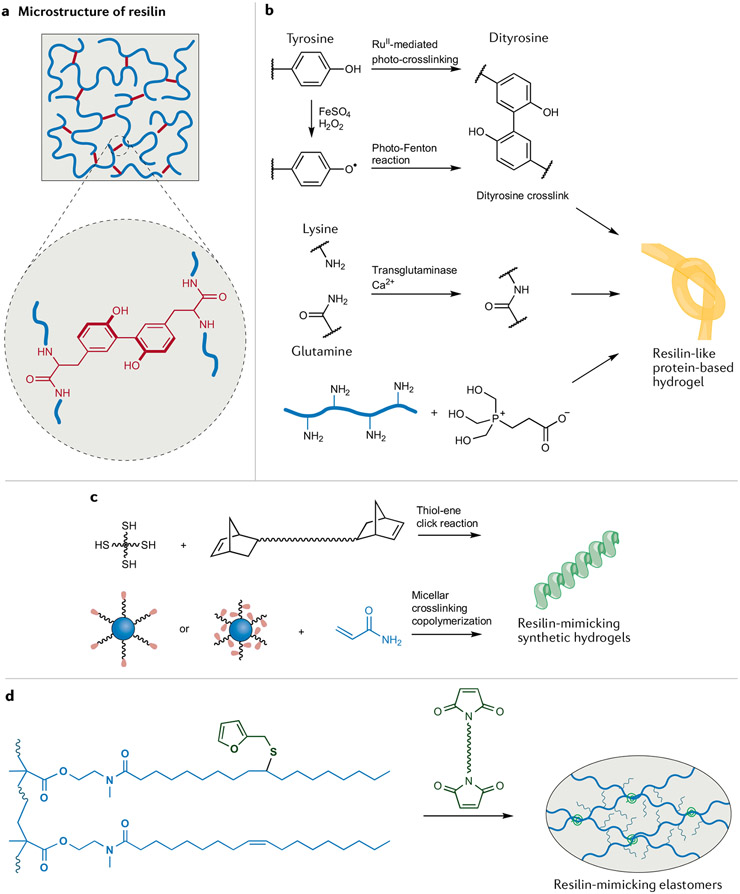
Fig. 2 ∣. Chemical approaches in the design of resilin-mimicking materials.
a ∣ The outstanding mechanical properties of resilin originate from its unique microstructure. Long and flexible polymer chains, well-defined chemical networks and low intermolecular friction result in high resilience. b ∣ Crosslinking resilin-like proteins can be products of RuII-mediated photocrosslinking, the photo-Fenton reaction, a transglutaminase-catalysed reaction and Mannich-type reaction to give hydrogels,,. Due to the specific crosslinking chemistry and hydration state, these protein-based hydrogels exhibit high resilience. c ∣ Bioinspired non-protein resilin-mimicking hydrogels can be prepared by a thiol–ene click reaction or micellar crosslinking copolymerization,,. d ∣ Plant oil-based elastomeric resilin mimics can be converted into well-defined networks by Diels–Alder crosslinking of furan and maleimide groups,.The fatty acid side chains act as internal plasticizers, endowing elastomers with high resilience.
Fig. 3 ∣
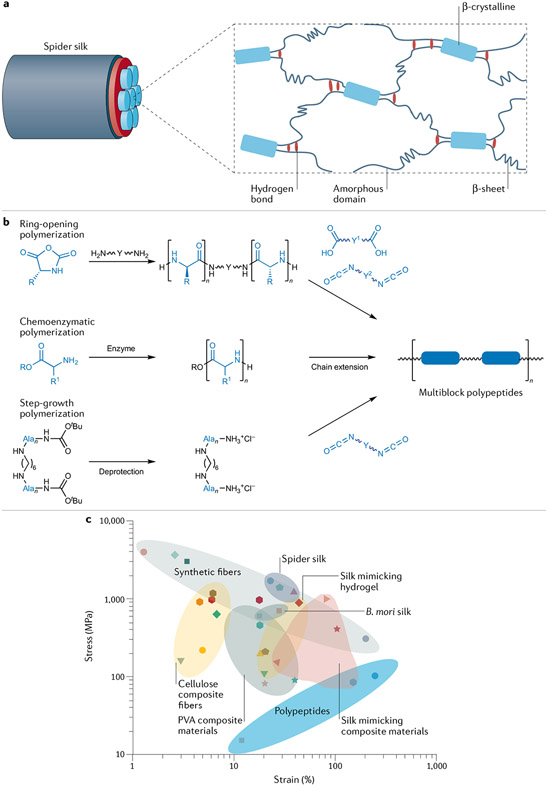
Fig. 3 ∣. Synthetic spider silk mimics recapitulate the primary or secondary structure of spider silk proteins.
a ∣ The secondary structure of spider silks exemplifies how nano-sized crystalline β-sheets and hydrogen bonds in an amorphous matrix can endow a material with outstanding mechanical properties. b ∣ Spider silk-mimicking multiblock copolymers with amino acid derivatives can be prepared by ring-opening polymerization, chemo-enzymatic polymerization with subsequent chain extension or step-growth polymerization-. c ∣ An Ashby plot of tensile stress versus strain for natural spider silks and synthetic mimics.
Fig. 4 ∣
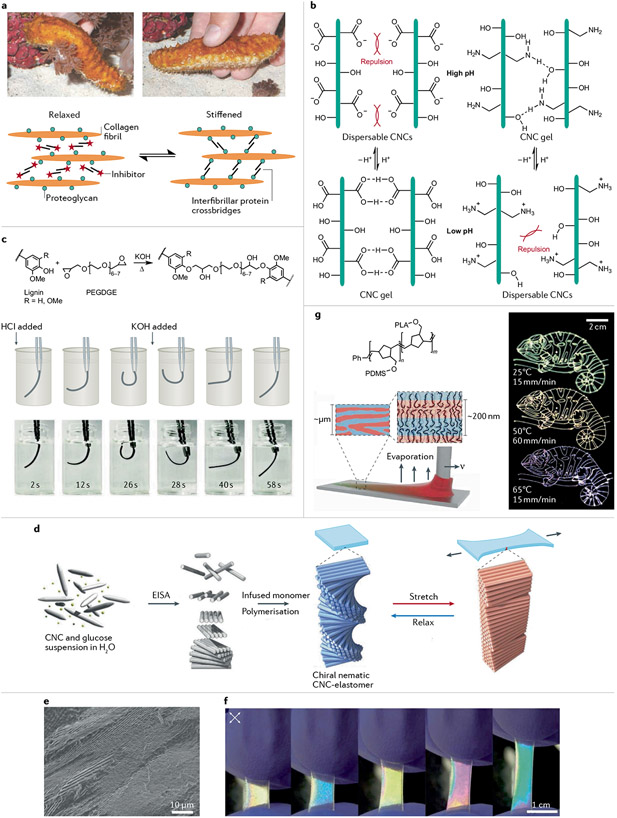
Fig. 4 ∣. Preparation and chemistry of biomimetic stimulus-responsive polymer composites.
a ∣ Sea cucumbers can switch between relaxed and stiffened states because of their mutable collagenous tissue. In simple terms, the stiffness-changing behaviour involves spindle-shaped collagen fibrils, which are discontinuous parallel aggregates. Proteoglycans bind proteins such as stiparin and tensilin, which bridge the fibrils. b ∣ Amine- or carboxy-functionalized cellulose nanocrystal (CNC) suspensions have a pH-dependent stiffness that depends on attractive hydrogen bonds or electrostatic repulsions. c ∣ Lignin-based pH-responsive reversible actuators. d ∣ A stretchable chiral nematic CNC–elastomer composite can be prepared by evaporation-induced self-assembly (EISA). e ∣ A cross-section scanning electron micrograph of the CNC–elastomer film shows periodic structures. f ∣ Photographs of CNC–elastomer samples viewed under crossed polarizers while stretched. g ∣ Direct-write chameleon patterns can be generated under constant 3D printing conditions. Printing speed v and substrate temperature can control on-the-fly tuning of photonic properties. PDMS, poly(dimethylsiloxane); PEGDGE, poly(ethylene glycol) diglycidyl ether; PLA, poly(lactic acid). Part a adapted with permission from REF., AAAS and REF., Springer Nature Limited. Part b adapted with permission from REF., ACS. Part c adapted with permission from REF., ACS. Part d, e, and f are reprinted from REF., CC BY 4.0. Part g adapted with permission from REF., AAAS.
Fig. 5 ∣
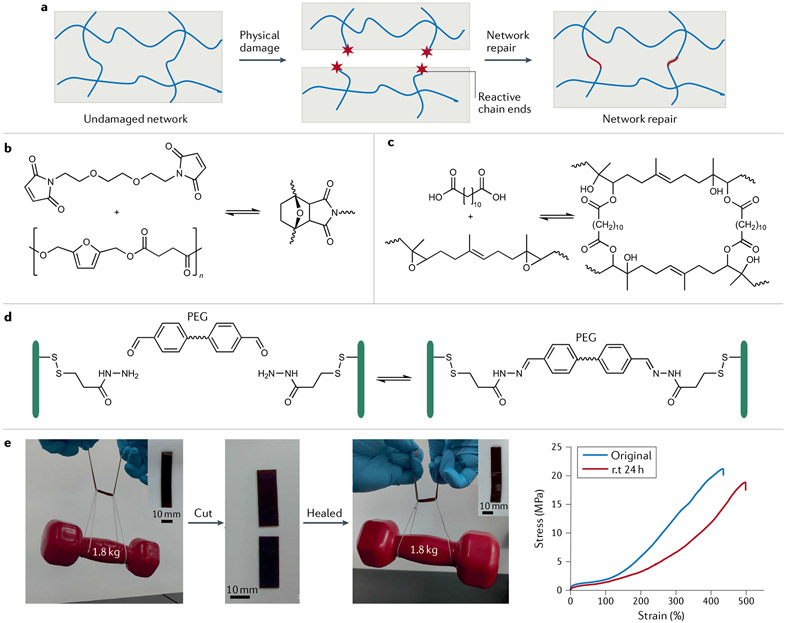
Fig. 5 ∣. Biobased elastomers and hydrogels with dynamic chemical networks can self-heal.
a ∣ Mechanical cleavage of polymer chains affords reactive end groups, but these can find each other to afford bond reconstruction and physical repair. b ∣ Biobased polyester elastomers with furans in their main chain participate in reversible Diels–Alder chemistry with maleimide groups to enable self-healing. c ∣ Epoxidized natural rubber can be chemically crosslinked with an α,ω-diacid. The β-hydroxy ester groups endow epoxidized natural rubber with self-healing properties. d ∣ Hydrogels based on carboxyethyl cellulose-graft-dithiodipropionate dihydrazide can be crosslinked with a poly(ethylene glycol) (PEG) derivative bearing benzaldehydes at both ends. The resulting covalent acylhydrazone linkages are dynamic, enabling the hydrogels to rapidly self-heal. e ∣ A castor oil-derived polyamide is an ultrastrong self-healing elastomer that can be cut into two pieces and healed at room temperature (rt), after which 88% of tensile strength is recovered. Properties such as crystallinity, efficient chain entanglement, high hydrogen-bond density and olefin cross-metathesis in polyamide elastomers are responsible for strength and self-healing. Part b adapted with permission from REF., ACS. Part c adapted with permission from REF., ACS. Part d adapted with permission from REF., Wiley. Part e adapted with permission from REF., ACS.
Fig. 6 ∣
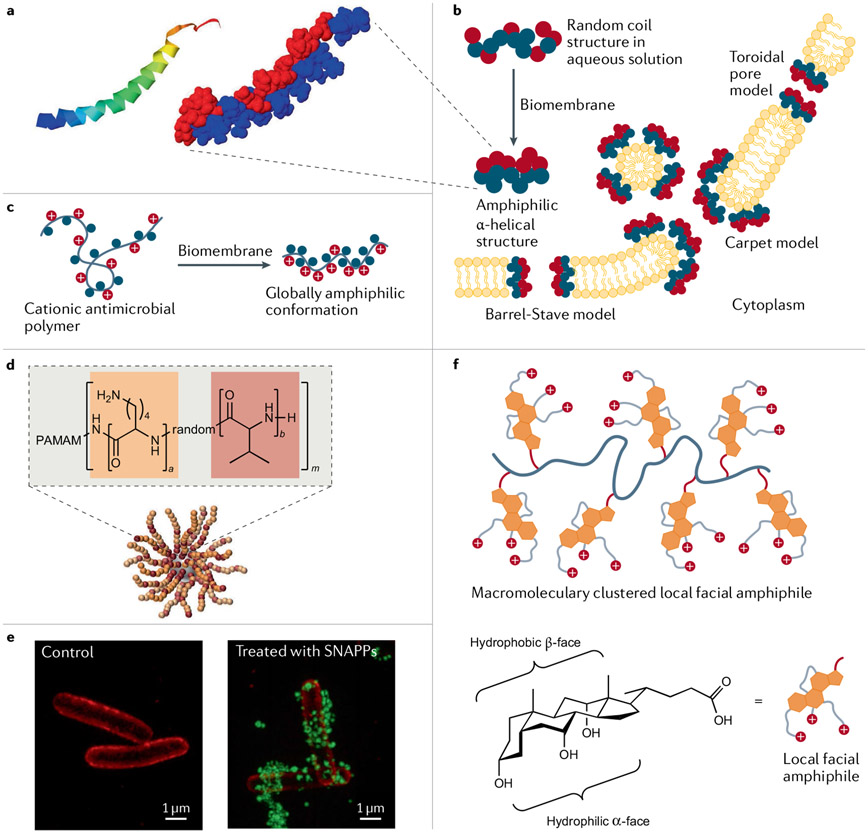
Fig. 6 ∣. Bioinspired and biomimetic polymers for antimicrobial applications.
a ∣ The antimicrobial peptide (AMP) LL-37 structure features an α-helical ribbon and hydrophobic (blue) and hydrophilic (red) regions,. b ∣ AMP mechanisms of membrane disruption, can be modeled in different ways. In the barrel-stave and toroidal pore models, AMPs insert themselves into membranes perpendicularly, where they generate membrane-spanning aqueous channels. The AMPs contact the phospholipid head groups in the toroidal pore model. In contrast, in the carpet model, the membrane surface becomes coated with destabilizing AMPs. At higher concentrations, carpet model peptides can behave as detergents. c ∣ When antimicrobial polymers approach a biomembrane surface, they adopt a globally amphiphilic irregular conformation. d ∣ Structurally nanoengineered antimicrobial peptide polymers (SNAPPs) can take the form of 16- and 32-arm star peptide polymer nanoparticles with dendritic poly(amidoamine) (PAMAM) cores. e ∣ Optical 3D structured illumination microscopy mages of Escherichia coli before and after treatment with AF488-tagged SNAPPs (green) with 16 arms. The E. coli cell membrane was stained with FM4-64FX (red). Membrane-associated or internalized SNAPPs are visible. f ∣ Facially amphiphilic antimicrobial polymer mimics derived from bile acids. These cationic antimicrobial polymers possess local facial amphiphilicity at the repeating unit level due to the presence of facially amphiphilic cationic bile acid structures. Part a is reprinted from REFS,, CC BY 4.0. Parts d and e reprinted from REF., Springer Nature Limited. Part f reprinted from REF., Springer Nature Limited.

References

    1. Wang Y, Naleway SE & Wang B Biological and bioinspired materials: structure leading to functional and mechanical performance. Bioact. Mater 5, 745–757 (2020). - PMC - PubMed
    1. Sanchez C, Arribart H & Guille MMG Biomimetism and bioinspiration as tools for the design of innovative materials and systems. Nat. Mater 4, 277–288 (2005). - PubMed
    1. Levin A et al. Biomimetic peptide self-assembly for functional materials. Nat. Rev. Chem 4, 615–634 (2020).
    1. Montero de Espinosa L, Meesorn W, Moatsou D & Weder C Bioinspired polymer systems with stimuli-responsive mechanical properties. Chem. Rev 117, 12851–12892 (2017). - PubMed
    1. Lefèvre T & Auger M Spider silk as a blueprint for greener materials: a review. Int. Mater. Rev 61, 127–153 (2016).