


Amazonian fruits with potential effects on COVID-19 by inflammaging modulation: A narrative review
- PMID: 36240164
- PMCID: PMC9874877
- DOI: 10.1111/jfbc.14472
Amazonian fruits with potential effects on COVID-19 by inflammaging modulation: A narrative review
Abstract
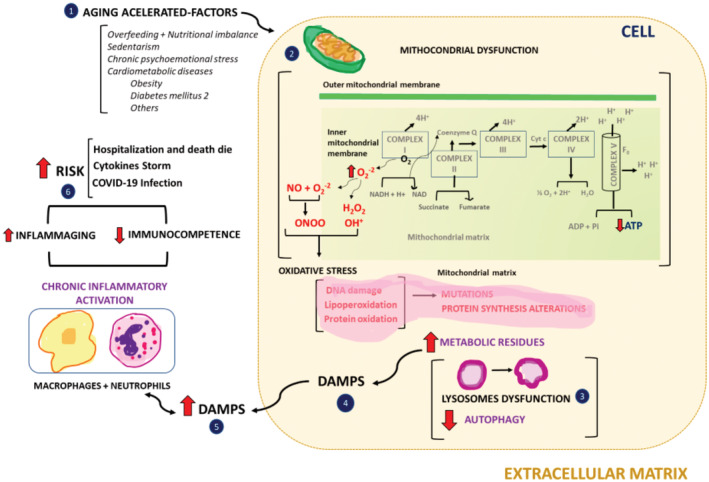
The COVID-19 pandemic had a great impact on the mortality of older adults and, chronic non- transmissible diseases (CNTDs) patients, likely previous inflammaging condition that is common in these subjects. It is possible that functional foods could attenuate viral infection conditions such as SARS-CoV-2 (severe acute respiratory syndrome coronavirus 2), the causal agent of COVID-19 pandemic. Previous evidence suggested that some fruits consumed by Amazonian Diet from Pre-Colombian times could present relevant proprieties to decrease of COVID-19 complications such as oxidative-cytokine storm. In this narrative review we identified five potential Amazonian fruits: açai berry (Euterpe oleracea), camu-camu (Myrciaria dubia), cocoa (Theobroma cacao), Brazil nuts (Bertholletia excelsa), and guaraná (Paullinia cupana). Data showed that these Amazonian fruits present antioxidant, anti-inflammatory and other immunomodulatory activities that could attenuate the impact of inflammaging states that potentially decrease the evolution of COVID-19 complications. The evidence compiled here supports the complementary experimental and clinical studies exploring these fruits as nutritional supplement during COVID-19 infection. PRACTICAL APPLICATIONS: These fruits, in their natural form, are often limited to their region, or exported to other places in the form of frozen pulp or powder. But there are already some companies producing food supplements in the form of capsules, in the form of oils and even functional foods enriched with these fruits. This practice is common in Brazil and tends to expand to the international market.
Keywords: Brazil nuts; COVID-19; amazon fruits; açai berry; camu-camu; cocoa; guarana.
© 2022 Wiley Periodicals LLC.
Conflict of interest statement
The authors declare they have no conflict of interest.
Figures
References
-
- Afonso Da Costa, P. , Ballus, C. A. , Teixeira Filho, J. , & Teixeira Godoy, H. (2011). Fatty acids profile of pulp and nuts of brazilian fruits Perfil de ácidos graxos de polpa e castanhas de frutas brasileiras. Food Science and Technology, 31, 950–954.
-
- Annweiler, C. , Hanotte, B. , Grandin De l'Eprevier, C. , Sabatier, J. M. , Lafaie, L. , & Célarier, T. (2020). Vitamin D and survival in COVID‐19 patients: A quasi‐experimental study. Journal of Steroid Biochemistry and Molecular Biology, 204, 105771. 10.1016/j.jsbmb.2020.105771 - DOI - PMC - PubMed
-
- Arantes, L. P. , Machado, M. L. , Zamberlan, D. C. , Da Silveira, T. L. , Da Silva, T. C. , da Cruz, I. B. M. , Ribeiro, E. E. , Aschner, M. , & Soares, F. A. A. (2018). Mechanisms involved in anti‐aging effects of guarana (Paullinia cupana) in Caenorhabditis elegans. Brazilian Journal of Medical and Biological Research, 51, e7552. - PMC - PubMed
-
- Assmann, C. E. , Weis, G. C. C. , da Rosa, J. R. , Bonadiman, B. D. S. R. , De Oliveira Alves, A. , Schetinger, M. R. C. , Ribeiro, E. E. , Morsch, V. M. M. , & Da Cruz, I. B. M. (2021). Amazon‐derived nutraceuticals: Promises to mitigate chronic inflammatory states and neuroinflammation. Neurochemistry International, 148, 105085. - PubMed
Publication types
MeSH terms
Substances
LinkOut - more resources
Full Text Sources
Medical
Miscellaneous
