


Pilot clinical and pharmacokinetic study of Δ9-Tetrahydrocannabinol (THC)/Cannabidiol (CBD) nanoparticle oro-buccal spray in patients with advanced cancer experiencing uncontrolled pain
- PMID: 36240167
- PMCID: PMC9565400
- DOI: 10.1371/journal.pone.0270543
Pilot clinical and pharmacokinetic study of Δ9-Tetrahydrocannabinol (THC)/Cannabidiol (CBD) nanoparticle oro-buccal spray in patients with advanced cancer experiencing uncontrolled pain
Abstract
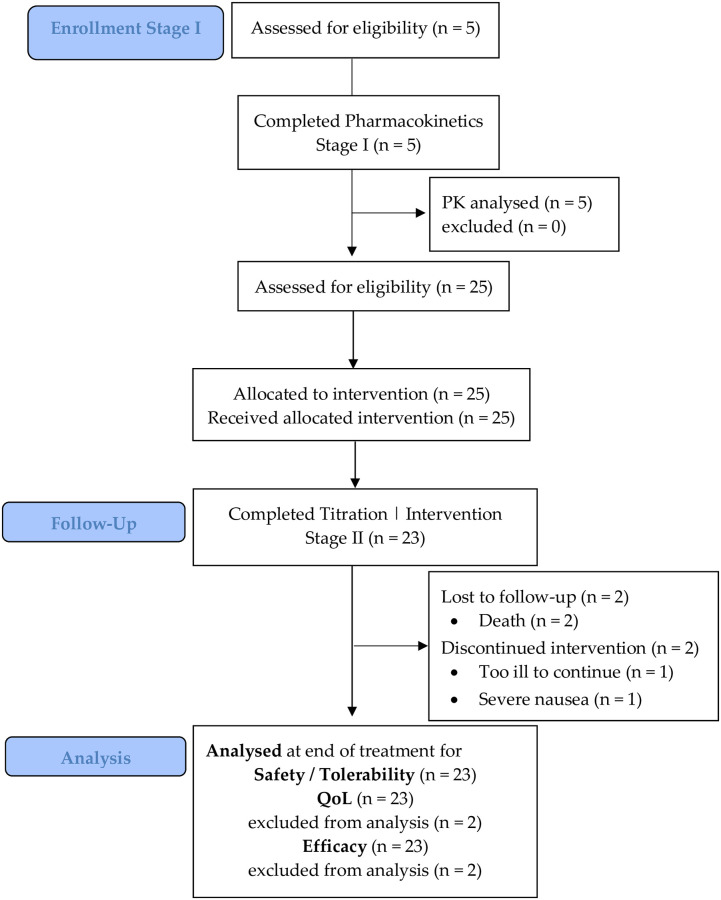
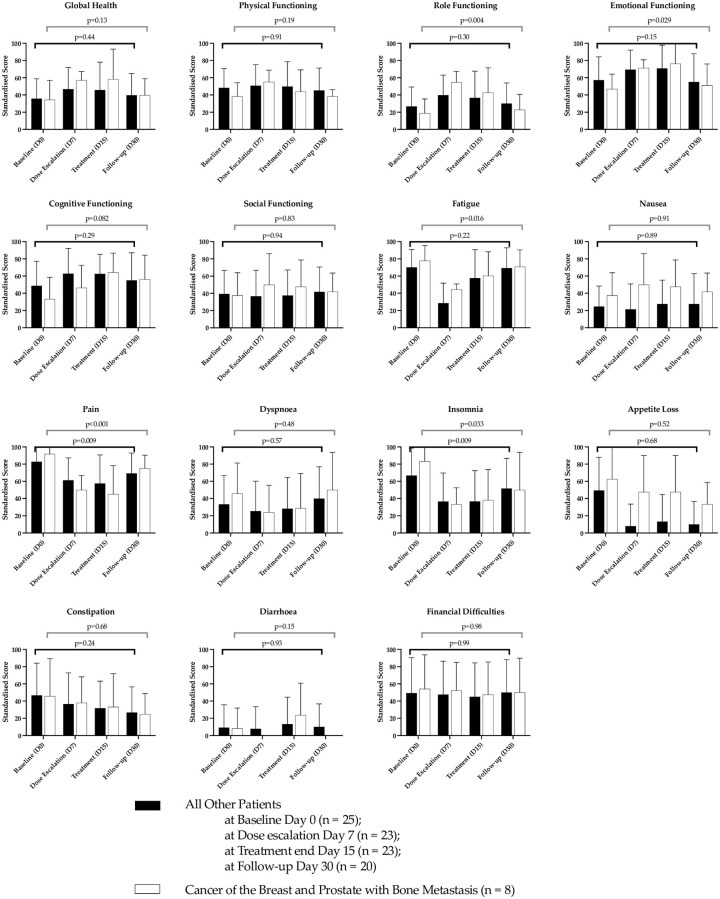
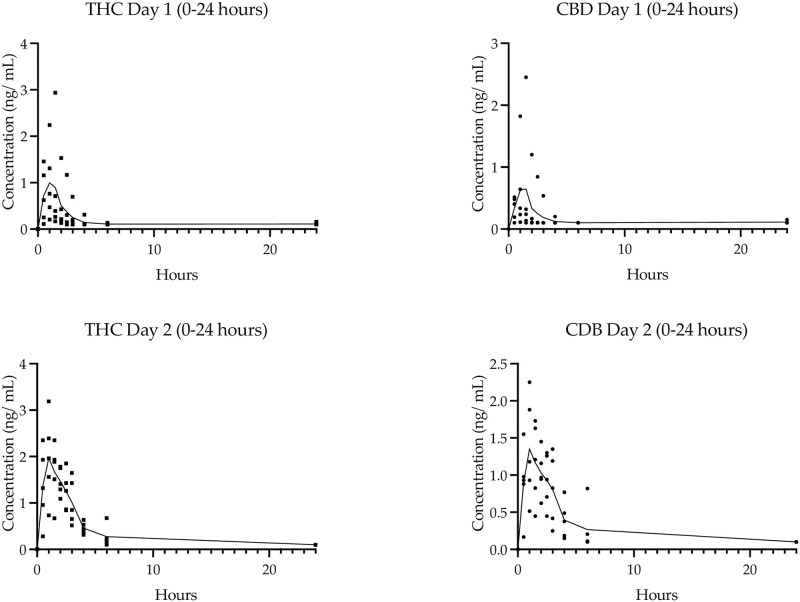
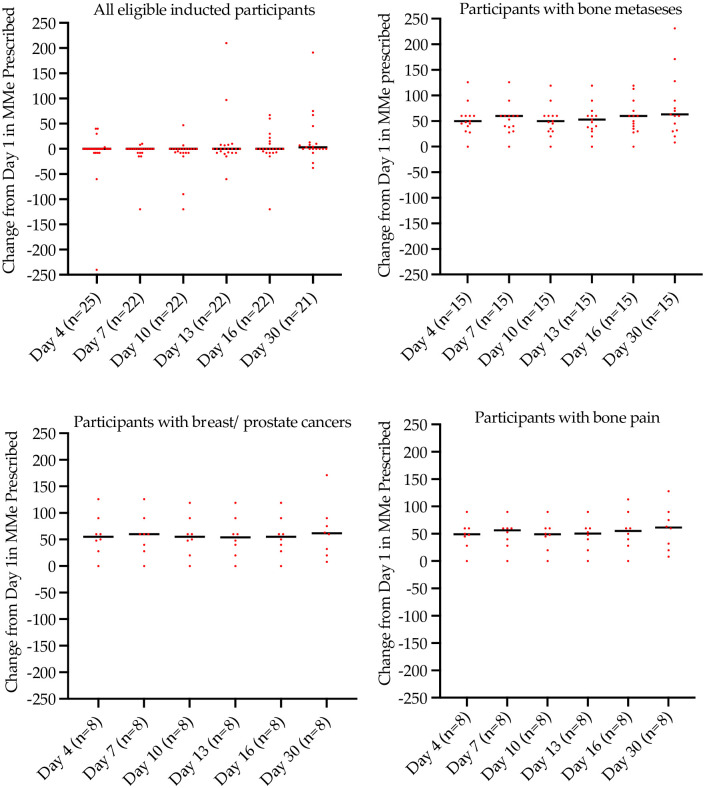
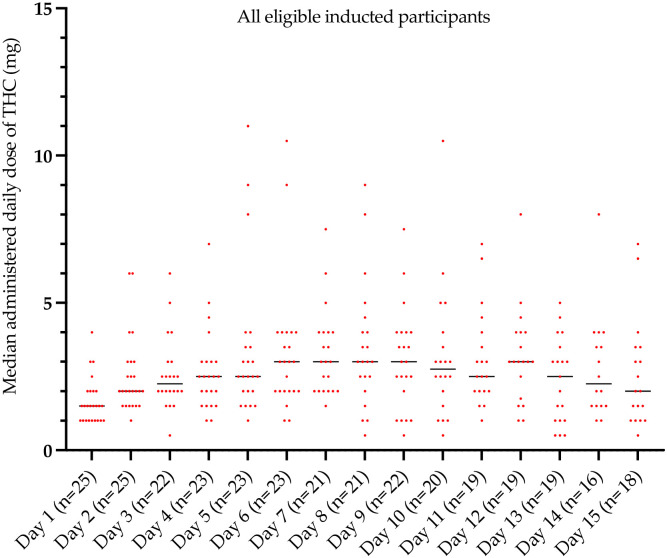
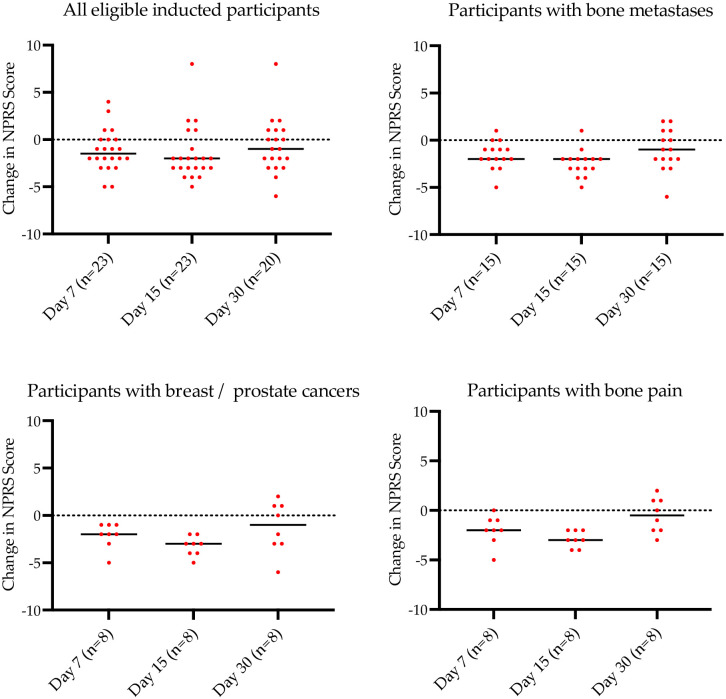
This pilot study aimed to assess the safety, tolerability, pharmacokinetics and exploratory analgesic effect of a novel water-soluble oro-buccal nanoparticle spray of a cannabis-based medicine (MDCNS-01) in patients with advanced incurable malignancy with unrelieved pain from opioid analgesic. The study was a non-blinded single arm 2 stage study. Stage I was a single escalating dose (n = 5) [2.5 mg Δ9-THC and 2.5 mg CBD) versus a 3-fold escalated dose. Stage II was an up-titrated dose in patients with advanced cancers and intractable pain (n = 25). During Stage I with an increased cannabis-based medicine dose, maximum observed plasma concentrations of cannabinoids were dose dependant. The water-soluble formulation in the current study resulted in a higher median (min, max) systemic exposure of Δ9-THC than CBD (AUC from 2.5 mg each of Δ9-THC and CBD, was 1.71 ng mL.h-1 (1.1, 6.6) and 0.65 ng mL.h-1 (0.49, 4.1), respectively). During stage II a subgroup of patients diagnosed with breast and prostate cancers with bone metastases, had the highest mean pain score improvement from baseline of 40% (unadjusted) and 33% (adjusted for rescue medication use). For all patients the most reported adverse events were mild or moderate drowsiness affecting 11 (44%) and 4 (6%) patients, respectively, and nausea and vomiting that affected 18 (72%) patients. The water-soluble cannabis-based medicine provided acceptable bioavailability for Δ9-THC/CBD, appeared safe and tolerable in advanced incurable cancers with uncontrolled pain with preliminary evidence of analgesic efficacy.
Conflict of interest statement
I have read the journal’s policy and the authors of this manuscript have the following competing interests, SC, AJM are consultants for Medlab Clinical, and BB was contracted by the funder to carry out an independent overall analysis of the data. JDH, DR, SH, LV own shares in Medlab Clinical and participate in its cannabis-based medicines research programs and the pilot clinical trial administered formulation, MDCNB-01 (NanaBisTM). Medlab Clinical also has granted patents for its submicron particle technology in all global western regions. This does not alter our adherence to PLOS ONE policies on sharing data and materials.
Figures
References
-
- Aviram J, Samuelly-Leichtag G. Efficacy of Cannabis-Based Medicines for Pain Management: A Systematic Review and Meta-Analysis of Randomized Controlled Trials. Pain Physician. 2017;20(6):E755–e96. Epub 2017/09/22. . - PubMed
Publication types
MeSH terms
Substances
LinkOut - more resources
Full Text Sources
Medical
