


Machine learning outperformed logistic regression classification even with limit sample size: A model to predict pediatric HIV mortality and clinical progression to AIDS
- PMID: 36240212
- PMCID: PMC9565414
- DOI: 10.1371/journal.pone.0276116
Machine learning outperformed logistic regression classification even with limit sample size: A model to predict pediatric HIV mortality and clinical progression to AIDS
Abstract
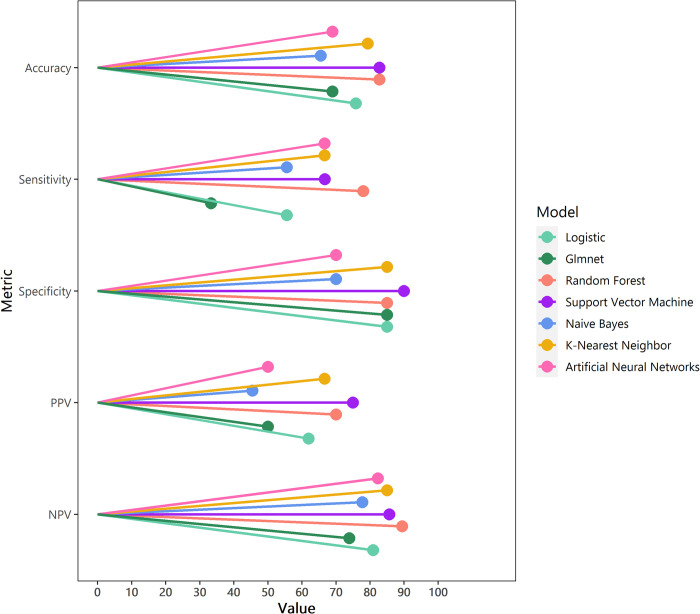
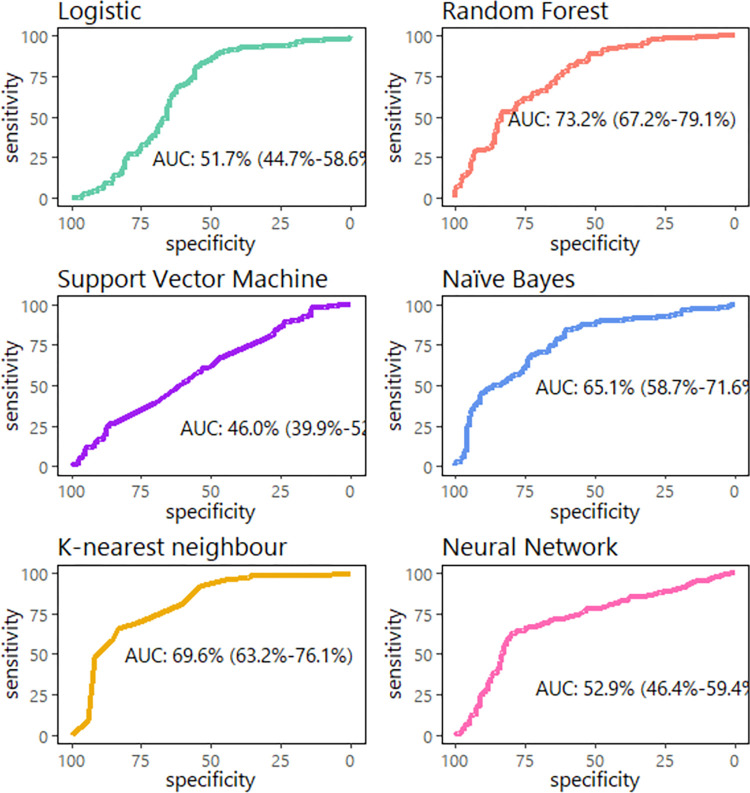
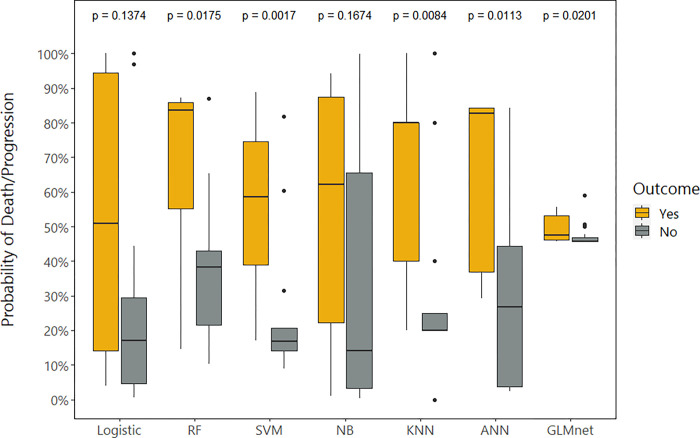
Logistic regression (LR) is the most common prediction model in medicine. In recent years, supervised machine learning (ML) methods have gained popularity. However, there are many concerns about ML utility for small sample sizes. In this study, we aim to compare the performance of 7 algorithms in the prediction of 1-year mortality and clinical progression to AIDS in a small cohort of infants living with HIV from South Africa and Mozambique. The data set (n = 100) was randomly split into 70% training and 30% validation set. Seven algorithms (LR, Random Forest (RF), Support Vector Machine (SVM), K-Nearest Neighbor (KNN), Naïve Bayes (NB), Artificial Neural Network (ANN), and Elastic Net) were compared. The variables included as predictors were the same across the models including sociodemographic, virologic, immunologic, and maternal status features. For each of the models, a parameter tuning was performed to select the best-performing hyperparameters using 5 times repeated 10-fold cross-validation. A confusion-matrix was built to assess their accuracy, sensitivity, and specificity. RF ranked as the best algorithm in terms of accuracy (82,8%), sensitivity (78%), and AUC (0,73). Regarding specificity and sensitivity, RF showed better performance than the other algorithms in the external validation and the highest AUC. LR showed lower performance compared with RF, SVM, or KNN. The outcome of children living with perinatally acquired HIV can be predicted with considerable accuracy using ML algorithms. Better models would benefit less specialized staff in limited resources countries to improve prompt referral in case of high-risk clinical progression.
Conflict of interest statement
The authors have declared that no competing interests exist.
Figures
References
Publication types
MeSH terms
LinkOut - more resources
Full Text Sources
Medical
