


Myeloablative autologous haematopoietic stem cell transplantation resets the B cell repertoire to a more naïve state in patients with systemic sclerosis
- PMID: 36241361
- PMCID: PMC9918657
- DOI: 10.1136/ard-2021-221925
Myeloablative autologous haematopoietic stem cell transplantation resets the B cell repertoire to a more naïve state in patients with systemic sclerosis
Abstract
Objectives: Myeloablative autologous haematopoietic stem cell transplant (HSCT) was recently demonstrated to provide significant benefit over cyclophosphamide (CYC) in the treatment of diffuse cutaneous systemic sclerosis (dcSSc) in the Scleroderma: Cyclophosphamide or Transplantation (SCOT) trial. As dysregulation of the B cell compartment has previously been described in dcSSc, we sought to gain insight into the effects of myeloablative autologous HSCT as compared with CYC.
Methods: We sequenced the peripheral blood immunoglobulin heavy chain (IGH) repertoires in patients with dcSSc enrolled in the SCOT trial.
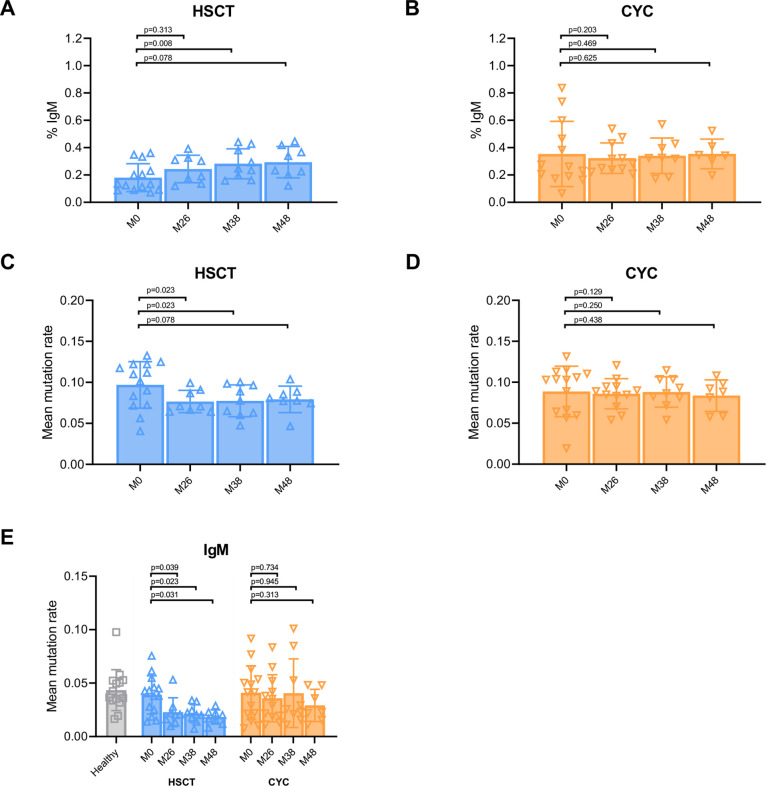
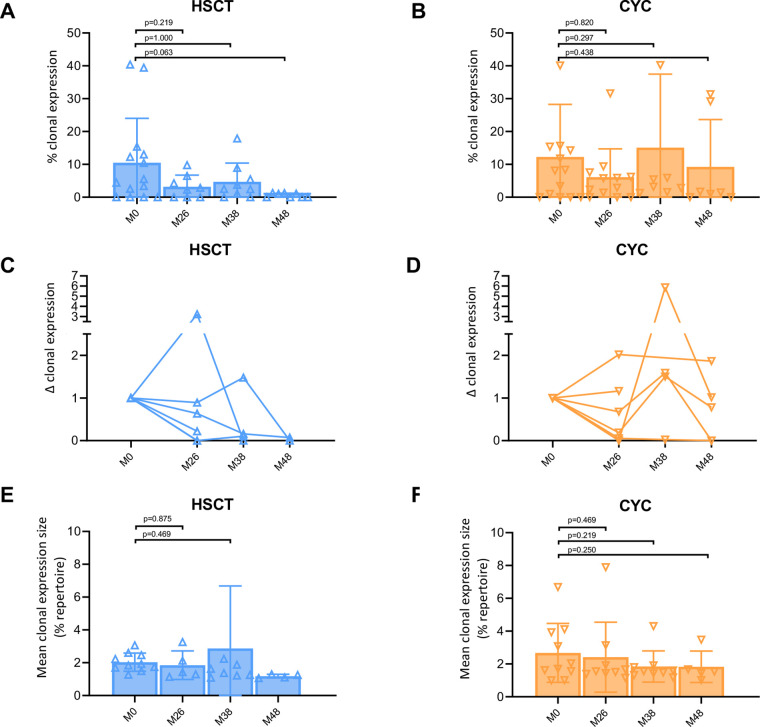
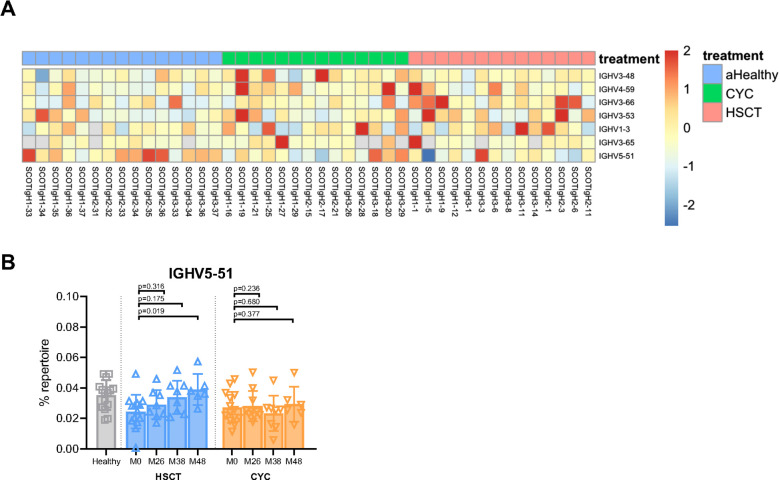
Results: Myeloablative autologous HSCT was associated with a sustained increase in IgM isotype antibodies bearing a low mutation rate. Clonal expression was reduced in IGH repertoires following myeloablative autologous HSCT. Additionally, we identified a underusage of immunoglobulin heavy chain V gene 5-51 in patients with dcSSc, and usage normalised following myeloablative autologous HSCT but not CYC treatment.
Conclusions: Together, these findings suggest that myeloablative autologous HSCT resets the IGH repertoire to a more naïve state characterised by IgM-expressing B cells, providing a possible mechanism for the elimination of pathogenic B cells that may contribute to the benefit of HSCT over CYC in the treatment of dcSSc.
Keywords: B-Lymphocytes; Immune System Diseases; Systemic Sclerosis.
© Author(s) (or their employer(s)) 2023. Re-use permitted under CC BY. Published by BMJ.
Conflict of interest statement
Competing interests: None declared.
Figures
References
-
- Simon D, Balogh P, Bognár A, et al. . Reduced non-switched memory B cell subsets cause imbalance in B cell repertoire in systemic sclerosis. Clin Exp Rheumatol 2016;34 Suppl (100):30–6. - PubMed
Publication types
MeSH terms
Substances
Grants and funding
LinkOut - more resources
Full Text Sources
Medical
Research Materials
