


Modelling the contribution of incarceration and public health oriented drug law reform to HCV transmission and elimination among PWID in Tijuana, Mexico
- PMID: 36242829
- PMCID: PMC9841890
- DOI: 10.1016/j.drugpo.2022.103878
Modelling the contribution of incarceration and public health oriented drug law reform to HCV transmission and elimination among PWID in Tijuana, Mexico
Abstract
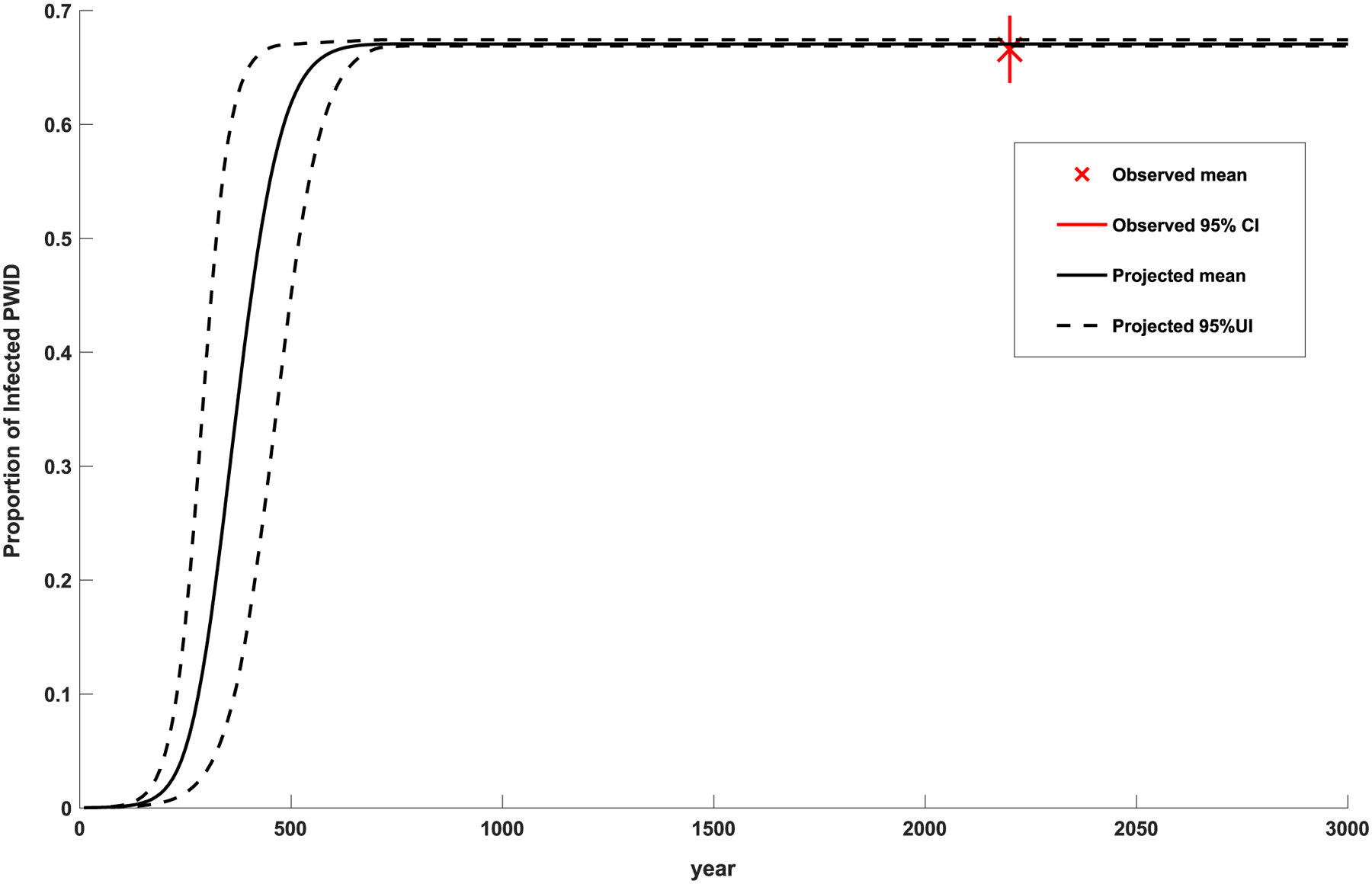
Background: Incarceration is associated with increased risk of hepatitis C virus (HCV) among people who inject drugs (PWID). Mexico's previous attempt in implementing a public health-oriented drug law reform resulted in minimal impact on incarceration among PWID. However, implementation of reforms alongside Mexico's HCV elimination program has the potential to reshape the HCV epidemic among PWID in the next decade. We use data from a cohort of PWID in Tijuana, Mexico, to inform epidemic modeling to assess the contribution of incarceration and fully implemented drug reform on HCV transmission and elimination among PWID.
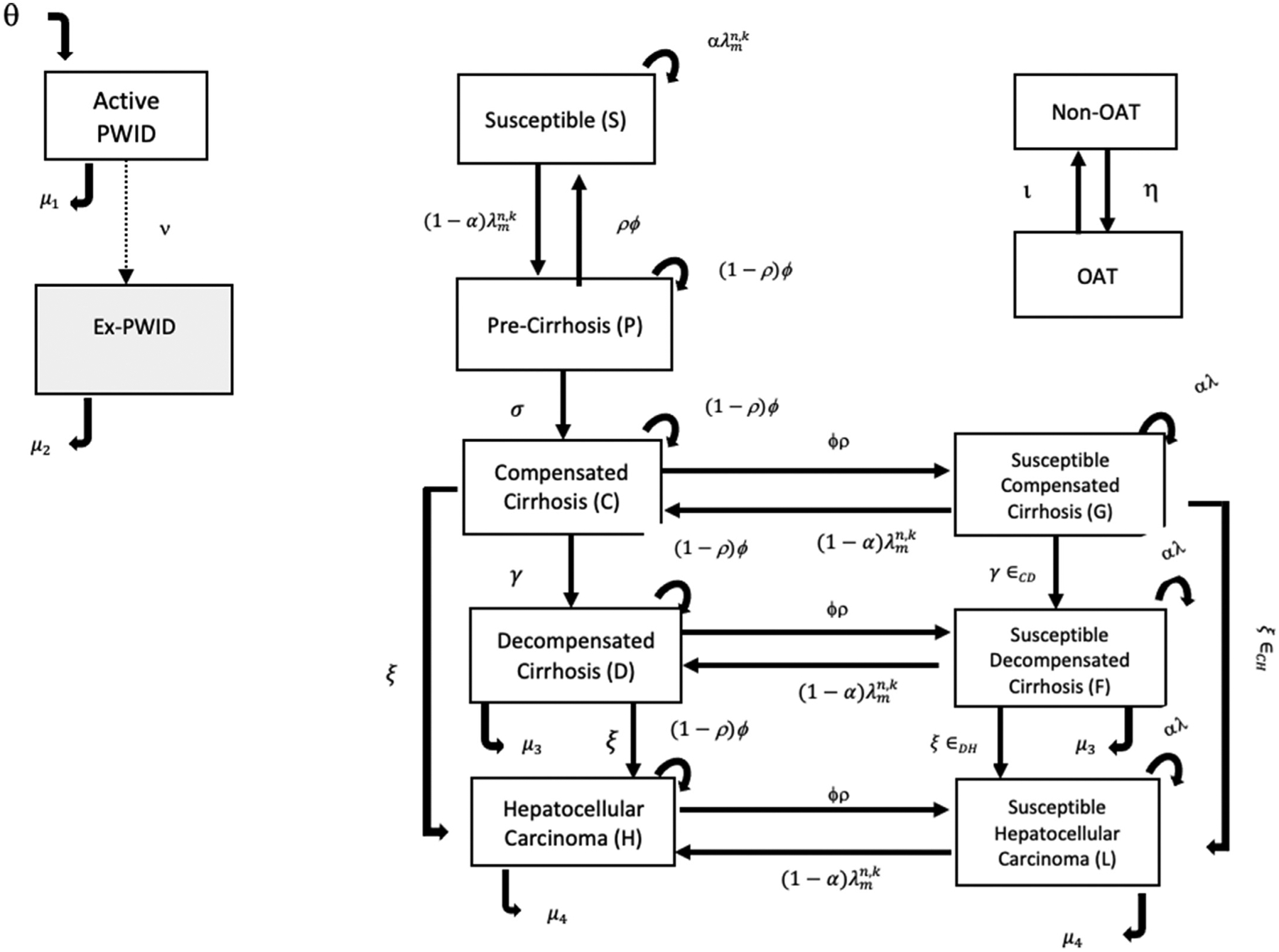
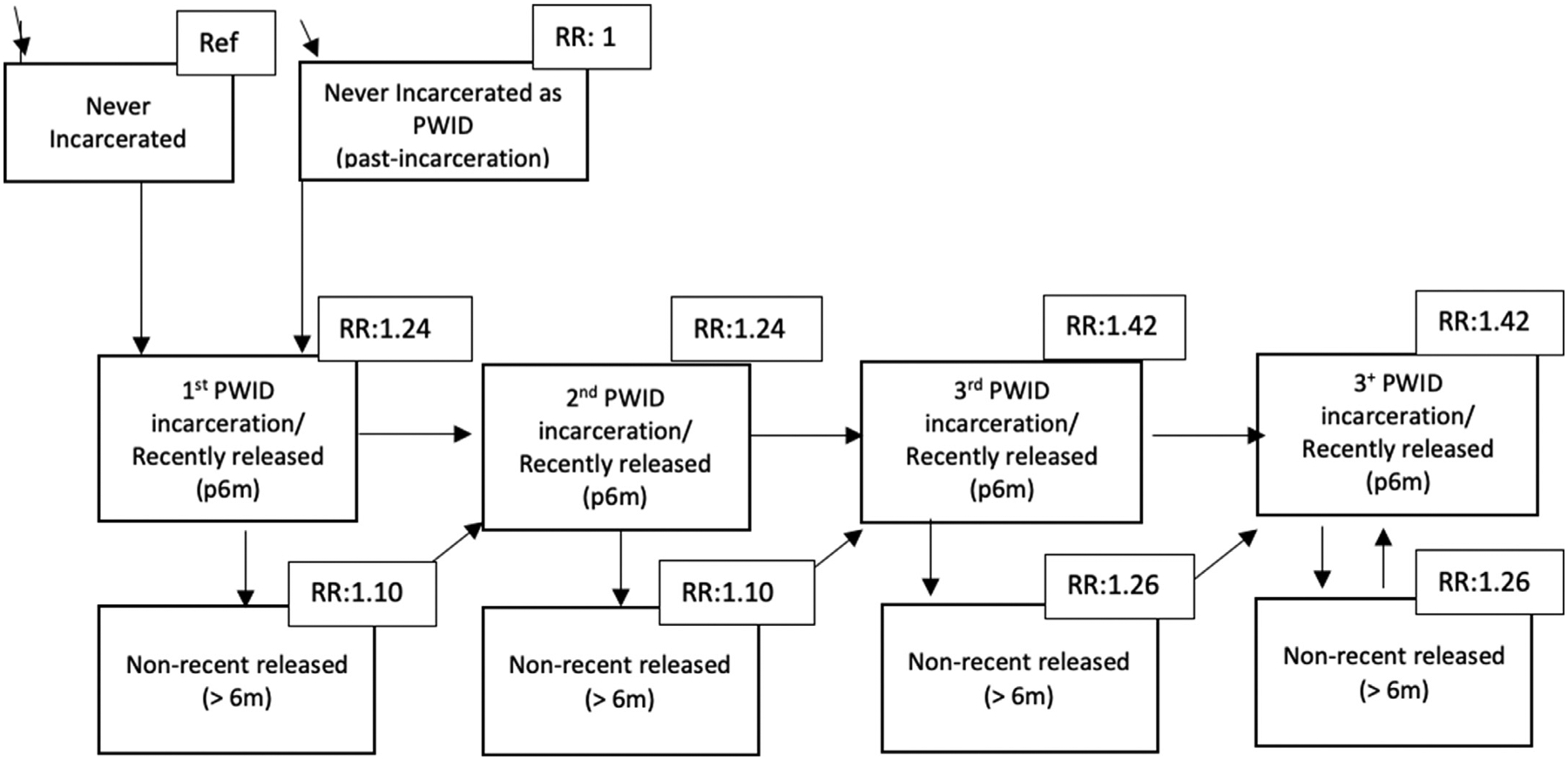
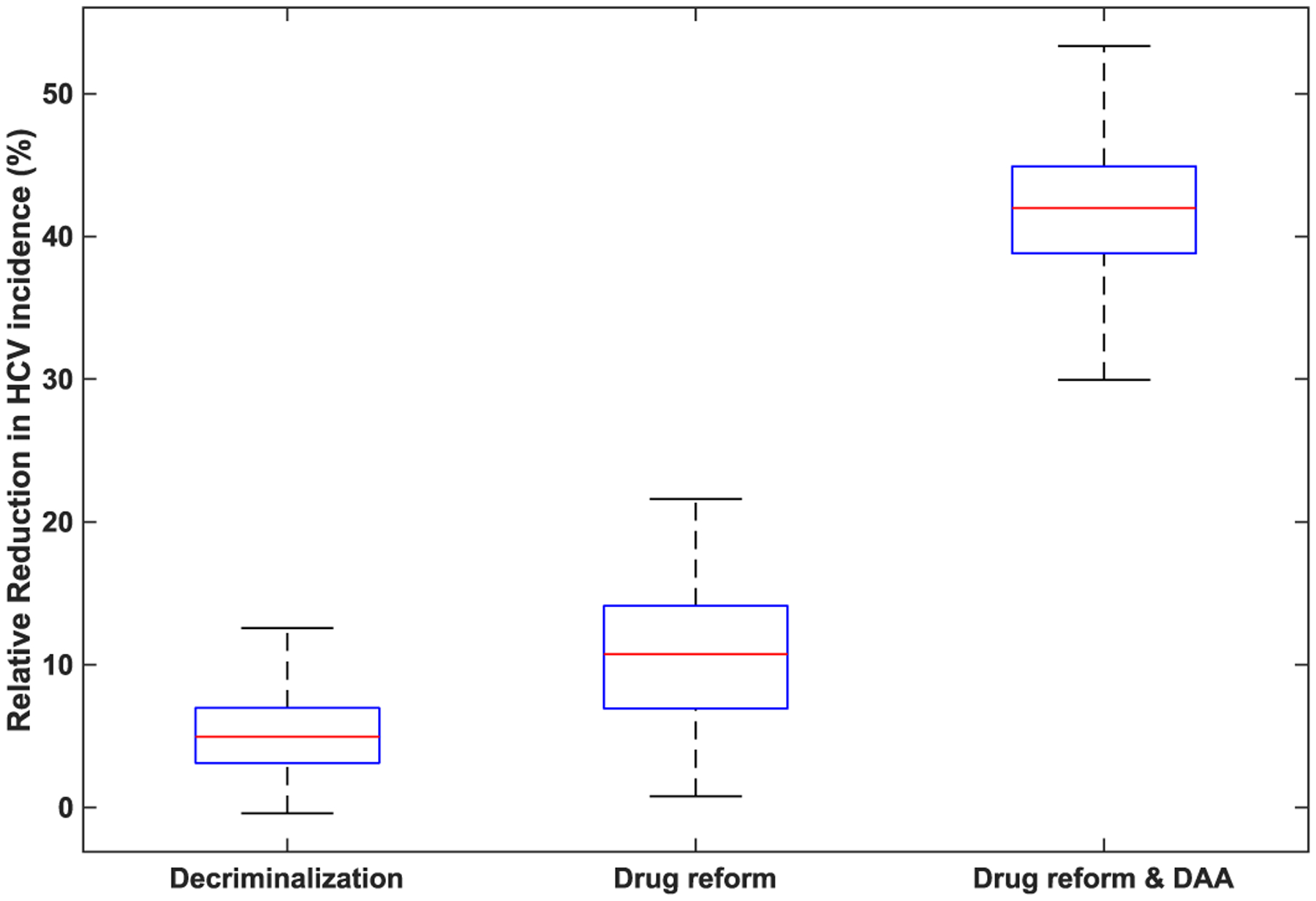
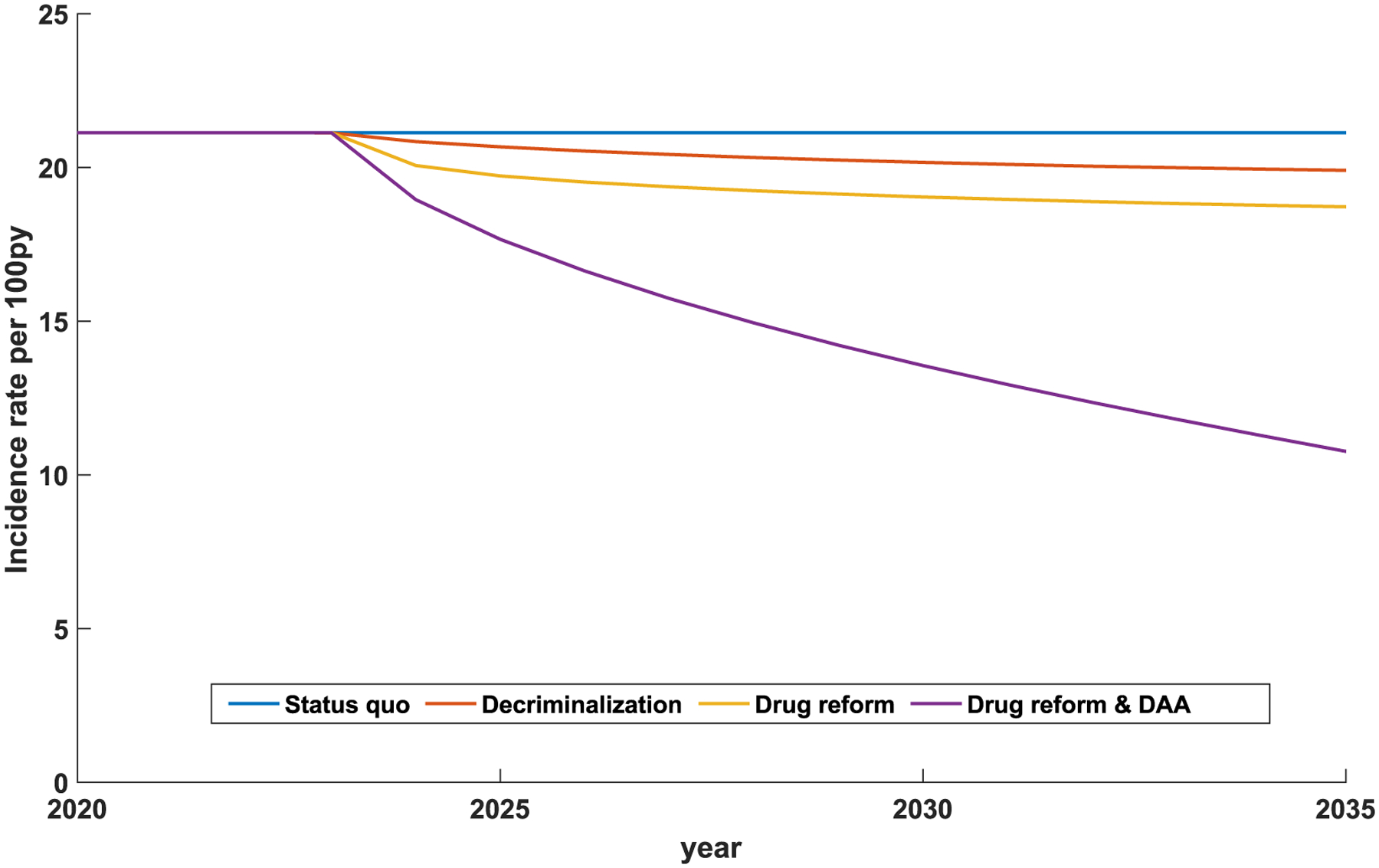
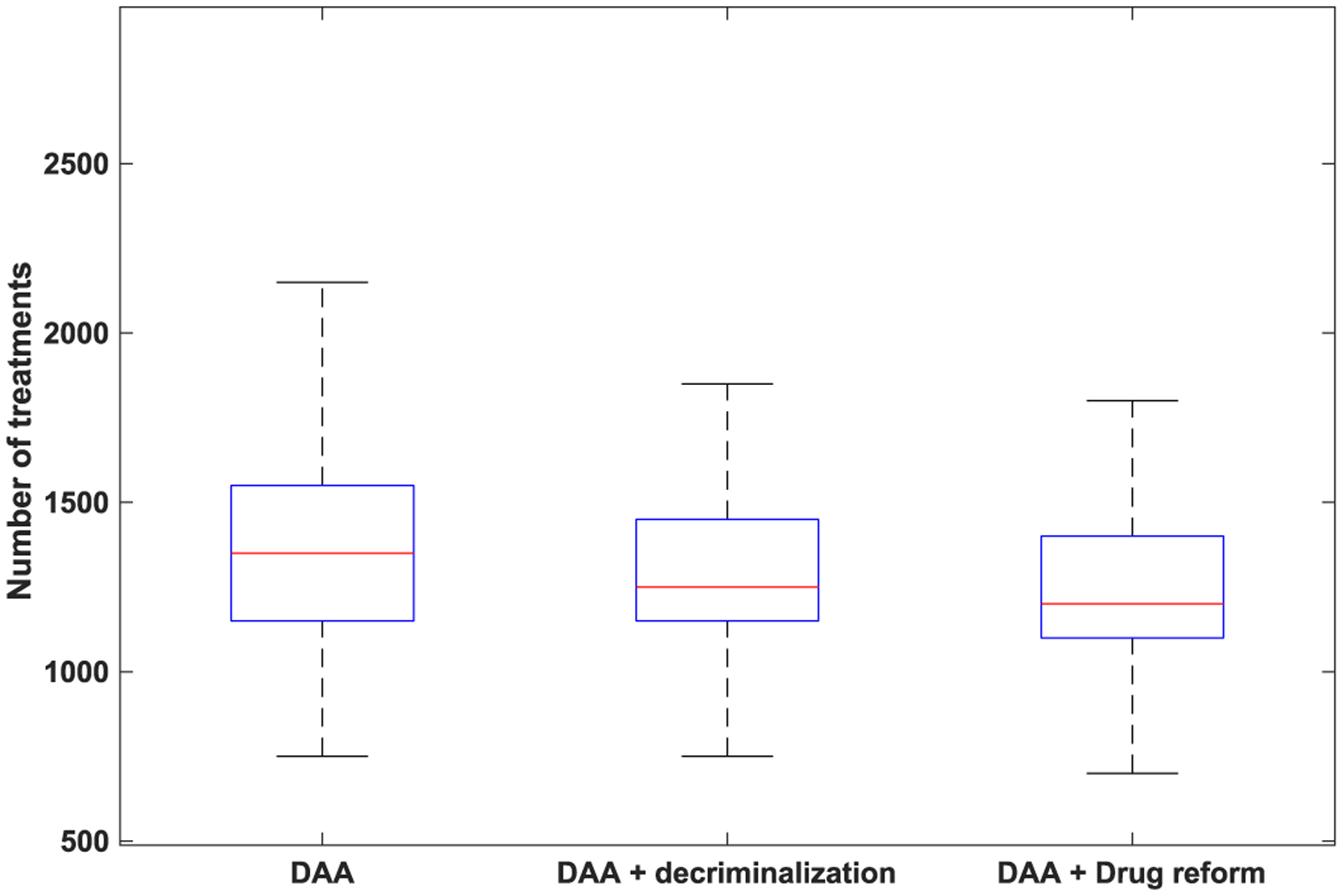
Methods: We developed a dynamic, deterministic model of incarceration, HCV transmission and disease progression among PWID. The model was calibrated to data from Tijuana, Mexico, with 90% HCV seroprevalence among 10,000 PWID. We estimated the 10-year population attributable fraction (PAF) of incarceration to HCV incidence among PWID and simulated, from 2022, the potential impact of the following scenarios: 1) decriminalization (80% reduction in incarceration rates); 2) fully implemented drug law reform (decriminalization and diversion to opiate agonist therapy [OAT]); 3) fully implemented drug law reform with HCV treatment (direct-acting antivirals [DAA]). We also assessed the number DAA needed to reach the 80% incidence reduction target by 2030 under these scenarios.
Results: Projections suggest a PAF of incarceration to HCV incidence of 5.4% (95% uncertainty interval [UI]:0.6-11.9%) among PWID in Tijuana between 2022-2032. Fully implemented drug reforms could reduce HCV incidence rate by 10.6% (95%UI:3.1-19.2%) across 10 years and reduce the number of DAA required to achieve Mexico's HCV incidence reduction goal by 14.3% (95%UI:5.3-17.1%).
Conclusions: Among PWID in Tijuana, Mexico, incarceration remains an important contributor to HCV transmission. Full implementation of public health-oriented drug law reform could play an important role in reducing HCV incidence and improve the feasibility of reaching the HCV incidence elimination target by 2030.
Keywords: Drug law reform; Epidemic modelling; HCV; Incarceration; PWID.
Copyright © 2022 Elsevier B.V. All rights reserved.
Conflict of interest statement
Declarations of Interest N.M. has received unrestricted research grants from Gilead and Merck unrelated to this work.
Figures
References
-
- Altice FL, Azbel L, Stone J, Brooks-Pollock E, Smyrnov P, Dvoriak S, & Vickerman P (2016). The perfect storm: Incarceration and the high-risk environment perpetuating transmission of HIV, hepatitis C virus, and tuberculosis in Eastern Europe and Central Asia. The Lancet, 388(10050), 1228–1248. 10.1016/S0140-6736(16)30856-X. - DOI - PMC - PubMed
-
- Arredondo J, Gaines T, Manian S, Vilalta C, Banuelos A, Strathdee SA, & Beletsky L (2018). The law on the streets: Evaluating the impact of Mexico’s drug decriminalization reform on drug possession arrests in Tijuana, Mexico. International Journal of Drug Policy, 54. 1–8. 10.1016/j.drugpo.2017.12.006. - DOI - PMC - PubMed
-
- Beletsky L, Wagner KD, Arredondo J, Palinkas L, Magis Rodríguez C, Kalic N, & Strathdee SA (2015). Implementing Mexico’s “Narcomenudeo ” drug law reform: A mixed methods assessment of early experiences among people who inject drugs. Journal of Mixed Methods Research, 10(4), 384–401. 10.1177/1558689815575862. - DOI
-
- Blower SM, & Dowlatabadi H (1994). Sensitivity and uncertainty analysis of complex models of disease transmission: An HIV model, as an example. International Statistical Review /Revue Internationale de Statistique, 62(2), 229–243. 10.2307/1403510. - DOI
MeSH terms
Substances
Grants and funding
LinkOut - more resources
Full Text Sources
Medical
