


Identification of phytochemical as a dual inhibitor of PI3K and mTOR: a structure-based computational approach
- PMID: 36244040
- PMCID: PMC10520133
- DOI: 10.1007/s11030-022-10541-2
Identification of phytochemical as a dual inhibitor of PI3K and mTOR: a structure-based computational approach
Abstract
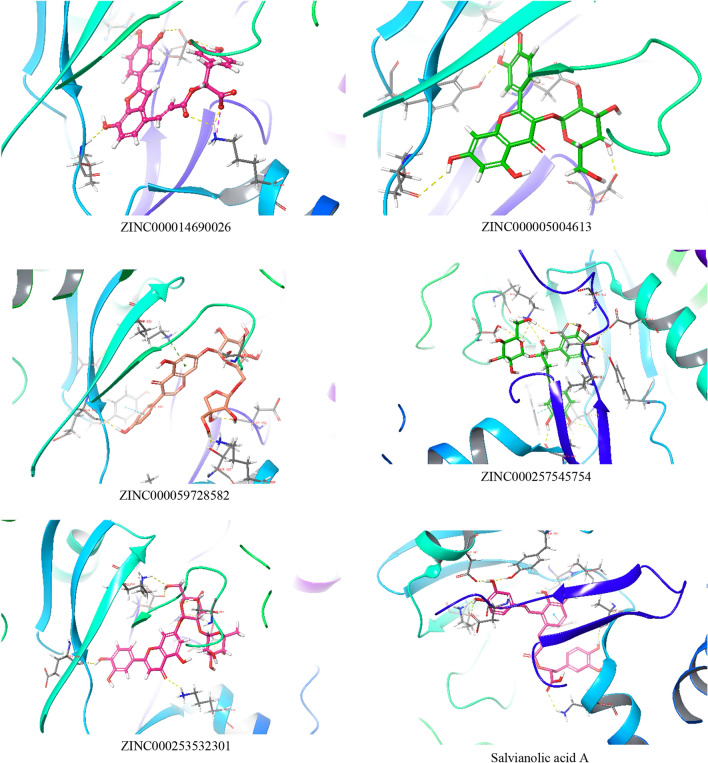
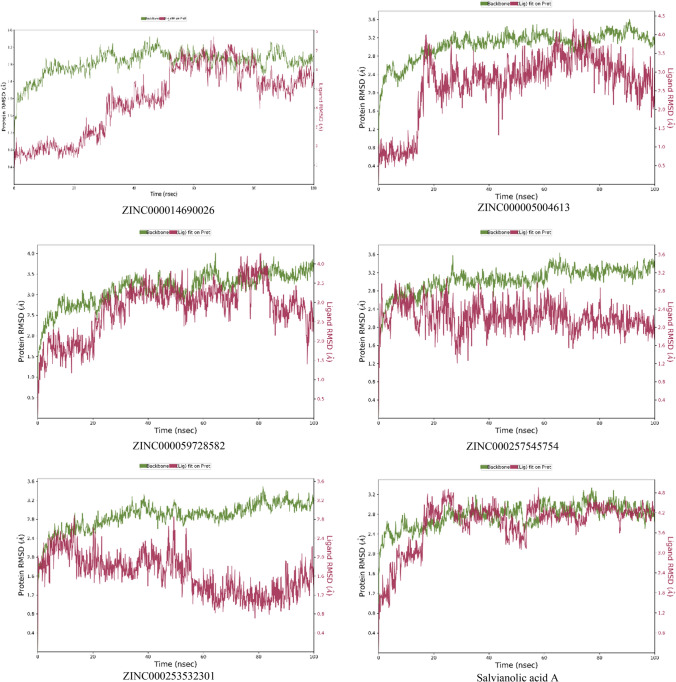
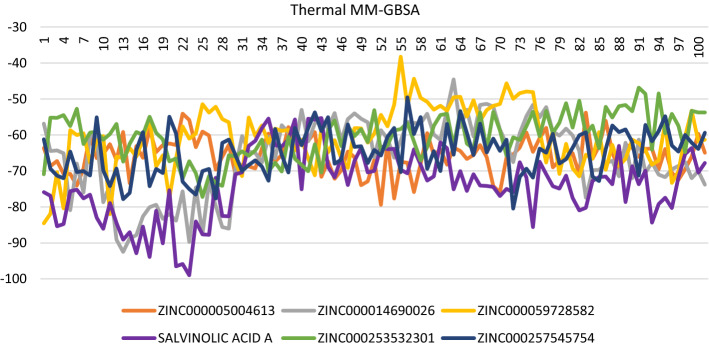
Breast cancer is a common form of cancer that affects both men and women. One of the most common types of genomic flaws in cancer is the aberrations in the PI3K/AKT/mTOR pathway. The benefit of dual targeting PI3K as well as mTOR is that the kinase-positive feedback loops are more effectively inhibited. Therefore, in the current study, structure-based models like molecular docking, MM-GBSA, Qikprop, induced fit docking, simulated molecular dynamics (MD), and thermal MM-GBSA were used to identify the phytochemicals from the zinc 15 database, which may inhibit PI3K and mTOR. After docking the phytochemicals with PI3K (PDB 4FA6), ten ligands based on the docking score were selected, among which salvianolic acid C had the highest docking score. Hence, salvianolic acid A was also docked. All the ligands taken showed a binding energy of greater than - 30 kcal/mol. The predicted ADME showed that the ligands have druggable properties. By performing MD of the top five ligands and salvianolic acid A, it was found that ZINC000059728582, ZINC000257545754, ZINC000253532301, and salvianolic acid A form a stable complex with PI3K protein, among which ZINC000014690026 showed interaction with Val 882 for more than 89% of the time. Salvianolic acid A is already proven to suppress tumor growth in acute myeloid leukemia by inhibiting PI3K/AKT pathway, but the exact protein target is unknown. Therefore, the present study identifies new molecules and provides evidence for salvianolic acid A for dual inhibition. Further experiments must be performed both in vitro and in vivo to support the predictions of these computational tools.
Keywords: Molecular dynamics; PI3K/mTOR pathway; Salvianolic acid A; Structure-based computational approach.
© 2022. The Author(s).
Conflict of interest statement
The authors declare no potential conflict of interest.
Figures



References
MeSH terms
Substances
LinkOut - more resources
Full Text Sources
Medical
Miscellaneous
