


COVID-19 Conspiracy Theories Discussion on Twitter
- PMID: 36245701
- PMCID: PMC9551662
- DOI: 10.1177/20563051221126051
COVID-19 Conspiracy Theories Discussion on Twitter
Abstract
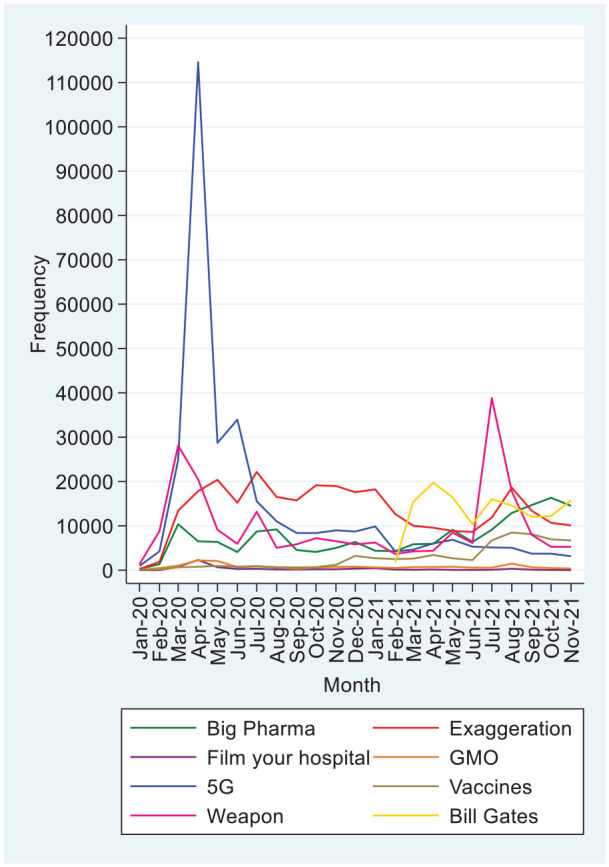
The coronavirus disease 2019 (COVID-19) pandemic was an unexpected event and resulted in catastrophic consequences with long-lasting behavioral effects. People began to seek explanations for different aspects of COVID-19 and resorted to conspiracy narratives. The objective of this article is to analyze the changes on the discussion of different COVID-19 conspiracy theories throughout the pandemic on Twitter. We have collected a data set of 1.269 million tweets associated with the discussion on conspiracy theories between January 2020 and November 2021. The data set includes tweets related to eight conspiracy theories: the 5G, Big Pharma, Bill Gates, biological weapon, exaggeration, FilmYourHospital, genetically modified organism (GMO), and the vaccines conspiracy. The analysis highlights several behaviors in the discussion of conspiracy theories and allows categorizing them into four groups. The first group are conspiracy theories that peaked at the beginning of the pandemic and sharply declined afterwards, including the 5G and FilmYourHospital conspiracies. The second group associated with the Big Pharma and vaccination-related conspiracy whose role increased as the pandemic progressed. The third are conspiracies that remained persistent throughout the pandemic such as exaggeration and Bill Gates conspiracies. The fourth are those that had multiple peaks at different times of the pandemic including the GMO and biological weapon conspiracies. In addition, the number of COVID-19 new cases was found to be a significant predictor for the next week tweet frequency for most of the conspiracies.
Keywords: COVID-19; Twitter; conspiracy theory; infodemic.
© The Author(s) 2022.
Conflict of interest statement
The author(s) declared no potential conflicts of interest with respect to the research, authorship, and/or publication of this article.
Figures
References
LinkOut - more resources
Full Text Sources