


Phosphate and IL-10 concentration as predictors of long-covid in hemodialysis patients: A Brazilian study
- PMID: 36248863
- PMCID: PMC9562993
- DOI: 10.3389/fimmu.2022.1006076
Phosphate and IL-10 concentration as predictors of long-covid in hemodialysis patients: A Brazilian study
Abstract
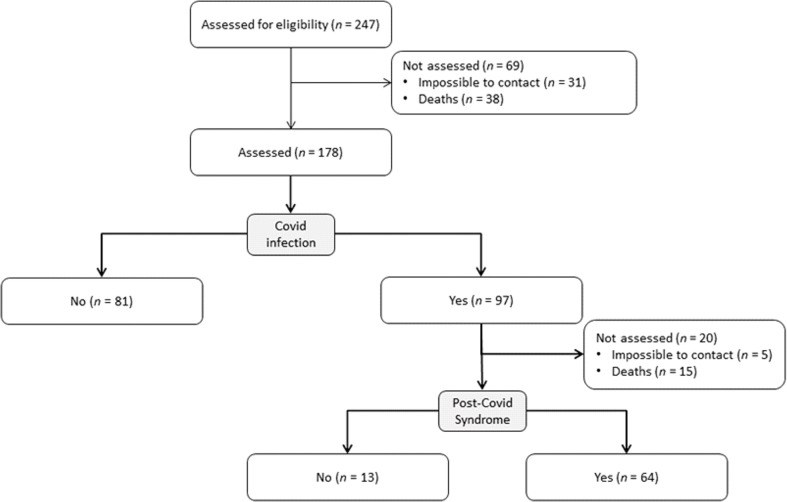
Background: The global burden of persistent COVID-19 in hemodialysis (HD) patients is a worrisome scenario worth of investigation for the critical care of chronic kidney disease (CKD). We performed an exploratory post-hoc study from the trial U1111-1237-8231 with two specific aims: i) to investigate the prevalence of COVID-19 infection and long COVID symptoms from our Cohort of 178 Brazilians HD patients. ii) to identify whether baseline characteristics should predict long COVID in this sample.
Methods: 247 community-dwelling older (>60 years) patients (Men and women) undergoing HD (glomerular filtration rate < 15 mL/min/1.73m2) with arteriovenous fistula volunteered for this study. All patients presented hypertension and diabetes. Patients were divided in two groups: without long-COVID and with long-COVID. Body composition, handgrip strength, functional performance, iron metabolism, phosphate, and inflammatory profile were assessed. Patients were screened for 11-months after COVID-19 infection. Results were considered significant at P < 0.05.
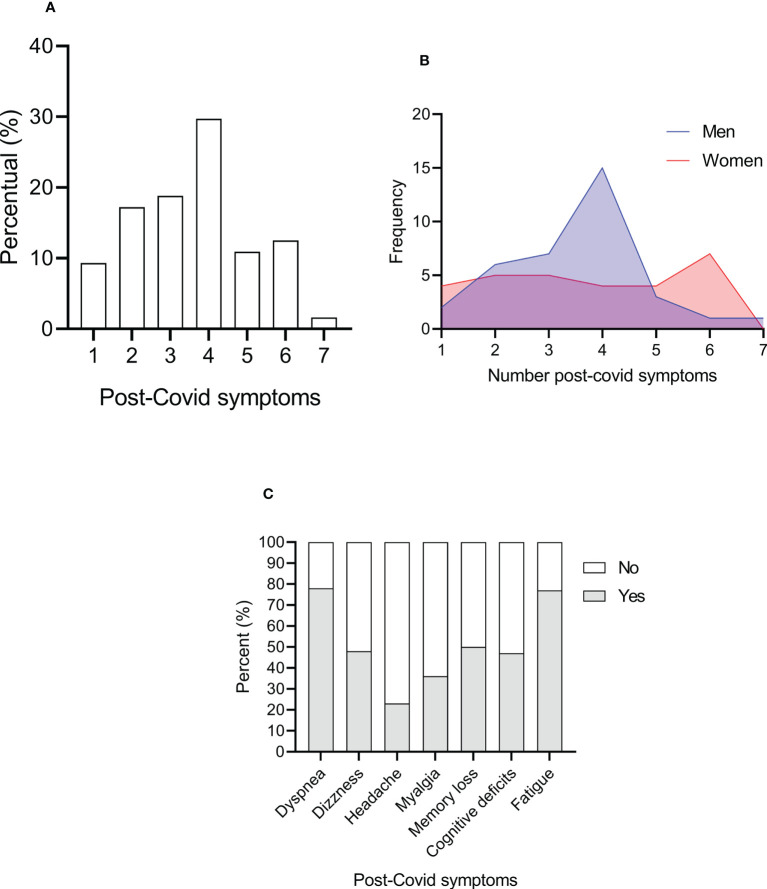
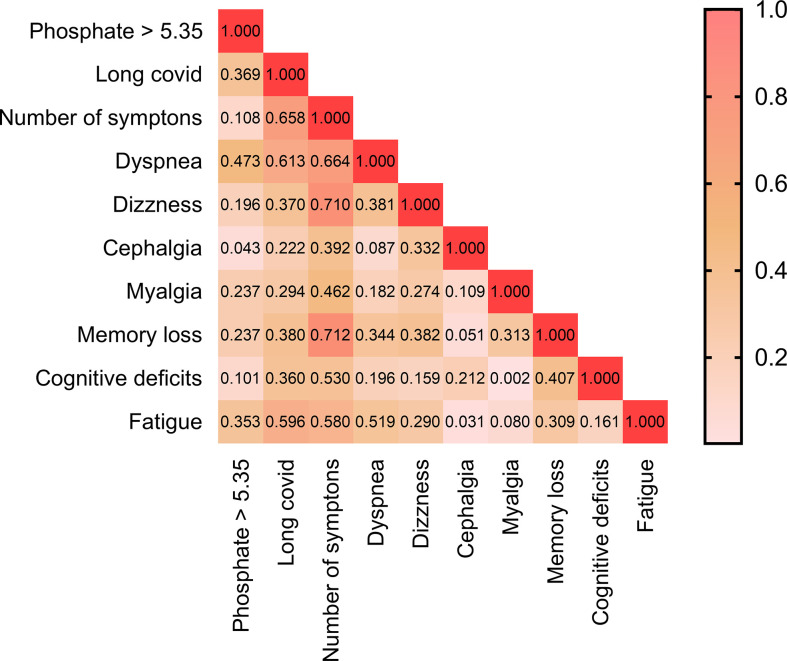
Results: We found that more than 85% of the COVID-19 infected patients presented a severe condition during the infection. In our sample, the mortality rate over 11-month follow was relatively low (8.4%) when compared to worldwide (approximately 36%). Long COVID was highly prevalent in COVID-19 survivors representing more than 80% of all cases. Phosphate and IL-10 were higher in the long COVID group, but only phosphate higher than 5.35 mg/dL appears to present an increased prevalence of long COVID, dyspnea, and fatigue.
Conclusion: There was a high prevalence of COVID-19 infection and long COVID in HD patients from the Brazilian trial 'U1111-1237-8231'. HD clinics should be aware with phosphate range in HD patients as a possible target for adverse post-COVID events.
Keywords: hemodialysis; inflammation; nephrology; phosphate; post-COVID.
Copyright © 2022 Corrêa, Deus, Araújo, Reis, Amorim, Gadelha, Santos, Honorato, Motta-Santos, Tzanno-Martins, Neves and Rosa.
Conflict of interest statement
The authors declare that the research was conducted in the absence of any commercial or financial relationships that could be construed as a potential conflict of interest.
Figures
References
-
- Clark A, Jit M, Warren-Gash C, Guthrie B, Wang HHX, Mercer SW, et al. . Global, regional, and national estimates of the population at increased risk of severe COVID-19 due to underlying health conditions in 2020: A modelling study. Lancet Glob Health (2020) 8:e1003–17. doi: 10.1016/S2214-109X(20)30264-3 - DOI - PMC - PubMed
-
- Flythe JE, Assimon MM, Tugman MJ, Chang EH, Gupta S, Shah J, et al. . Characteristics and outcomes of individuals with pre-existing kidney disease and COVID-19 admitted to intensive care units in the United States. Am J Kidney Dis (2021) 77:190–203.e191. doi: 10.1053/j.ajkd.2020.09.003 - DOI - PMC - PubMed
Publication types
MeSH terms
Substances
LinkOut - more resources
Full Text Sources
Medical
