. 2022 Dec;37(12):2548-2565.
doi: 10.1002/jbmr.4723. Epub 2022 Nov 1.

Degradation of Bone Quality in a Transgenic Mouse Model of Alzheimer's Disease

Affiliations

Degradation of Bone Quality in a Transgenic Mouse Model of Alzheimer's Disease

Joan E LLabre et al. J Bone Miner Res. 2022 Dec.

Abstract

Alzheimer's disease (AD) patients present with symptoms such as impairment of insulin signaling, chronic inflammation, and oxidative stress. Furthermore, there are comorbidities associated with AD progression. For example, osteoporosis is common with AD wherein patients exhibit reduced mineralization and a risk for fragility fractures. However, there is a lack of understanding on the effects of AD on bone beyond loss of bone density. To this end, we investigated the effects of AD on bone quality using the 5XFAD transgenic mouse model in which 12-month-old 5XFAD mice showed accumulation of amyloid-beta (Aβ42) compared with wild-type (WT) littermates (n = 10/group; 50% female, 50% male). Here, we observed changes in cortical bone but not in cancellous bone quality. Both bone mass and bone quality, measured in femoral samples using imaging (micro-CT, confocal Raman spectroscopy, X-ray diffraction [XRD]), mechanical (fracture tests), and chemical analyses (biochemical assays), were altered in the 5XFAD mice compared with WT. Micro-CT results showed 5XFAD mice had lower volumetric bone mineral density (BMD) and increased endocortical bone loss. XRD results showed decreased mineralization with smaller mineral crystals. Bone matrix compositional properties, from Raman, showed decreased crystallinity along with higher accumulation of glycoxidation products and glycation products, measured biochemically. 5XFAD mice also demonstrated loss of initiation and maximum toughness. We observed that carboxymethyl-lysine (CML) and mineralization correlated with initiation toughness, whereas crystal size and pentosidine (PEN) correlated with maximum toughness, suggesting bone matrix changes predominated by advanced glycation end products (AGEs) and altered/poor mineral quality explained loss of fracture toughness. Our findings highlight two pathways to skeletal fragility in AD through alteration of bone quality: (i) accumulation of AGEs; and (ii) loss of crystallinity, decreased crystal size, and loss of mineralization. We observed that the accumulation of amyloidosis in brain correlated with an increase in several AGEs, consistent with a mechanistic link between elevated Aβ42 levels in the brain and AGE accumulation in bone. © 2022 American Society for Bone and Mineral Research (ASBMR).

Keywords: 5XFAD TRANSGENIC MOUSE MODEL; ALZHEIMER′S DISEASE; BIOMECHANICS; BONE QCT/MICRO-CT; GLYCOXIDATION.


Conflict of interest statement

Disclosures: All authors declare that they have no conflicts of interest.

Figures

Figure 1.
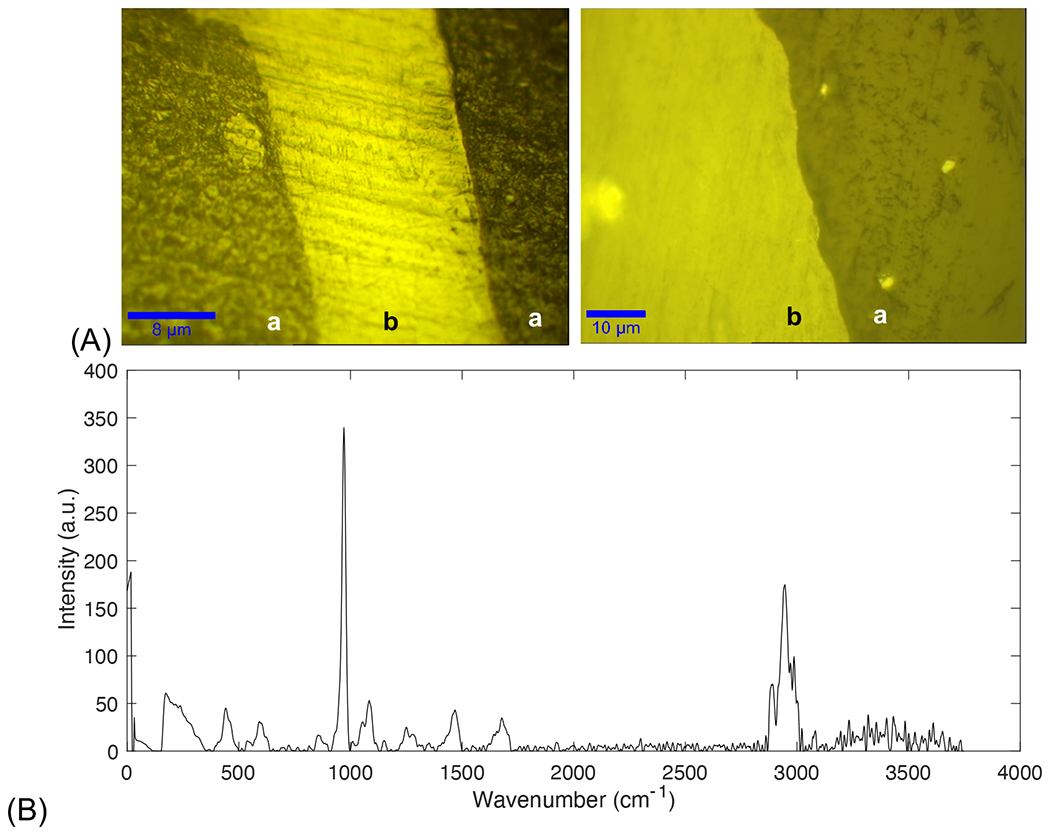
Figure 1.. Analysis of bone tissue by confocal Raman spectroscopy.
(A) Objective lens of 20x (left) was used to differentiate bone tissue (region marked ‘b’) from epoxy (region marked ‘a’) resin which was then confirmed at 100x (right). (B) Complete Raman spectrum collected from bone tissue.
Figure 2.
Figure 2.. Analysis of bone powder by X-ray Diffraction.
(A) Raw peak intensities. (B) Baseline correction for XRD peak analysis. (C) Peak fitting of 002 peak.
Figure 3.
Figure 3.. 5XFAD mice displayed a progressive weight loss.
5XFAD mice showed a 1.81% decrease in body mass at baseline (A) that by 47-weeks (B) had augmented to a 15.28% decrease. Results are shown as boxplots (with median and interquartile range) showing all data points. Statistically significant differences were determined by Kruskal–Wallis (α < 0.05) test by ranks to discern gender, and genotype effects, with Dunn’s test (95% CI) as post hoc tests in pairwise multiple comparisons procedure based on rank sums; or by Two-Factor ANOVA with Replication (α < 0.05) to discern gender, genotype, and interactions effect, with Tukey’s HSD test (95% CI) as post hoc tests in multiple comparisons of means. Significant codes: p < 0.05 ‘*’, p < 0.01 ‘**’, p < 0.001 ‘***’.
Figure 4.
Figure 4.. 5XFAD mice exhibited decline in nesting abilities.
(A) Example of near perfect nest building compared to an unidentifiable nest. AD progression significantly reduced the ability of 5XFAD mice to build nests exhibiting a decline from baseline (B) to the end of the study (C). Despite gender not being a significant factor in these changes, we did observe greater effect sizes within the female groups. Results are shown as boxplots (with median and interquartile range) showing all data points. Statistically significant differences were determined by Kruskal–Wallis (α < 0.05) test by ranks to discern gender, and genotype effects, with Dunn’s test (95% CI) as post hoc tests in pairwise multiple comparisons procedure based on rank sums. Significant codes: p < 0.05 ‘*’, p < 0.01 ‘**’, p < 0.001 ‘***’.
Figure 5.
Figure 5.. Elevated levels of Aβ42 in 5XFAD mice.
5XFAD mice showed a significant increase in Aβ42 levels compared to WT mice, regardless of gender. Results are shown as boxplots (with median and interquartile range) showing all data points. Statistically significant differences were determined by Kruskal–Wallis (α < 0.05) test by ranks to discern gender, and genotype effects, with Dunn’s test (95% CI) as post hoc tests in pairwise multiple comparisons procedure based on rank sums. Significant codes: p < 0.05 ‘*’, p < 0.01 ‘**’, p < 0.001 ‘***’.
Figure 6.
Figure 6.. Diminished mineral crystal size and lattice d-spacing in 5XFAD mice.
The FWHM of peak 002 was used to calculate the mean crystal size (A) and d-spacing (B) of the mineral crystal lattice. Results are shown as boxplots (with median and interquartile range) showing all data points. Statistically significant differences were determined by Two-Factor ANOVA with Replication (α < 0.05) to discern gender, genotype, and interactions effect, with Tukey’s HSD test (95% CI) as post hoc tests in multiple comparisons of means; or by Kruskal–Wallis (α < 0.05) test by ranks to discern gender, and genotype effects, with Dunn’s test (95% CI) as post hoc tests in pairwise multiple comparisons procedure based on rank sums. Significant codes: p < 0.05 ‘*’, p < 0.01 ‘**’, p < 0.001 ‘***’.
Figure 7.
Figure 7.. Loss of bone quality and diminished mineralization in 5XFAD mice.
(A) Crystallinity (1/ν1PO43−). (B) B-type carbonate substitutions (ν1CO32−/ν1PO43−). (C) Mineral-to-matrix ratio (ν1PO43−/Amide I). (D) Mineral-to-matrix ratio (ν2PO43−/Amide III). Results are shown as boxplots (with median and interquartile range) showing all data points. Statistically significant differences were determined by Two-Factor ANOVA with Replication (α < 0.05) to discern gender, genotype, and interactions effect, with Tukey’s HSD test (95% CI) as post hoc tests in multiple comparisons of means; or by Kruskal–Wallis (α < 0.05) test by ranks to discern gender, and genotype effects, with Dunn’s test (95% CI) as post hoc tests in pairwise multiple comparisons procedure based on rank sums. Significant codes: p < 0.05 ‘*’, p < 0.01 ‘**’, p < 0.001 ‘***’.
Figure 8.
Figure 8.. 5XFAD mice showed accumulation of glycoxidation products.
(A) Carboxymethyl-lysine (I1150/CH2-wag). (B) Pentosidine (I1495/ CH2-wag). Results are shown as boxplots (with median and interquartile range) showing all data points. Statistically significant differences were determined by Two-Factor ANOVA with Replication (α < 0.05) to discern gender, genotype, and interactions effect, with Tukey’s HSD test (95% CI) as post hoc tests in multiple comparisons of means. Significant codes: p < 0.05 ‘*’, p < 0.01 ‘**’, p < 0.001 ‘***’.
Figure 9.
Figure 9.. 5XFAD mice showed greater accumulation of fAGEs.
Results are shown as boxplots (with median and interquartile range) showing all data points. Statistically significant differences were determined by Kruskal–Wallis (α < 0.05) test by ranks to discern gender, and genotype effects, with Dunn’s test (95% CI) as post hoc tests in pairwise multiple comparisons procedure based on rank sums. Significant codes: p < 0.05 ‘*’, p < 0.01 ‘**’, p < 0.001 ‘***’.
Figure 10.
Figure 10.. Loss of bone toughness in 5XFAD mice.
(A) Bone toughness was measured by subjecting femora to three-point bending. (B) Initiation toughness. (C) Maximum toughness. Results are shown as boxplots (with median and interquartile range) showing all data points. Statistically significant differences were determined by Two-Factor ANOVA with Replication (α < 0.05) to discern gender, genotype, and interactions effect, with Tukey’s HSD test (95% CI) as post hoc tests in multiple comparisons of means; or by Kruskal–Wallis (α < 0.05) test by ranks to discern gender, and genotype effects, with Dunn’s test (95% CI) as post hoc tests in pairwise multiple comparisons procedure based on rank sums. Significant codes: p < 0.05 ‘*’, p < 0.01 ‘**’, p < 0.001 ‘***’.

References

    1. C. P, “World Alzheimer report 2018: the state of the art of dementia research,” 2018.
    1. Yu H and Wu J, “Amyloid-β: A double agent in Alzheimer’s disease?,” Biomed. Pharmacother, vol. 139, p. 111575, Jul. 2021. - PubMed
    1. Wang D et al., “The Structure Biology of Tau and Clue for Aggregation Inhibitor Design.,” Protein J., vol. 40, no. 5, pp. 656–668, Oct. 2021. - PubMed
    1. Ishii M and ladecola C, “Metabolic and Non-Cognitive Manifestations of Alzheimers Disease: The Hypothalamus as Both Culprit and Target of Pathology,” Cell Metab., vol. 22, no. 5, pp. 761–776, 2015. - PMC - PubMed
    1. De La Monte SM, “Alzheimer’s Disease Is Type 3 Diabetes—Evidence Reviewed,” J. Diabetes Sci. Technol. J Diabetes Sci Technol J Diabetes Sci Technol, vol. 22, no. 6, pp. 1101–1113, 2008. - PMC - PubMed

Publication types

Substances