


Ring-fused 2-pyridones effective against multidrug-resistant Gram-positive pathogens and synergistic with standard-of-care antibiotics
- PMID: 36252016
- PMCID: PMC9618150
- DOI: 10.1073/pnas.2210912119
Ring-fused 2-pyridones effective against multidrug-resistant Gram-positive pathogens and synergistic with standard-of-care antibiotics
Abstract
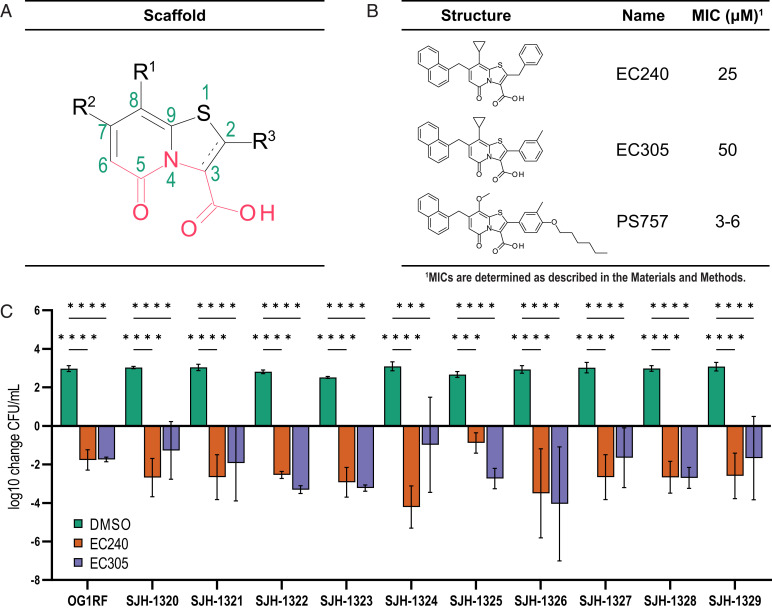
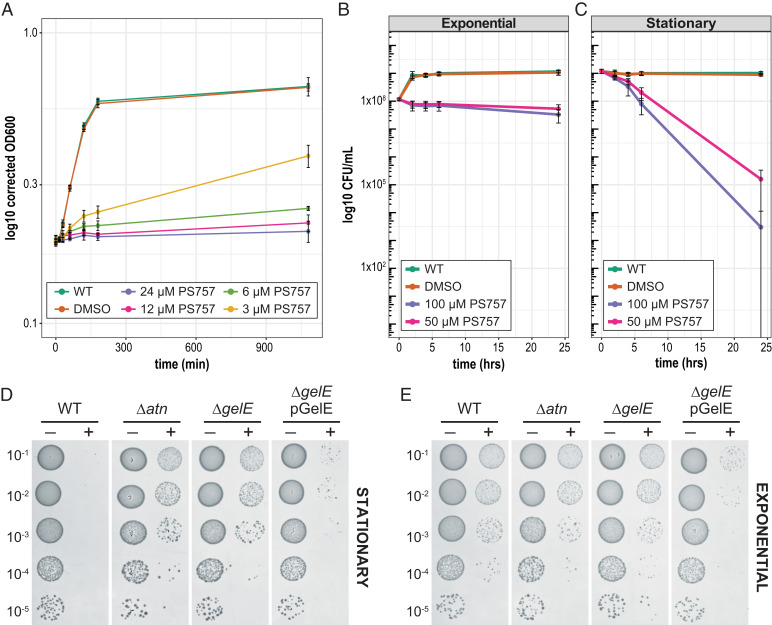
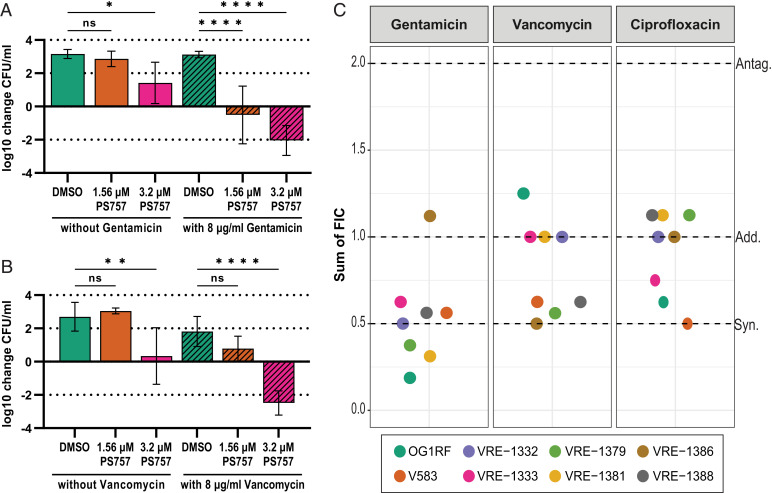
The alarming rise of multidrug-resistant Gram-positive bacteria has precipitated a healthcare crisis, necessitating the development of new antimicrobial therapies. Here we describe a new class of antibiotics based on a ring-fused 2-pyridone backbone, which are active against vancomycin-resistant enterococci (VRE), a serious threat as classified by the Centers for Disease Control and Prevention, and other multidrug-resistant Gram-positive bacteria. Ring-fused 2-pyridone antibiotics have bacteriostatic activity against actively dividing exponential phase enterococcal cells and bactericidal activity against nondividing stationary phase enterococcal cells. The molecular mechanism of drug-induced killing of stationary phase cells mimics aspects of fratricide observed in enterococcal biofilms, where both are mediated by the Atn autolysin and the GelE protease. In addition, combinations of sublethal concentrations of ring-fused 2-pyridones and standard-of-care antibiotics, such as vancomycin, were found to synergize to kill clinical strains of VRE. Furthermore, a broad range of antibiotic resistant Gram-positive pathogens, including those responsible for the increasing incidence of antibiotic resistant healthcare-associated infections, are susceptible to this new class of 2-pyridone antibiotics. Given the broad antibacterial activities of ring-fused 2-pyridone compounds against Gram-positive (GmP) bacteria we term these compounds GmPcides, which hold promise in combating the rising tide of antibiotic resistant Gram-positive pathogens.
Keywords: VRE; antibiotic resistance; antibiotic synergy; multidrug-resistant pathogens.
Conflict of interest statement
J.J., F.A., A.L.F.M., M.G.C., and S.J.H. have ownership interest in QureTech Bio AB, which licenses EC240, EC305, PS757, FN075, EC260, EC312, PS579, PS581, PS583, PS623, PS624, PS625, PS627, PS631, PS749, and PS756, and may benefit if the company is successful in marketing GmPcides. S.J.H, F.A., and J.J. serve on the Board of Directors for QureTech Bio AB. The remaining authors declare no competing interests.
Figures
References
-
- O’Neill J., Tackling Drug-Resistant Infections Globally: Final Report and Recommendations. Review on Antimicrobial Resistance. Wellcome Trust and HM Government. https://amr-review.org/sites/default/files/160525_Final%20paper_with%20c..., Accessed 23 May 2022).
-
- Hutchings M. I., Truman A. W., Wilkinson B., Antibiotics: Past, present and future. Curr. Opin. Microbiol. 51, 72–80 (2019). - PubMed
-
- Tsiodras S., et al. , Linezolid resistance in a clinical isolate of Staphylococcus aureus. Lancet 358, 207–208 (2001). - PubMed
Publication types
MeSH terms
Substances
Grants and funding
- R01 DK128805/DK/NIDDK NIH HHS/United States
- R01DK128805/HHS | NIH | National Institute of Diabetes and Digestive and Kidney Diseases (NIDDK)
- R01 DK051406/DK/NIDDK NIH HHS/United States
- RO1DK51406/HHS | NIH | National Institute of Diabetes and Digestive and Kidney Diseases (NIDDK)
- T32 AI007172/AI/NIAID NIH HHS/United States
- T32AI007172/HHS | NIH | National Institute of Allergy and Infectious Diseases (NIAID)
- R01 AI134847/AI/NIAID NIH HHS/United States
- U19 AI157797/AI/NIAID NIH HHS/United States
- 1U19AI157797-01/HHS | NIH | National Institute of Allergy and Infectious Diseases (NIAID)
- R01AI134847-01A1/HHS | NIH | National Institute of Allergy and Infectious Diseases (NIAID)
LinkOut - more resources
Full Text Sources
Molecular Biology Databases
