


Suppressed renoprotective purines in COVID-19 patients with acute kidney injury
- PMID: 36253495
- PMCID: PMC9574168
- DOI: 10.1038/s41598-022-22349-z
Suppressed renoprotective purines in COVID-19 patients with acute kidney injury
Abstract
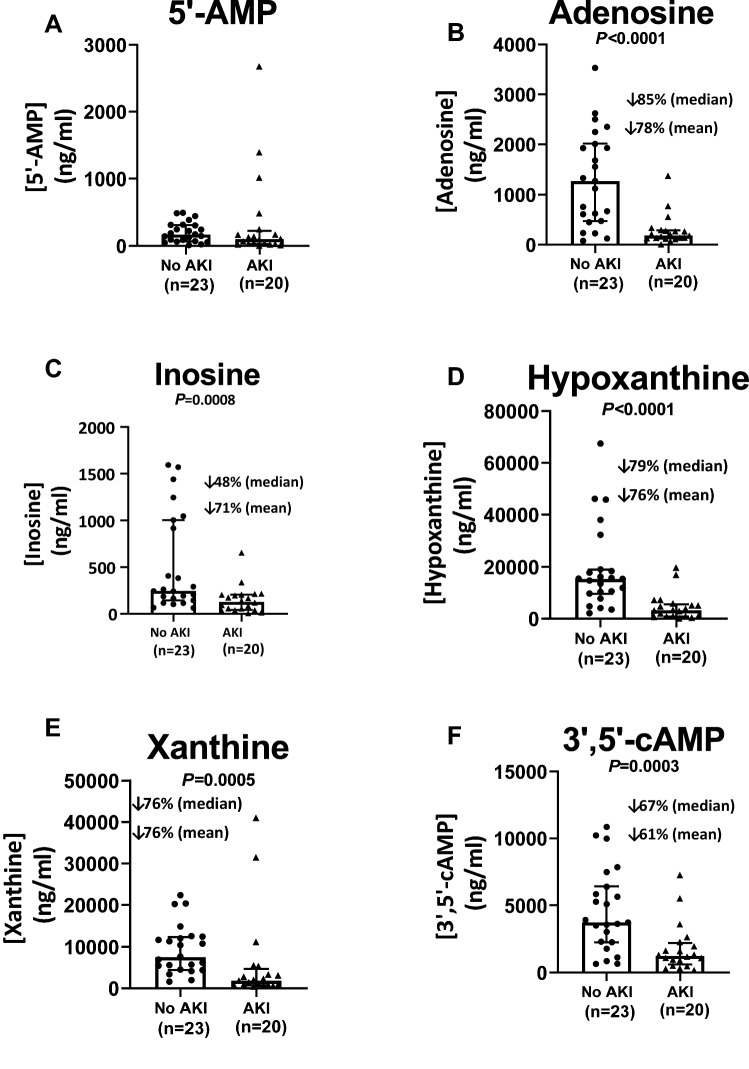
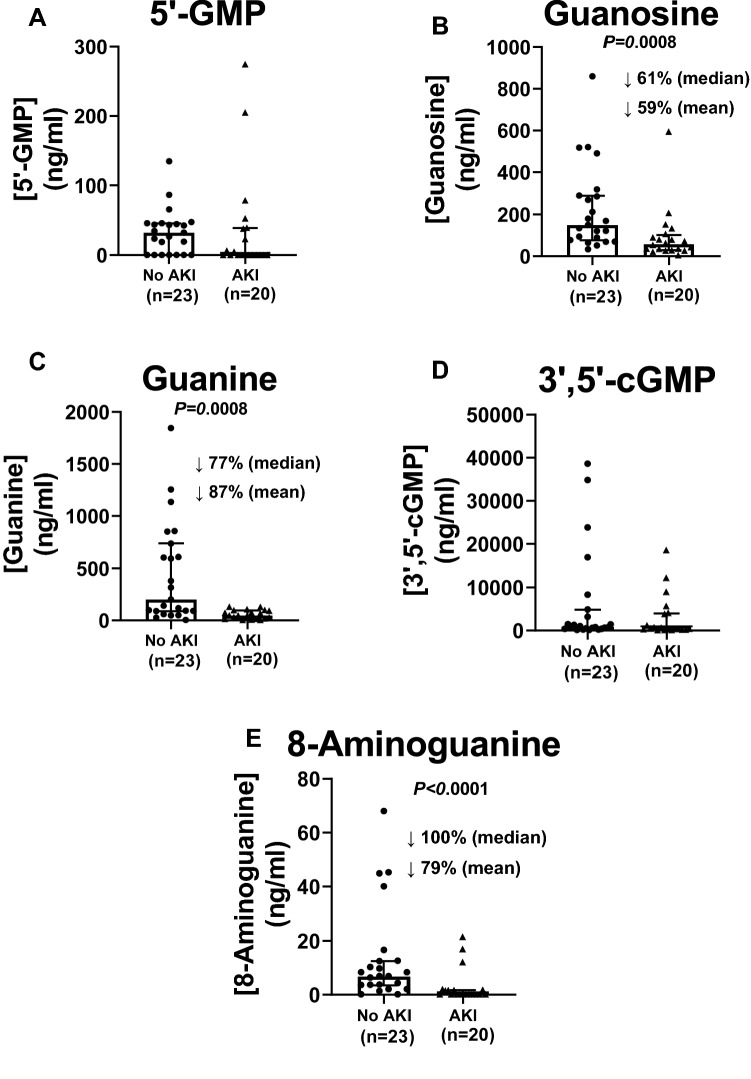
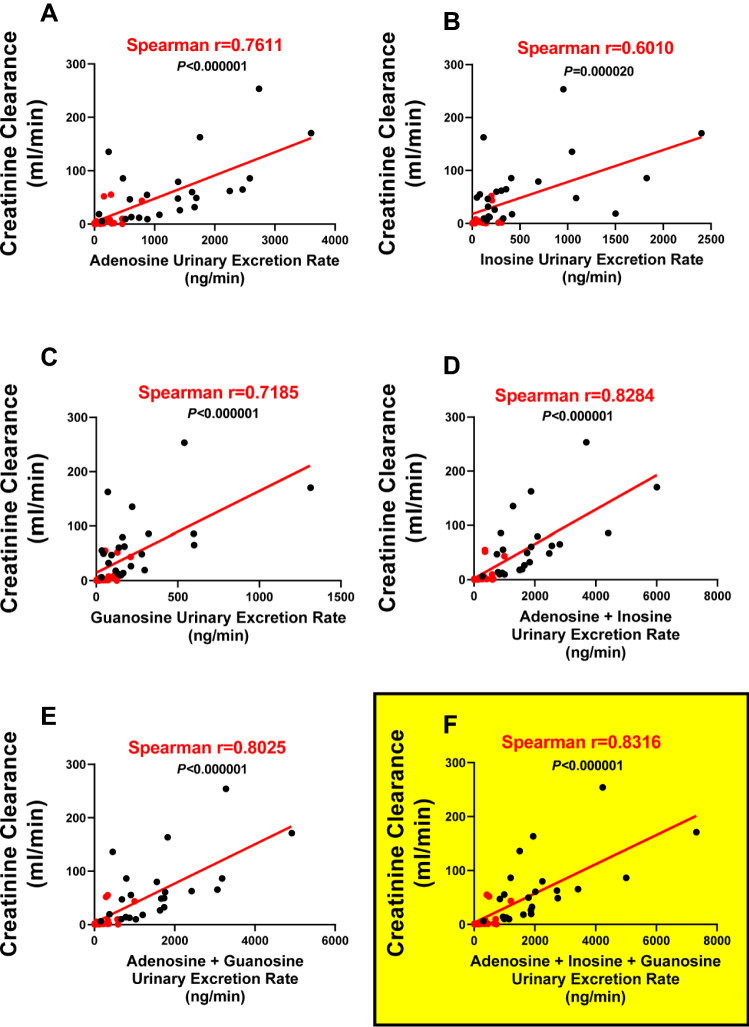
Acute kidney injury (AKI) is common in patients hospitalized for COVID-19, complicating their clinical course and contributing to worse outcomes. Animal studies show that adenosine, inosine and guanosine protect the kidney against some types of AKI. However, until now there was no evidence in patients supporting the possibility that abnormally low kidney levels of adenosine, inosine and guanosine contribute to AKI. Here, we addressed the question as to whether these renoprotective purines are altered in the urine of COVID-19 patients with AKI. Purines were measured by employing ultra-high-performance liquid chromatography-tandem mass spectrometry with stable-isotope-labeled internal standards for each purine of interest. Compared with COVID-19 patients without AKI (n = 23), COVID-19 patients with AKI (n = 20) had significantly lower urine levels of adenosine (P < 0.0001), inosine (P = 0.0008), and guanosine (P = 0.0008) (medians reduced by 85%, 48% and 61%, respectively) and lower levels (P = 0.0003; median reduced by 67%) of the 2nd messenger for A2A and A2B adenosine receptors, i.e., 3',5'-cAMP. Moreover, in COVID-19 patients with AKI, urine levels of 8-aminoguanine (endogenous inhibitor of inosine and guanosine metabolism) were nearly abolished (P < 0.0001). In contrast, the "upstream" precursors of renoprotective purines, namely 5'-AMP and 5'-GMP, were not significantly altered in COVID-19 patients with AKI, suggesting defective conversion of these precursors by CD73 (converts 5'-AMP to adenosine and 5'-GMP to guanosine). These findings imply that an imbalance in renoprotective purines may contribute to AKI in COVID-19 patients and that pharmacotherapy targeted to restore levels of renoprotective purines may attenuate the risk of AKI in susceptible patients with COVID-19.
© 2022. The Author(s).
Conflict of interest statement
The authors declare no competing interests.
Figures
References
Publication types
MeSH terms
Substances
Grants and funding
LinkOut - more resources
Full Text Sources
Medical
Research Materials
