


Fibromyalgia and Chronic Fatigue Syndromes: A systematic review and meta-analysis of cardiorespiratory fitness and neuromuscular function compared with healthy individuals
- PMID: 36264901
- PMCID: PMC9584387
- DOI: 10.1371/journal.pone.0276009
Fibromyalgia and Chronic Fatigue Syndromes: A systematic review and meta-analysis of cardiorespiratory fitness and neuromuscular function compared with healthy individuals
Abstract
Objective: To determine cardiorespiratory fitness and neuromuscular function of people with CFS and FMS compared to healthy individuals.
Design: Systematic review and meta-analysis.
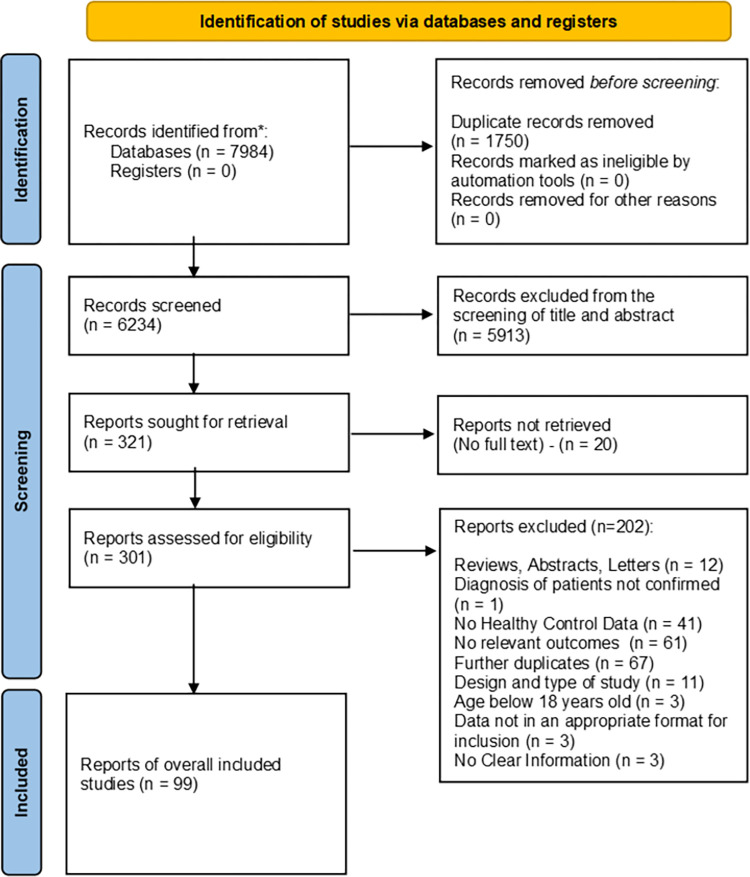
Data sources: PubMed, Medline, CINAHL, AMED, Cochrane Central Register of Controlled Trials (CENTRAL), and PEDro from inception to June 2022.
Eligible criteria for selecting studies: Studies were included if presenting baseline data on cardiorespiratory fitness and/or neuromuscular function from observational or interventional studies of patients diagnosed with FMS or CFS. Participants were aged 18 years or older, with results also provided for healthy controls. Risk of bias assessment was conducted using the Quality Assessment Tool for Quantitative Studies (EPHPP).
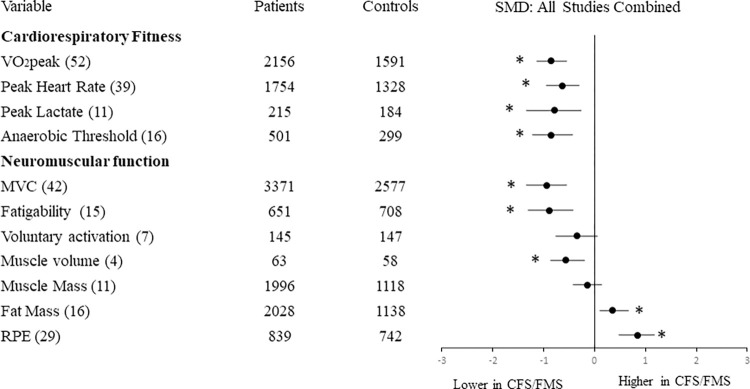
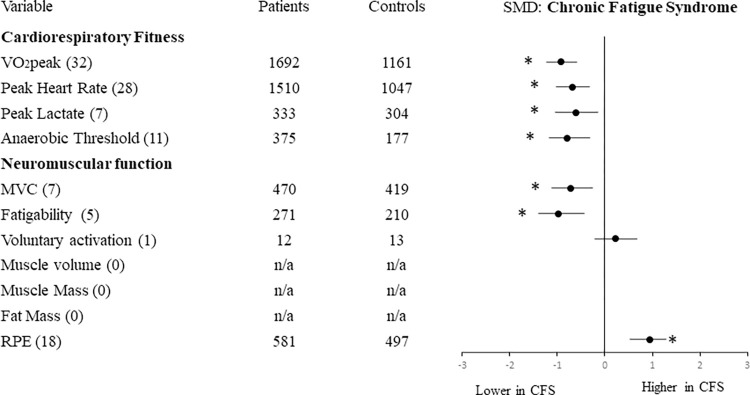
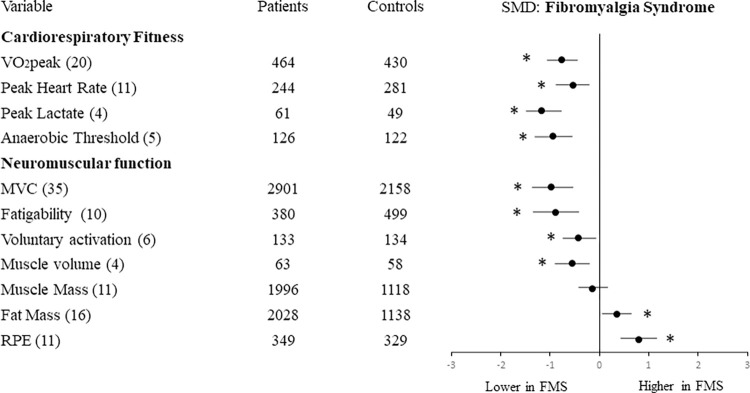
Results: 99 studies including 9853 participants (5808 patients; 4405 healthy controls) met our eligibility criteria. Random effects meta-analysis showed lower cardiorespiratory fitness (VO2max, anaerobic threshold, peak lactate) and neuromuscular function (MVC, fatigability, voluntary activation, muscle volume, muscle mass, rate of perceived exertion) in CFS and FMS compared to controls: all with moderate to high effect sizes.
Discussion: Our results demonstrate lower cardiorespiratory fitness and muscle function in those living with FMS or CFS when compared to controls. There were indications of dysregulated neuro-muscular interactions including heightened perceptions of effort, reduced ability to activate the available musculature during exercise and reduced tolerance of exercise.
Trail registration: PROSPERO registration number: (CRD42020184108).
Conflict of interest statement
The authors have declared that no competing interests exist.
Figures
References
-
- Nijs J, Aelbrecht S, Meeus M, Van Oosterwijck J, Zinzen E, Clarys P. Tired of being inactive: a systematic literature review of physical activity, physiological exercise capacity and muscle strength in patients with chronic fatigue syndrome. Disabil Rehabil. 2011;33(17–18):1493–500. Epub 2010/12/21. doi: 10.3109/09638288.2010.541543 . - DOI - PubMed
Publication types
MeSH terms
Substances
LinkOut - more resources
Full Text Sources
Medical
Miscellaneous
