


Effects of different weaning times on the stress response and the intestinal microbiota composition of female forest musk deer (Moschus berezovskii) and their fawns
- PMID: 36264997
- PMCID: PMC9584425
- DOI: 10.1371/journal.pone.0276542
Effects of different weaning times on the stress response and the intestinal microbiota composition of female forest musk deer (Moschus berezovskii) and their fawns
Abstract
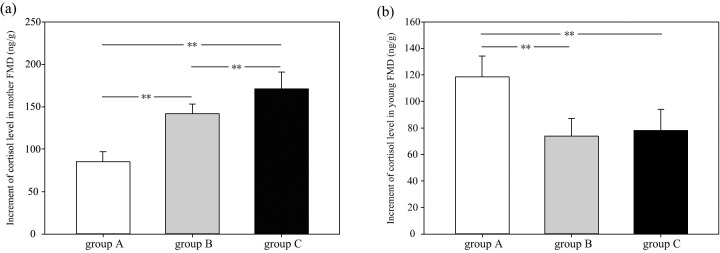
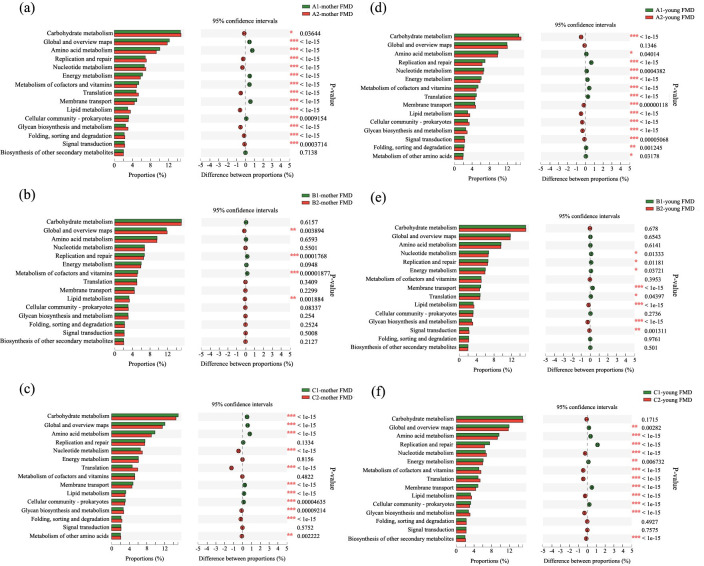
The effects of mother-infant separation (i.e., weaning) on the physiology, psychology and nutrition of mammalian infants have attracted much attention. Forest musk deer (FMD) is a first-class protected species in China and listed endangered in the IUCN Red List. The captive breeding population is not only an important source for restocking of wild resources, but also a necessary way to supply the market with legal musk. So far, there is no scientific basis for the appropriate separation time of FMD females and their infants. Therefore, we used metagenome sequencing and enzyme-linked immunosorbent assays to study changes in the fecal cortisol concentration, as well as the intestinal microbiome composition and function of females and fawns at three different separation times, i.e., after 80 days, 90 days and 100 days. The results showed that the increment of the cortisol concentration in female FMD increased with increasing lactation time. The increment of cortisol concentration in infant FMD was highest in the 80 days weaning group, but there was no significant difference between the 90 days and the 100 days separation time. Based on the annotation results of COG, KEGG and CAZy databases, the abundance of different functions annotated by the intestinal microbiome of mothers and fawns of the 90 days weaning group changed slightly after separation. Based on the above results, the separation of mother and infant FMD is recommended after 90 days, i.e., the separation time that triggered the lowest rate of weaning stress and that supported a relatively stable gastro-intestinal physiology.
Conflict of interest statement
The authors have declared that no competing interests exist.
Figures


References
-
- Wemmer C. Deer: Status survey and conservation action plan. 1998, IUCN/SSC Deer Specialist Group, IUCN, Gland.
-
- Wang Y, Harris RB. Moschus berezovskii. The IUCN Red List of Threatened Species. Version 2014.1. www.iucnredlist.org. 2008.
-
- Sheng HL, Liu ZX. The musk deer in China. The Shanghai Scientific & Technical Publishers, Shanghai. 2007.
-
- Wu J, Wang W. The musk deer of China. China Forestry Publisher, Beijing; 2007.
-
- Meng X, Yang H, Yang Q, Feng Z, Peng X, Perkins GC. Preliminary findings of behavioral patterns in captive alpine musk deer (Moschus sifanicus) and prospects for future conservation. Turk J Vet Anim Sci. 2010;34: 111–117.
Publication types
MeSH terms
Substances
Associated data
LinkOut - more resources
Full Text Sources
