


The effect of selective serotonin and norepinephrine reuptake inhibitors on clinical outcome of COVID-19 patients: A systematic review and meta-analysis
- PMID: 36268458
- PMCID: PMC9577115
- DOI: 10.1002/hsr2.892
The effect of selective serotonin and norepinephrine reuptake inhibitors on clinical outcome of COVID-19 patients: A systematic review and meta-analysis
Abstract
Background and aim: Due to the high social and economic burden and also mortality and morbidity caused by coronavirus disease 2019 (COVID-19) in the past few years, researchers have aimed at finding solutions to suppressing the severity of infection. Recently, selective serotonin and serotonin-norepinephrine reuptake inhibitors (SSRI/SNRI) have been investigated as an adjuvant treatment for COVID-19. The aim of the current study was to investigate the impact of SSRI/SNRIs on outcomes of COVID-19 patients.
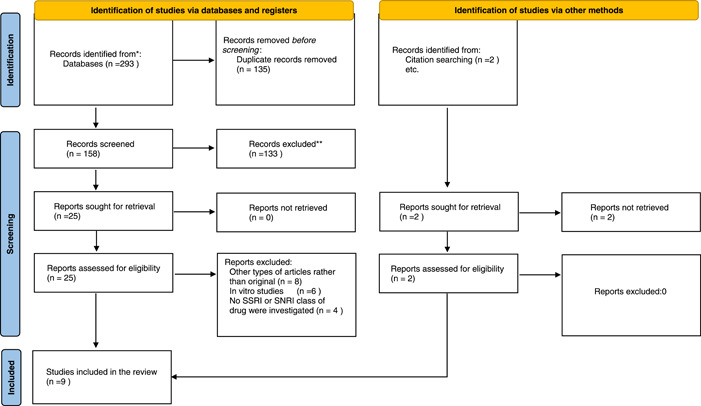
Methods: In this systematic review and meta-analysis, a comprehensive search strategy consisting of relevant words was performed by two researchers in PubMed, Scopus and EMBASE libraries. Studies reporting the effect of SSRI and/or SNRI use in COVID-19 patients' outcome were included. Hospitalization, mortality, hospitalization event, and length of hospital stay were considered as main outcomes of this study. Analysis was carried out using Comprehensive Meta-Analysis (CMA-version 2) and final data were reported as odds ratio (OR) and 95% confidence interval (CI).
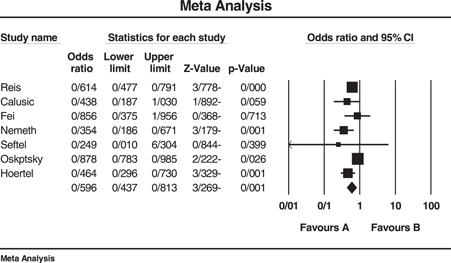
Results: Our search led to the final selection of 9 articles including 15,287 patients. The effect of fluvoxamine, fluoxetine, and the overall effect of SSRI/SNRI use on mortality of COVID-19 patients were investigated in 3, 2, and 7 articles, respectively. The results of our analyses showed that these medications could significantly decrease mortality of COVID-19 patients (OR and 95% [CI]: 0.595 [0.467-0.758], 0.620 [0.469-0.821], and 0.596 [0.437-0.813]). The effect of SSRI/SNRIs on hospitalization events of COVID-19 patients was not significant (OR: 0.240% and 95% CI: 0.041-1.4). Also, length of hospital stay was longer in patients who administrated SSRIs.
Conclusion: According to this study's results, SSRI/SNRIs may be effective in reducing mortality of COVID-19 patients, suggesting the superiority of fluvoxamine to fluoxetine. The safety profile and affordable cost of SSRI/SNRIs for a short-term use may be other reasons to propose them as beneficial medications in preventing mortality in COVID-19.
Keywords: COVID‐19; SNRI; SSRI; selective serotonin reuptake inhibitors; serotonin‐norepinephrine reuptake Inhibitor.
© 2022 The Authors. Health Science Reports published by Wiley Periodicals LLC.
Conflict of interest statement
The authors declare no conflicts of interest.
Figures

References
LinkOut - more resources
Full Text Sources
Miscellaneous
