


The clinical characteristics, novel predictive tool, and risk classification system for primary Ewing sarcoma patients that underwent chemotherapy: A large population-based retrospective cohort study
- PMID: 36271609
- PMCID: PMC10028057
- DOI: 10.1002/cam4.5379
The clinical characteristics, novel predictive tool, and risk classification system for primary Ewing sarcoma patients that underwent chemotherapy: A large population-based retrospective cohort study
Abstract
Background: This study aims to determine the independent prognostic predictors of cancer-specific survival (CSS) in patients with primary Ewing sarcoma (ES) that underwent chemotherapy and create a novel prognostic nomogram and risk stratification system.
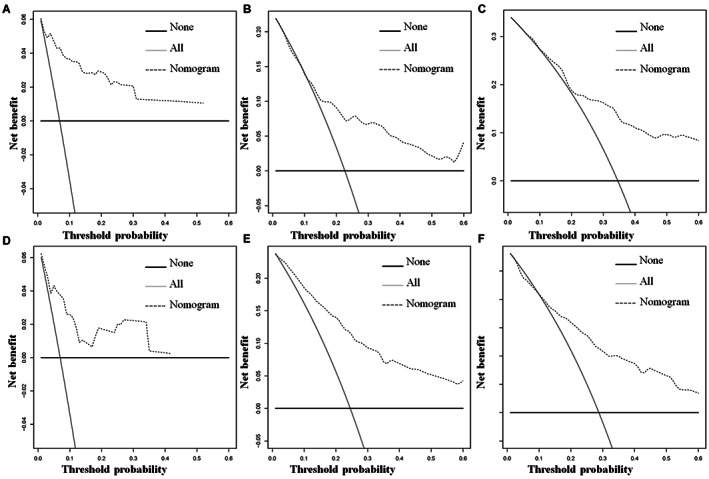
Methods: Demographic and clinicopathologic characteristics related to patients with primary ES that underwent chemotherapy between 2000 and 2018 were extracted from the Surveillance, Epidemiology, and End Results (SEER) database. CSS was the primary endpoint of this study. First, independent prognostic predictors of CSS identified from univariate and multivariate Cox regression analyses were used to construct a prognostic nomogram for predicting 1-, 3-, and 5-year CSS of patients with primary ES that underwent chemotherapy. Then, calibration curves and receiver operating characteristic (ROC) curves were used to evaluate the nomogram's prediction accuracy, while decision curve analysis (DCA) was used to evaluate the nomogram's clinical utility. Finally, a mortality risk stratification system was constructed for this subpopulation.
Results: A total of 393 patients were included in this study. Age, tumor size, bone metastasis, and surgery were independent prognostic predictors of CSS. The calibration curves, ROC, and DCA showed that the nomogram had excellent discrimination and clinical value, with the 1-, 3-, and 5-year AUCs higher than 0.700. Moreover, the mortality risk stratification system could effectively divide all patients into three risk subgroups and achieve targeted patient management.
Conclusions: Based on the SEER database, a novel prognostic nomogram for predicting 1-, 3-, and 5- year CSS in patients with primary ES that underwent chemotherapy has been constructed and validated. The nomogram showed relatively good performance, which could be used in clinical practice to assist clinicians in individualized treatment strategies.
Keywords: Ewing sarcoma; SEER; cancer-specific survival; chemotherapy; nomogram; risk stratification system.
© 2022 The Authors. Cancer Medicine published by John Wiley & Sons Ltd.
Conflict of interest statement
The authors declare no competing interests.
Figures



References
-
- Ewing J. Classics in oncology. Diffuse endothelioma of bone. James ewing. Proceedings of the New York pathological society, 1921. CA Cancer J Clin. 1972;22:95‐98. - PubMed
-
- Balamuth NJ, Womer RB. Ewing's sarcoma. Lancet Oncol. 2010;11:184‐192. - PubMed
-
- Esiashvili N, Goodman M, Marcus RB Jr. Changes in incidence and survival of Ewing sarcoma patients over the past 3 decades: surveillance epidemiology and end results data. J Pediatr Hematol Oncol. 2008;30:425‐430. - PubMed
Publication types
MeSH terms
LinkOut - more resources
Full Text Sources
