


Trends in U.S. Depression Prevalence From 2015 to 2020: The Widening Treatment Gap
- PMID: 36272761
- PMCID: PMC9483000
- DOI: 10.1016/j.amepre.2022.05.014
Trends in U.S. Depression Prevalence From 2015 to 2020: The Widening Treatment Gap
Abstract
Introduction: Major depression is a common and potentially lethal condition. Early data suggest that the population-level burden of depression has been exacerbated by the COVID-19 pandemic. Prepandemic estimates of depression prevalence are required to quantify and comprehensively address the pandemic's impact on mental health in the U.S.
Methods: Data were drawn from the 2015-2020 National Survey on Drug Use and Health, a nationally representative study of U.S. individuals aged ≥12 years. The prevalence of past-year depression and help seeking for depression were estimated from 2015 to 2019, and time trends were tested with Poisson regression with robust SEs. Point estimates were calculated for 2020 and not included in statistical trend analyses because of differences in data collection procedures.
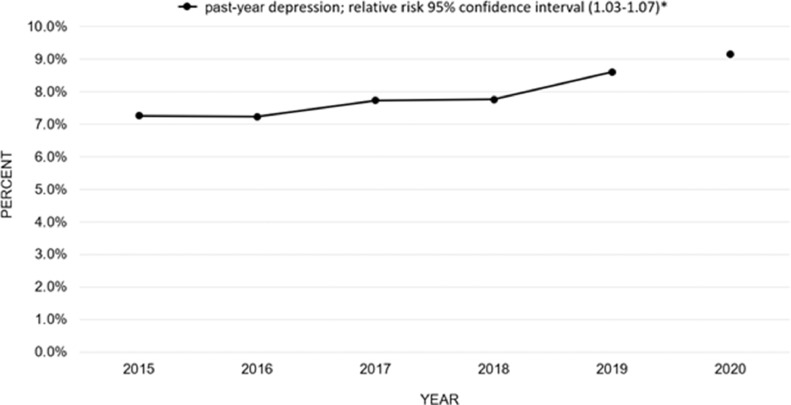
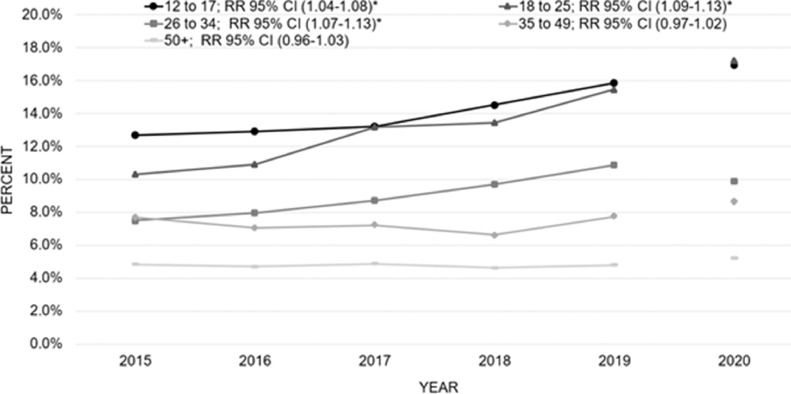
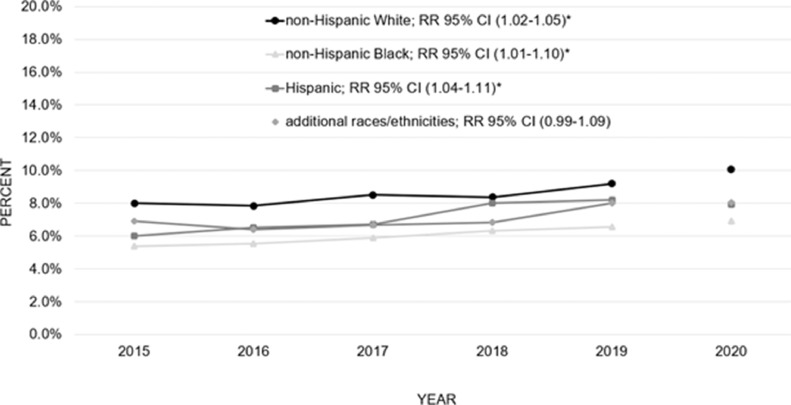
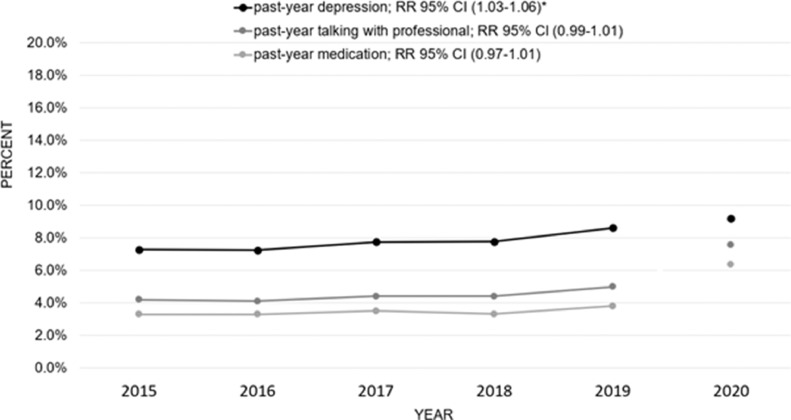
Results: In 2020, 9.2% (SE=0.31) of Americans aged ≥12 years experienced a past-year major depressive episode. Depression was more common among young adults aged 18-25 years (17.2%, SE=0.78), followed closely by adolescents aged 12-17 years (16.9%, SE=0.84). Depression increased most rapidly among adolescents and young adults and increased among nearly all sex, racial/ethnic, income, and education groups. Depression prevalence did not change among adults aged ≥35 years, and the prevalence of help seeking remained consistently low across the study period.
Conclusions: From 2015 to 2019, there were widespread increases in depression without commensurate increases in treatment, and in 2020, past 12‒month depression was prevalent among nearly 1 in 10 Americans and almost 1 in 5 adolescents and young adults. Decisive action involving a multipronged public health campaign that includes evidence-based prevention and intervention to address this ongoing mental health crisis is urgently needed.
Copyright © 2022 American Journal of Preventive Medicine. Published by Elsevier Inc. All rights reserved.
Figures
References
-
- GBD 2017 Disease and Injury Incidence and Prevalence Collaborators Global, regional, and national incidence, prevalence, and years lived with disability for 354 diseases and injuries for 195 countries and territories, 1990–2017: a systematic analysis for the Global Burden of Disease Study 2017. Lancet. 2018;392(10159):1789–1858. doi: 10.1016/S0140-6736(18)32279-7. - DOI - PMC - PubMed
-
- World Health Organization. Depression. Geneva, Switzerland: World Health Organization. http://www.who.int/mediacentre/factsheets/fs369/en/. Published 2016. Accessed June 1, 2021.
MeSH terms
LinkOut - more resources
Full Text Sources
Other Literature Sources
Medical
Miscellaneous
