


Effectiveness of daily activity record-based self-monitoring intervention for patients with chronic heart failure: A study protocol
- PMID: 36276263
- PMCID: PMC9583036
- DOI: 10.1016/j.conctc.2022.101017
Effectiveness of daily activity record-based self-monitoring intervention for patients with chronic heart failure: A study protocol
Abstract
Background: The prevention of recurrent readmission among heart failure (HF) patients requires support for appropriate self-care behaviors to prevent exacerbation of HF and self-monitoring to allow for patients' early perception of physical changes during exacerbations. Such support may enable patients to seek early consultation. This study developed a self-monitoring intervention that aimed at increasing the perception of patient-unique physical sensations caused by HF, based on daily activity records of patients.
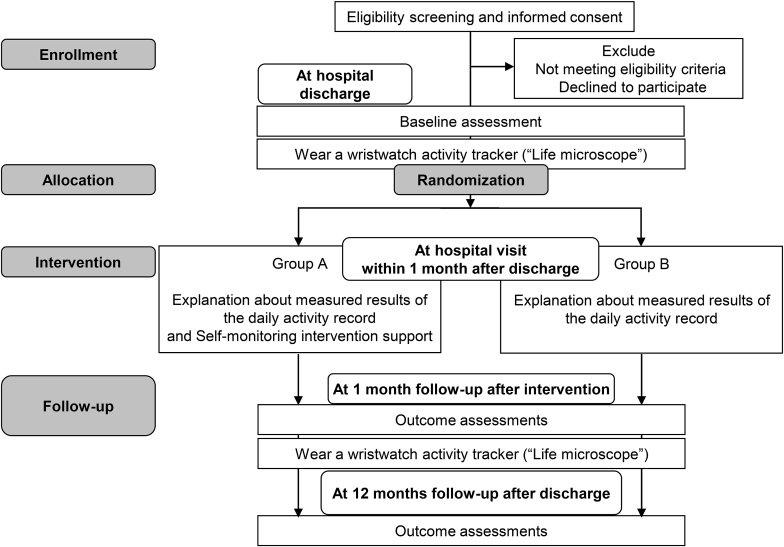
Method: A parallel two-arm randomized controlled trial is being conducted with 68 HF patients early after their discharge. Participants in both groups wear a wristwatch activity tracker from time-of-discharge. Participants in the self-monitoring intervention group receive support to reflect on their actual daily activities and the associated physical sensations they experienced, based on their daily activity records. The primary outcome is participants' "Asking for Help" dimension of self-care behavior, measured using the European Heart Failure Self-Care Behavior Scale at one month follow-up after intervention.
Conclusion: This study is the first trial to use an activity tracker as a tool for symptom perception among HF patients. The problem of delayed consultations during exacerbations may be resolved by assisting patients in improving their perception of their unique physical sensations associated with specific daily activities, based on their daily activity records. If the effect is clarified, it could lead to the construction of new nursing interventions for continuous disease management that aim towards re-hospitalization prevention.
Keywords: Daily activity; Heart failure; Self-care; Self-monitoring; Symptom perception.
© 2022 The Authors.
Conflict of interest statement
The authors declare that they have no known competing financial interests or personal relationships that could have appeared to influence the work reported in this paper.
Figures

References
-
- Tsuchihashi-Makaya M., Hamaguchi S., Kinugawa S., Yokota T., Goto D., Yokoshiki H., Kato N., Takeshita A., Tsutsui H. JCARE-CARD Investigators, Characteristics and outcomes of hospitalized patients with heart failure and reduced vs preserved ejection fraction -A report from the Japanese cardiac registry of heart failure in cardiology (JCARE-CARD), Circ. J. 2009;73:1893–1900. doi: 10.1253/circj.cj-09-0254. - DOI - PubMed
LinkOut - more resources
Full Text Sources
Research Materials
Miscellaneous
