Review
. 2022 Oct 17;10(4):90.
doi: 10.3390/diseases10040090.

Fexinidazole for Human African Trypanosomiasis, the Fruit of a Successful Public-Private Partnership

Affiliations
Review

Fexinidazole for Human African Trypanosomiasis, the Fruit of a Successful Public-Private Partnership

Sonja Bernhard et al. Diseases. .

Abstract

After 100 years of chemotherapy with impractical and toxic drugs, an oral cure for human African trypanosomiasis (HAT) is available: Fexinidazole. In this case, we review the history of drug discovery for HAT with special emphasis on the discovery, pre-clinical development, and operational challenges of the clinical trials of fexinidazole. The screening of the Drugs for Neglected Diseases initiative (DNDi) HAT-library by the Swiss TPH had singled out fexinidazole, originally developed by Hoechst (now Sanofi), as the most promising of a series of over 800 nitroimidazoles and related molecules. In cell culture, fexinidazole has an IC50 of around 1 µM against Trypanosoma brucei and is more than 100-fold less toxic to mammalian cells. In the mouse model, fexinidazole cures both the first, haemolymphatic, and the second, meningoencephalitic stage of the infection, the latter at 100 mg/kg twice daily for 5 days. In patients, the clinical trials managed by DNDi and supported by Swiss TPH mainly conducted in the Democratic Republic of the Congo demonstrated that oral fexinidazole is safe and effective for use against first- and early second-stage sleeping sickness. Based on the positive opinion issued by the European Medicines Agency in 2018, the WHO has released new interim guidelines for the treatment of HAT including fexinidazole as the new therapy for first-stage and non-severe second-stage sleeping sickness caused by Trypanosoma brucei gambiense (gHAT). This greatly facilitates the diagnosis and treatment algorithm for gHAT, increasing the attainable coverage and paving the way towards the envisaged goal of zero transmission by 2030.

Keywords: Trypanosoma brucei; clinical trial efficiency; clinical trial operations; clinical trial planning; drug discovery; human African trypanosomiasis; nitroimidazole; product development partnership; sleeping sickness.


Conflict of interest statement

The authors declare no conflict of interest.

Figures
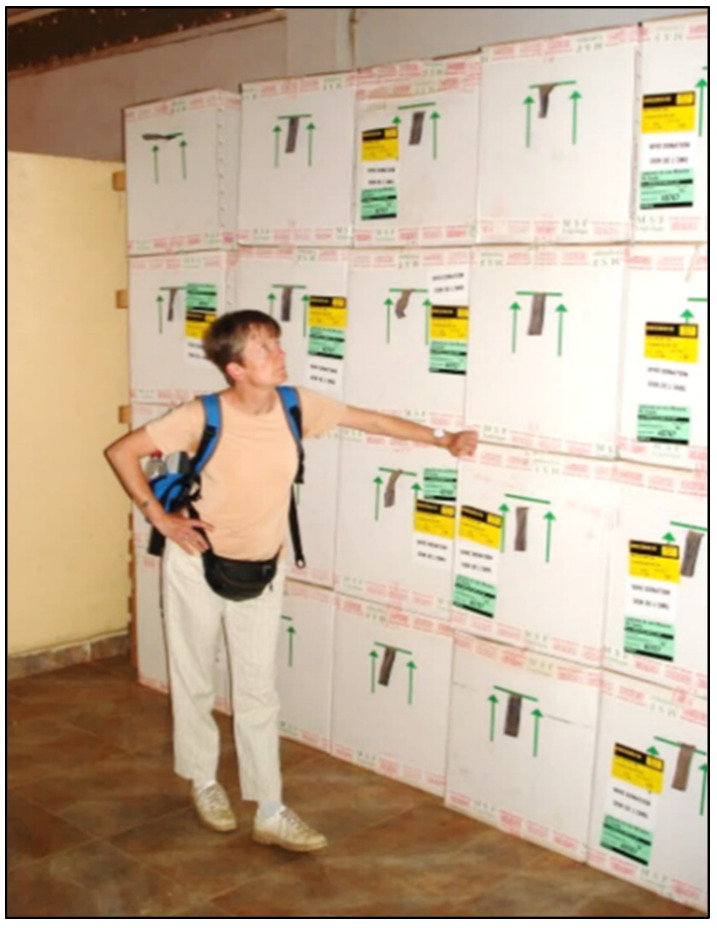
Figure 1
Figure 1
NECT presents a logistic challenge in the remote rural areas where HAT is prevalent. One box on the picture contains the treatment for two patients with eflornithine infusions. Later, the same boxes contained the NECT treatment (nifurtimox tablets and eflornithine infusion bags) for four patients. The picture shows Gabriele Pohlig, a key person for the NECT and DB289 trials, who sadly passed away in June 2022. Photograph by Sonja Bernhard.
Figure 2
Figure 2
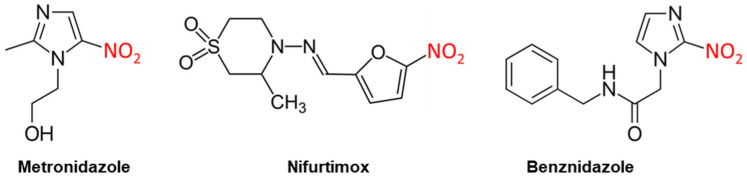
Nitro-drugs are a mainstay of antiprotozoal chemotherapy. The 5-nitroimidazole metronidazole is used for intestinal pathogens and trichomoniasis; the 2-nitroimidazole benznidazole for Chagas disease; the nitrofuran nifurtimox for Chagas and, in combination with eflornithine, for gambiense HAT.
Figure 3
Figure 3
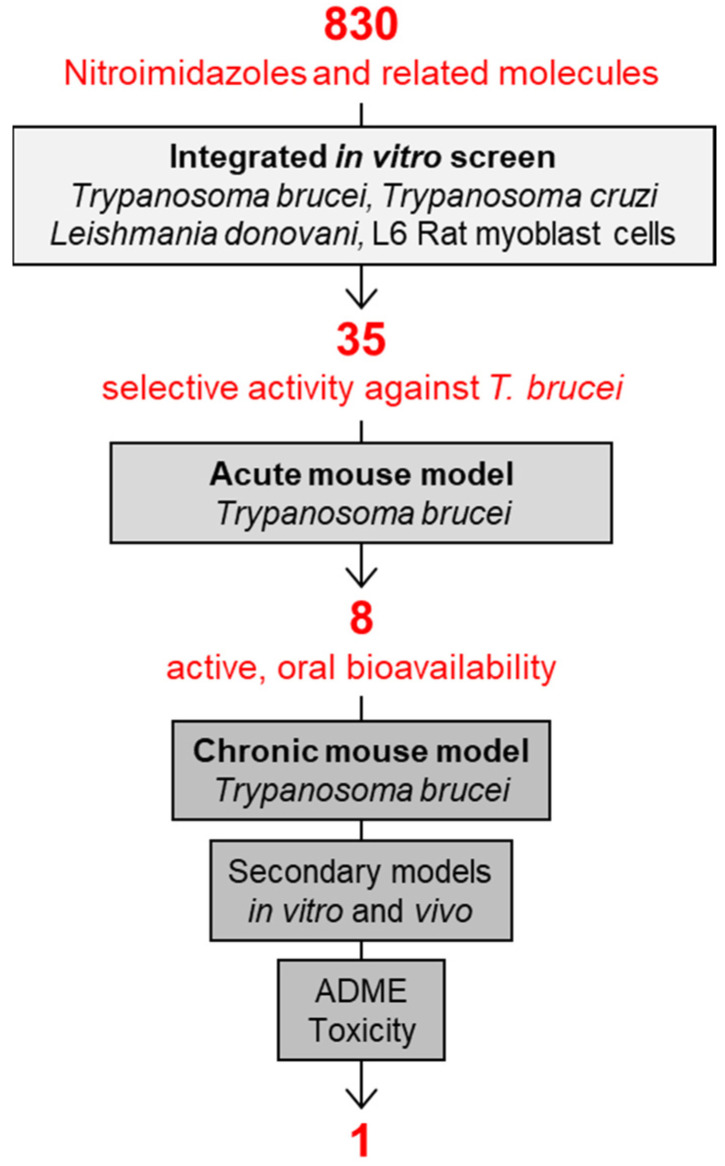
The HAT-pipeline at Swiss TPH established by the Parasite Chemotherapy Unit under the lead of Reto Brun. The one molecule that was singled out as the best drug candidate of all the tested nitro-drugs was fexinidazole.
Figure 4
Figure 4
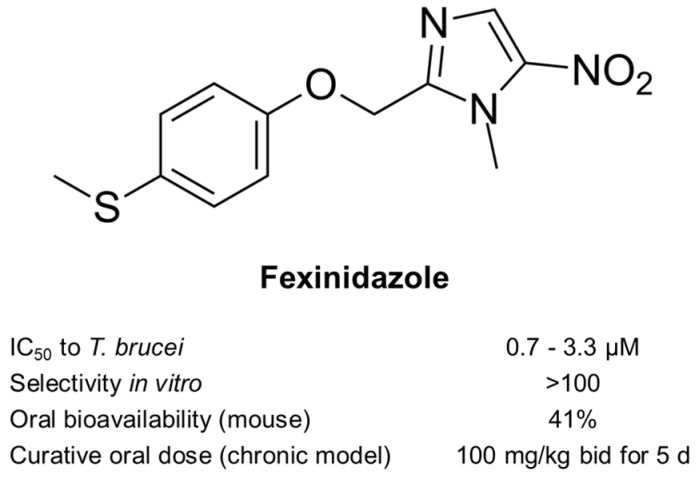
Fexinidazole and its efficacy as assessed in vitro (axenic cultivation of T. brucei subspecies bloodstream forms) and in vivo (mouse models of infection). IC50, 50% inhibitory concentration; bid, twice daily [31,32].
Figure 5
Figure 5
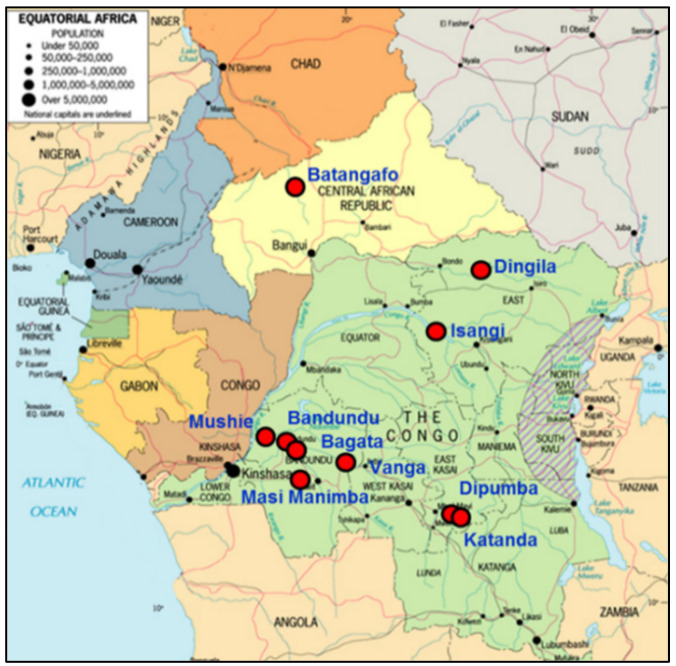
The study sites of the fexinidazole combined phase II/III clinical trial.
Figure 6
Figure 6
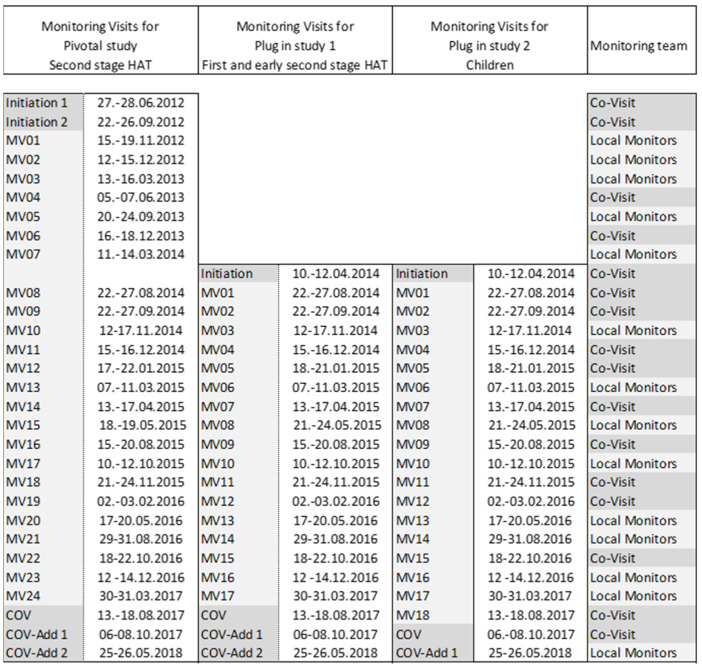
Example of a monitoring visit schedule for one of the high-recruiting study sites (MV, monitoring visit; COV, close out visit; Add, additional visit).

References

    1. Barrett M.P. The fall and rise of sleeping sickness. Lancet. 1999;353:1113–1114. doi: 10.1016/S0140-6736(98)00416-4. - DOI - PubMed
    1. Smith D.H., Pepin J., Stich A.H. Human African trypanosomiasis: An emerging public health crisis. Br. Med. Bull. 1998;54:341–355. doi: 10.1093/oxfordjournals.bmb.a011692. - DOI - PubMed
    1. Pays E., Vanhollebeke B., Uzureau P., Lecordier L., Perez-Morga D. The molecular arms race between African trypanosomes and humans. Nat. Rev. Microbiol. 2014;12:575–584. doi: 10.1038/nrmicro3298. - DOI - PubMed
    1. Brun R., Blum J., Chappuis F., Burri C. Human African trypanosomiasis. Lancet. 2010;375:148–159. doi: 10.1016/S0140-6736(09)60829-1. - DOI - PubMed
    1. Fevre E.M., Coleman P.G., Odiit M., Magona J.W., Welburn S.C., Woolhouse M.E. The origins of a new Trypanosoma brucei rhodesiense sleeping sickness outbreak in eastern Uganda. Lancet. 2001;358:625–628. doi: 10.1016/S0140-6736(01)05778-6. - DOI - PubMed

LinkOut - more resources