


Application of a Bayesian Network Learning Model to Predict Longitudinal Trajectories of Executive Function Difficulties in Elementary School Students
- PMID: 36278596
- PMCID: PMC9589973
- DOI: 10.3390/jintelligence10040074
Application of a Bayesian Network Learning Model to Predict Longitudinal Trajectories of Executive Function Difficulties in Elementary School Students
Abstract
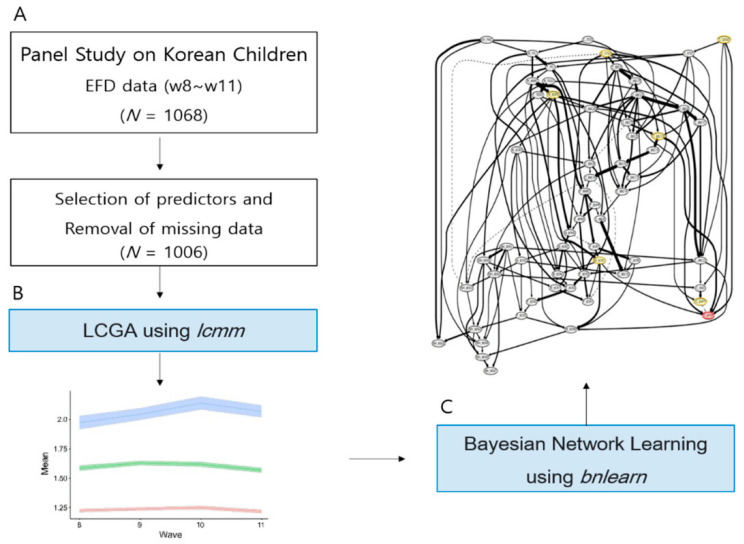
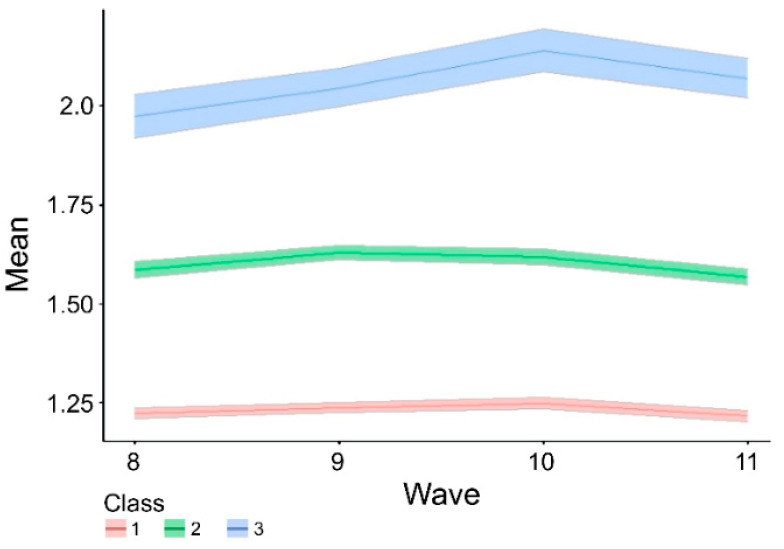
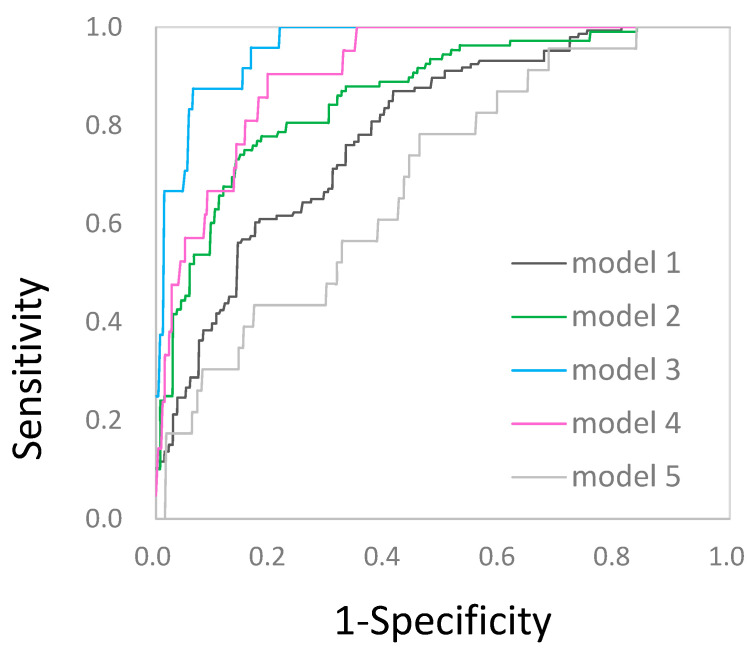
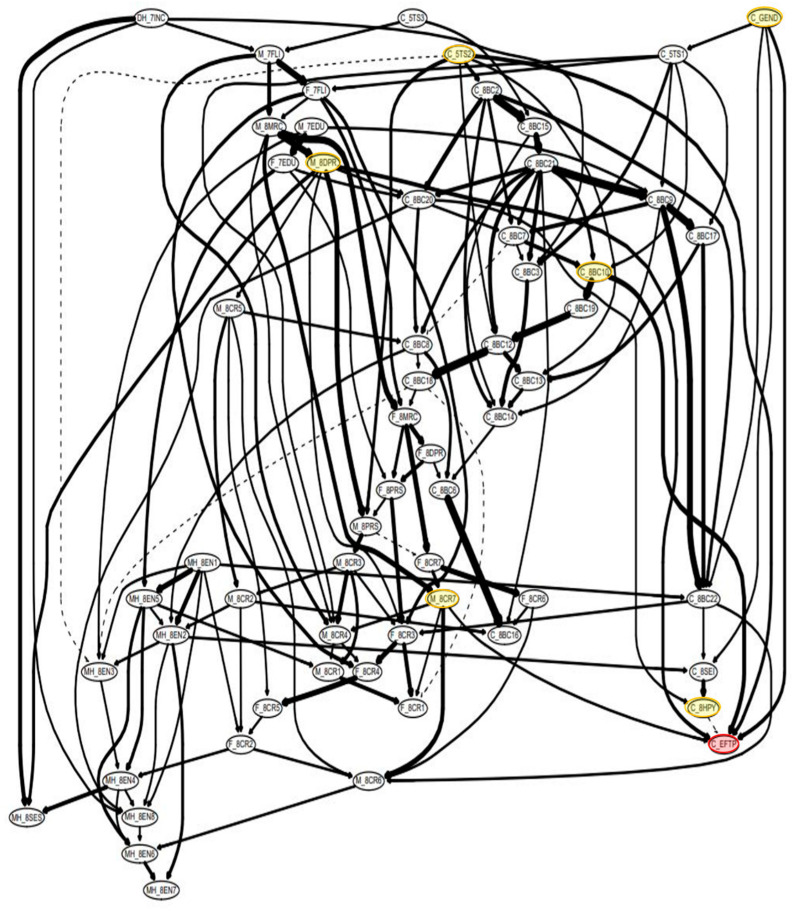
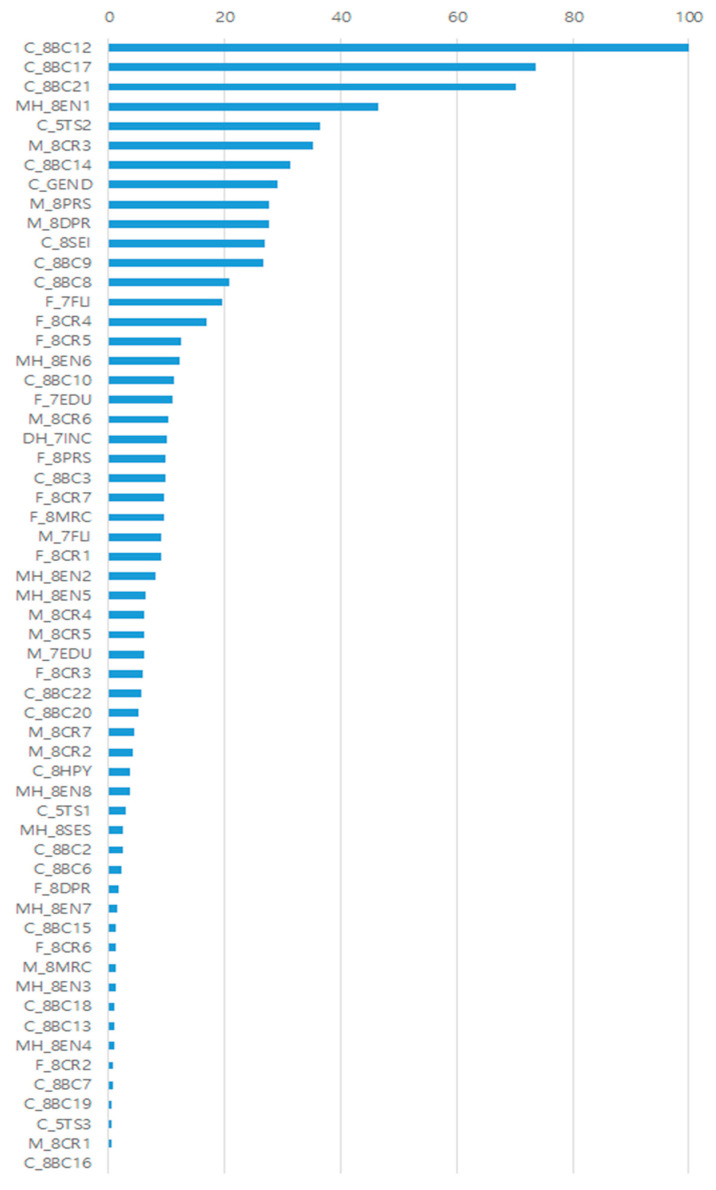
Executive function is the mental ability to modulate behavior or thinking to accomplish a task. This is developmentally important for children's academic achievements and ability to adjust to school. We classified executive function difficulties (EFDs) in longitudinal trajectories in Korean children from 7 to 10 years old. We found predictors of EFDs using latent class growth analysis and Bayesian network learning methods with Panel Study data. Three types of latent class models of executive function difficulties were identified: low, intermediate, and high EFDs. The modeling performance of the high EFD group was excellent (AUC = .91), and the predictors were the child's gender, temperamental emotionality, happiness, DSM (Diagnostic and Statistical Manual of Mental Disorders) anxiety problems, and the mother's depression as well as coparenting conflict recognized by the mother. The results show that using latent class growth analysis and Bayesian network learning are helpful in classifying the longitudinal EFD patterns in elementary school students. Furthermore, school-age EFD is affected by emotional problems in parents and children that continue from early life. These findings can support children's development and prevent risk by preclassifying children who may experience persistent EFD and tracing causes.
Keywords: Bayesian network learning; elementary school students; executive function difficulties.
Conflict of interest statement
The authors declare no conflict of interest.
Figures
References
-
- Abidin Richard R. Parenting Stress Index Short Form (PSI-SF) Pediatric Psychology Press; Charlottesville: 1990.
-
- Achenbach Thomas M., Rescorla Leslie A. Manual for the ASEBA School-Age Forms & Profiles: An Integrated System of Multi-Informant Assessment. ASEBA; Burlington: 2001.
-
- Bajaj Badri, Gupta Ragini, Pande Neerja. Self-esteem mediates the relationship between mindfulness and well-being. Personality and Individual Differences. 2016;94:96–100. doi: 10.1016/j.paid.2016.01.020. - DOI
Grants and funding
LinkOut - more resources
Full Text Sources
Medical
