


Systematic review of the radiomics quality score applications: an EuSoMII Radiomics Auditing Group Initiative
- PMID: 36282312
- PMCID: PMC9935718
- DOI: 10.1007/s00330-022-09187-3
Systematic review of the radiomics quality score applications: an EuSoMII Radiomics Auditing Group Initiative
Abstract
Objective: The main aim of the present systematic review was a comprehensive overview of the Radiomics Quality Score (RQS)-based systematic reviews to highlight common issues and challenges of radiomics research application and evaluate the relationship between RQS and review features.
Methods: The literature search was performed on multiple medical literature archives according to PRISMA guidelines for systematic reviews that reported radiomic quality assessment through the RQS. Reported scores were converted to a 0-100% scale. The Mann-Whitney and Kruskal-Wallis tests were used to compare RQS scores and review features.
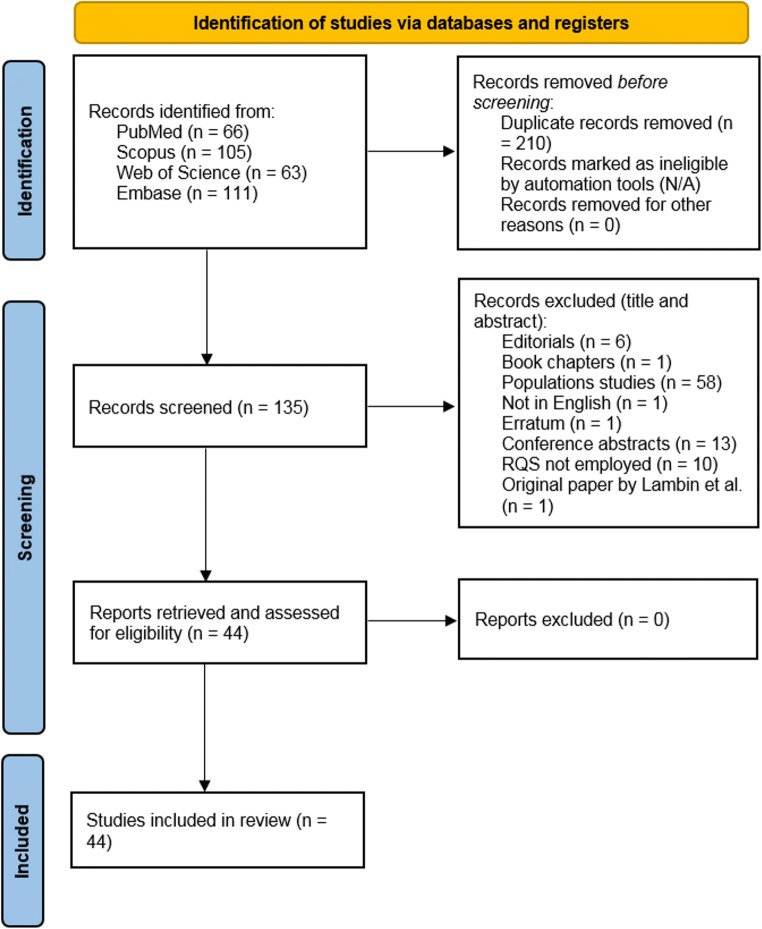
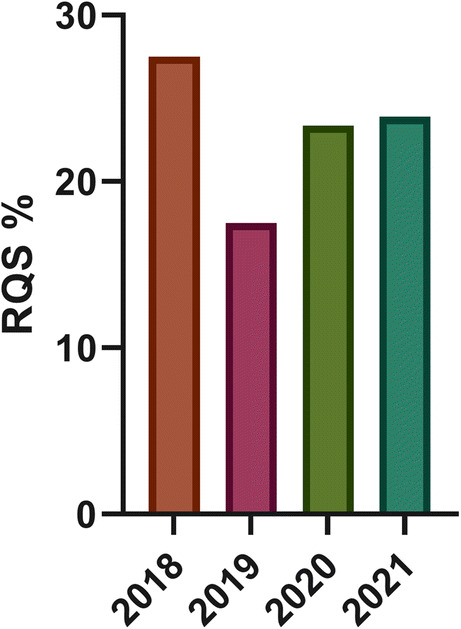
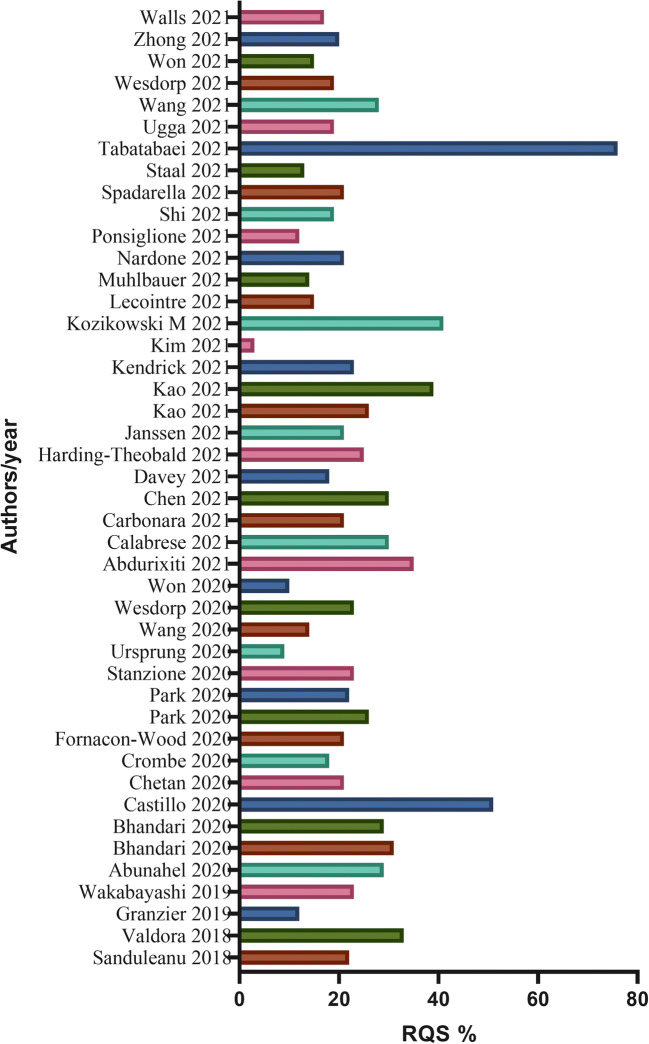
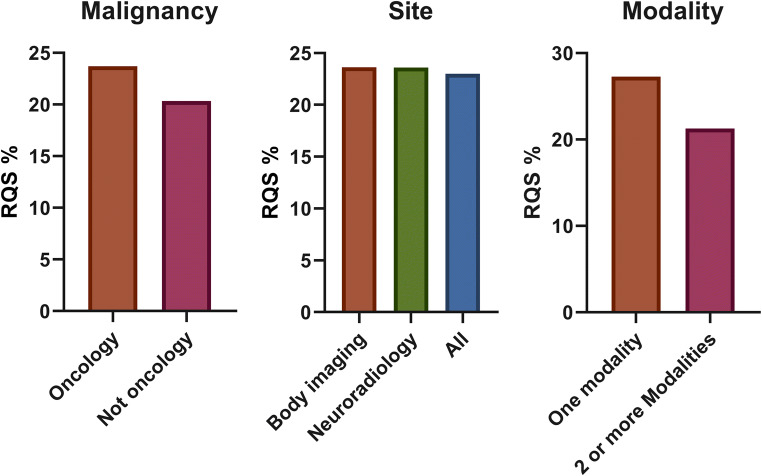
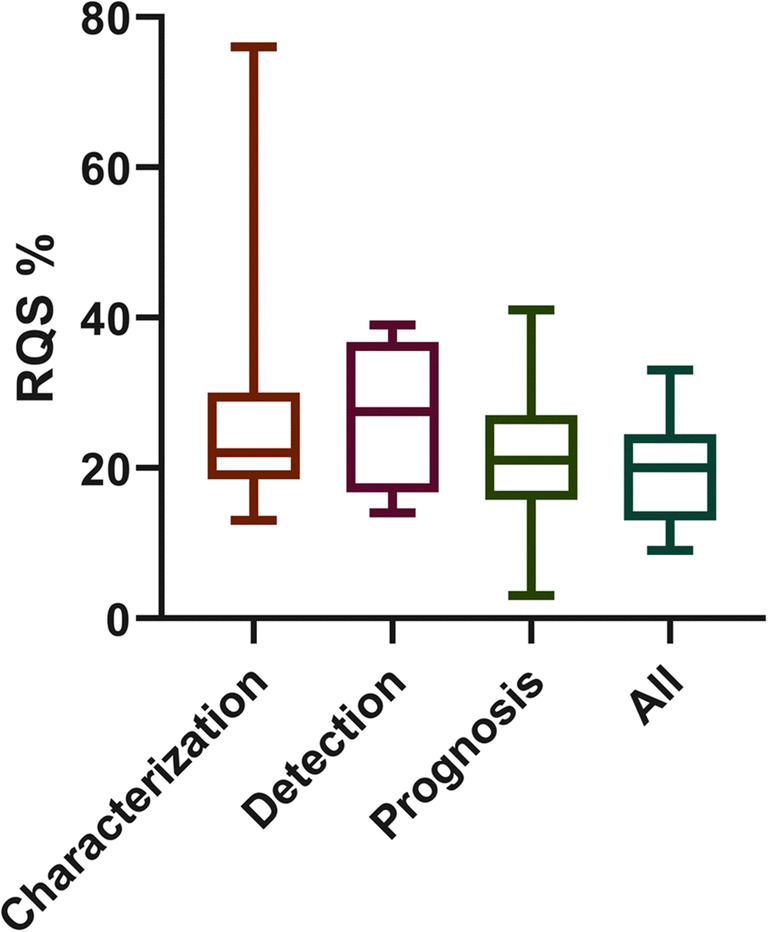
Results: The literature research yielded 345 articles, from which 44 systematic reviews were finally included in the analysis. Overall, the median of RQS was 21.00% (IQR = 11.50). No significant differences of RQS were observed in subgroup analyses according to targets (oncological/not oncological target, neuroradiology/body imaging focus and one imaging technique/more than one imaging technique, characterization/prognosis/detection/other).
Conclusions: Our review did not reveal a significant difference of quality of radiomic articles reported in systematic reviews, divided in different subgroups. Furthermore, low overall methodological quality of radiomics research was found independent of specific application domains. While the RQS can serve as a reference tool to improve future study designs, future research should also be aimed at improving its reliability and developing new tools to meet an ever-evolving research space.
Key points: • Radiomics is a promising high-throughput method that may generate novel imaging biomarkers to improve clinical decision-making process, but it is an inherently complex analysis and often lacks reproducibility and generalizability. • The Radiomics Quality Score serves a necessary role as the de facto reference tool for assessing radiomics studies. • External auditing of radiomics studies, in addition to the standard peer-review process, is valuable to highlight common limitations and provide insights to improve future study designs and practical applicability of the radiomics models.
Keywords: Big data; Diagnostic imaging; Radiomics; Radiomics quality score; Systematic review.
© 2022. The Author(s).
Conflict of interest statement
Renato Cuocolo serves as an editorial board member of European Radiology and European Radiology Experimental.
Figures
References
-
- Qi Y, Zhao T, Han M (2022) The application of radiomics in predicting gene mutations in cancer. Eur Radiol. 10.1007/s00330-021-08520-6 - PubMed
Publication types
MeSH terms
Substances
LinkOut - more resources
Full Text Sources
Medical
