. 2022 Aug 26;4(34):766-770.
doi: 10.46234/ccdcw2022.162.

Meta-Analysis: Prevalence of Food Allergy and Food Allergens - China, 2000-2021

Affiliations

Meta-Analysis: Prevalence of Food Allergy and Food Allergens - China, 2000-2021

Jiangzuo Luo et al. China CDC Wkly. .

Abstract

What is already known about this topic?: In recent decades, the prevalence of food allergy has increased worldwide; however, a comprehensive estimate of the prevalence of food allergy and allergens in China is not yet available.

What is added by this report?: By searching the English databases PubMed, Embase, Cochrane Library, and Chinese databases CNKI, Wanfang Data, and VIP Chinese epidemiological studies on food allergy, the probability of food allergy in China and related influencing factors were determined.

What are the implications for public health practice?: The findings of this study provide up-to-date estimates of the prevalence of food allergy rates in China in terms of age, gender, and the eight major food allergens.

Keywords: Chinese; food allergens; food allergies; prevalence.


Figures

Figure 1
Figure 1
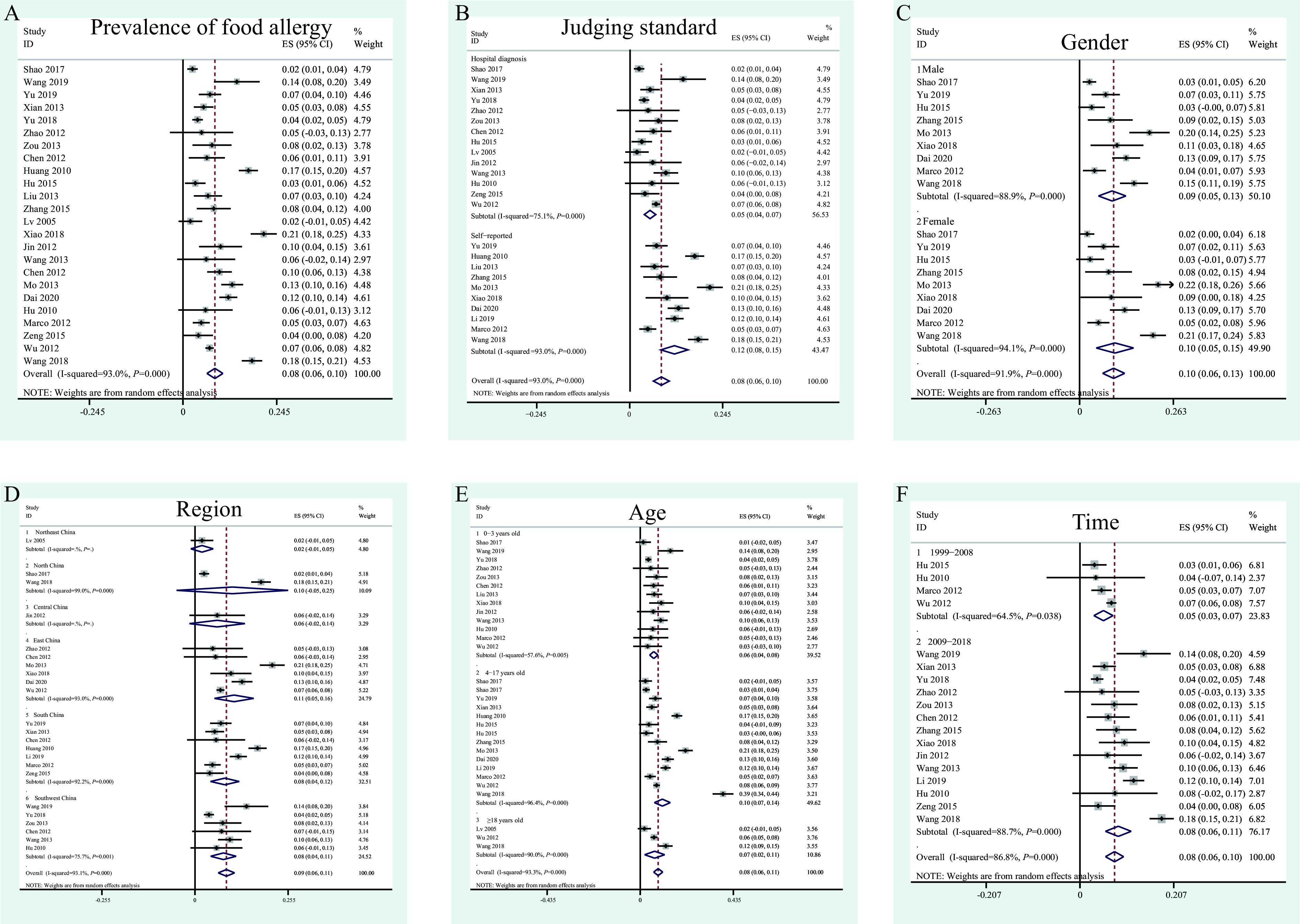
Prevalence of food allergy in Chinese. (A) Overall prevalence of food allergy. (B) The difference between the prevalence of self-report (questionnaire survey) and hospital confirmed food allergy. (C) Prevalence of food allergy in male and female. (D) Prevalence of food allergy in different regions. (E) Prevalence of food allergy in different ages. (F) Prevalence of food allergy in different time periods.
Figure 2
Figure 2
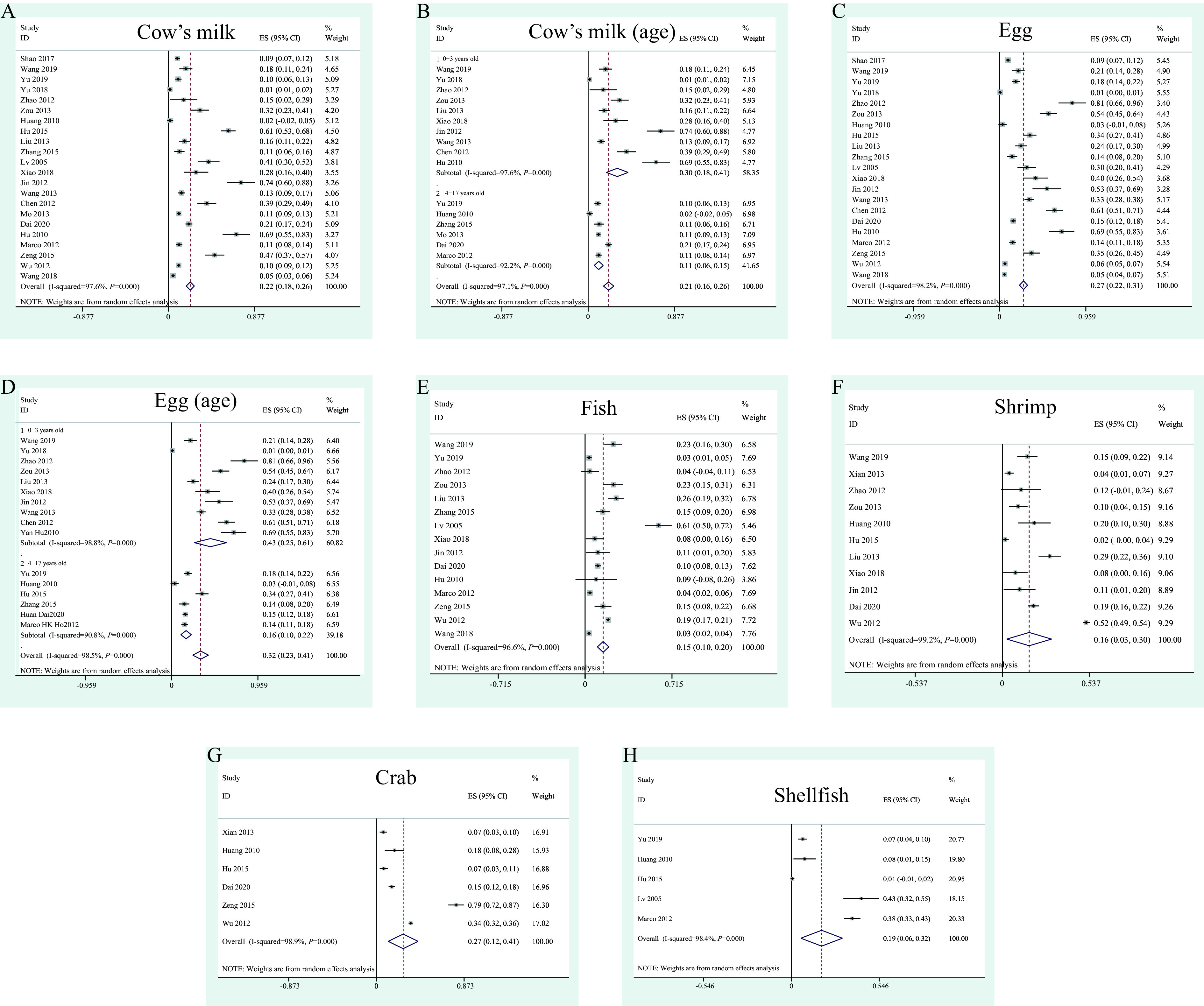
Prevalence of milk, egg, and aquatic product allergy in patients with food allergy. (A) Cow’s milk. (B) Different ages of cow’s milk allergy patients. (C) Egg. (D) Egg allergy rates in different age groups. (E) Fish. (F) Shrimp. (G) Crab. (H) Shellfish.
Figure 3
Figure 3
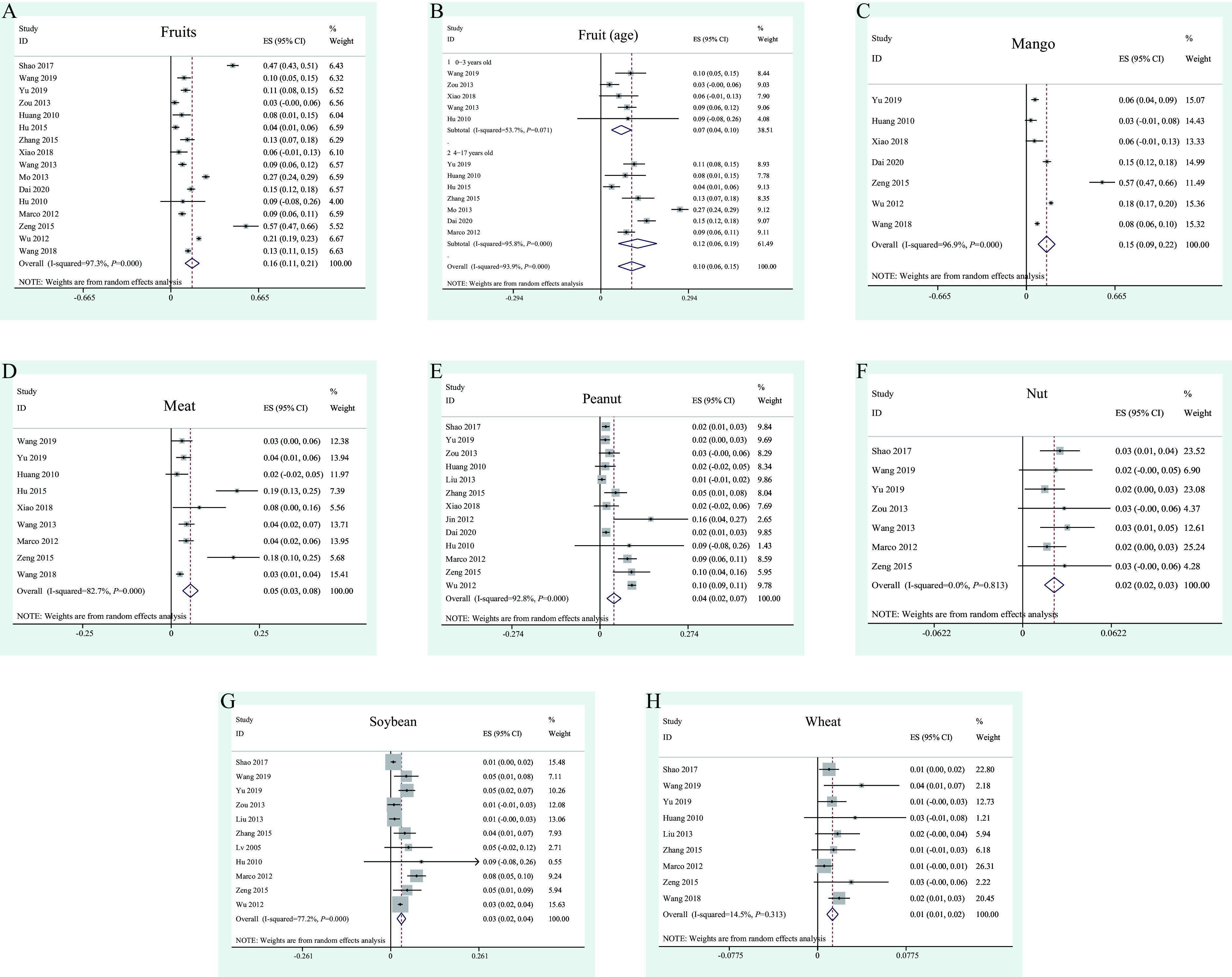
Prevalence of fruit, meat, peanut, nut, soybean, and wheat allergy in patients with food allergy. (A) Fruits, including mangoes, peaches, pineapples, oranges, dates, apples, cherries, tomatoes, kiwifruit, and other. (B) Different ages of fruit allergy patients. (C) Mango. (D) Meat, including beef, mutton, chicken. (E) Peanut. (F) Nut. (G) Soybean. (H) Wheat.

References

    1. Yu W, Freeland DMH, Nadeau KC Food allergy: immune mechanisms, diagnosis and immunotherapy. Nat Rev Immunol. 2016;16(12):751–65. doi: 10.1038/nri.2016.111. - DOI - PMC - PubMed
    1. Food and Agricultural Organization of the United Nations, The International Atomic Energy Agency, World Health Organization. Revision of the recommended international general standard for irradiated foods and of the recommended international code of practice for the operation of radiation facilities used for the treatment of foods. 1981. https://inis.iaea.org/collection/NCLCollectionStore/_Public/14/742/14742020.pdf?r=1. [2021-1-21].

    1. Boye JI Food allergies in developing and emerging economies: need for comprehensive data on prevalence rates. Clin Transl Allergy. 2012;2(1):25. doi: 10.1186/2045-7022-2-25. - DOI - PMC - PubMed
    1. Hill DJ, Hosking CS, Zhie CY, Leung R, Baratwidjaja K, Iikura Y, et al The frequency of food allergy in Australia and Asia. Environ Toxicol Pharmacol. 1997;4(1-2):101–10. doi: 10.1016/S1382-6689(97)10049-7. - DOI - PubMed
    1. Chen J, Hu Y, Allen KJ, Ho MHK, Li HQ The prevalence of food allergy in infants in Chongqing, China. Pediatr Allergy Immunol. 2011;22(4):356–60. doi: 10.1111/j.1399-3038.2011.01139.x. - DOI - PubMed

LinkOut - more resources