Invasive Infections Caused by Lancefield Groups C/G and A Streptococcus, Western Australia, Australia, 2000-2018
- PMID: 36285885
- PMCID: PMC9622247
- DOI: 10.3201/eid2811.220029
Invasive Infections Caused by Lancefield Groups C/G and A Streptococcus, Western Australia, Australia, 2000-2018
Abstract
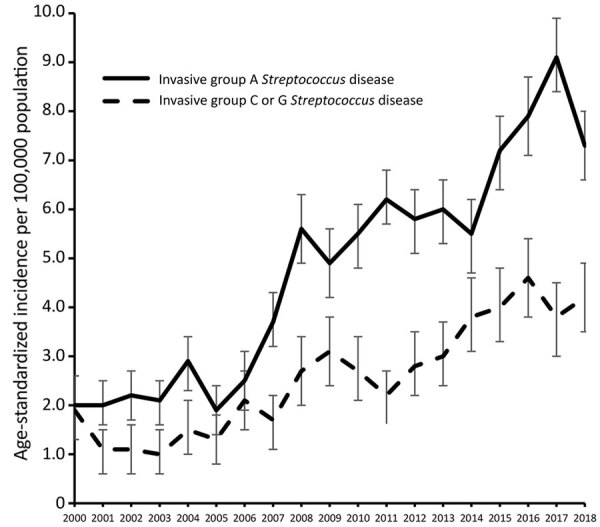
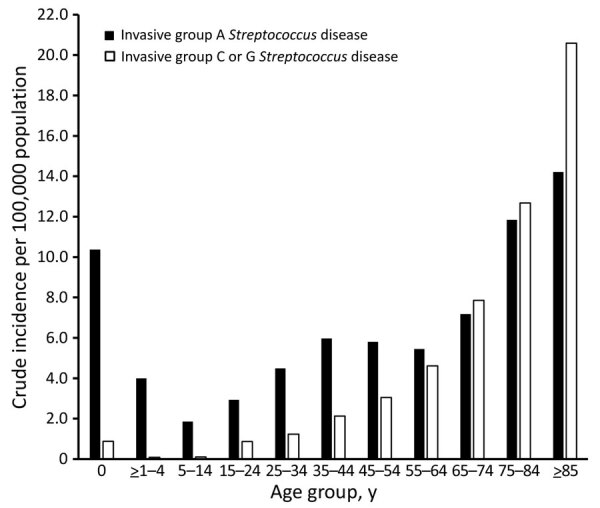
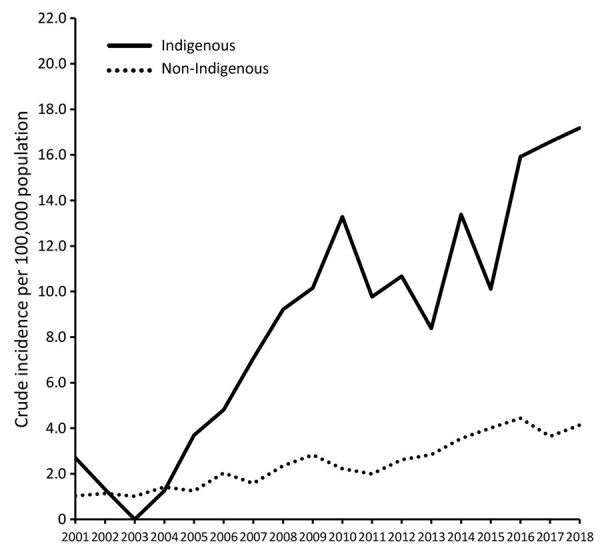
Epidemiologic data on invasive group C/G Streptococcus (iGCGS) infections are sparse internationally. Linked population-level hospital, pathology, and death data were used to describe the disease burden in Western Australia, Australia, during 2000-2018 compared with that of invasive group A Streptococcus (GAS, Streptococcus pyogenes) infections. Of 1,270 cases, 866 (68%) occurred in men. Patients with iGCGS infection were older (median age 62 years) than those with invasive GAS (median age 44 years; p<0.0001). The age and sex-adjusted incidence rate ratio by year was 1.08 (95% CI 1.07-1.09). The incidence rate ratio for Indigenous compared with non-Indigenous Australians was 3.6 (95% CI 3.0-4.3). The all-cause 90-day death rate was 9% for iGCGS infection compared with 7% for invasive GAS (p = 0.03). iGCGS infection was more common in men and older persons and had a higher death rate, perhaps reflecting the effect of age and comorbidities on incidence and death.
Keywords: Australia; Group C Streptococcus; Group G Streptococcus; Lancefield groups; Streptococcus; bacteria; infectious diseases; public health.
Figures
References
-
- Centers for Disease Control and Prevention. Case definitions for infectious conditions under public health surveillance. MMWR Recomm Rep. 1997;46(RR-10):1–55. - PubMed
Publication types
MeSH terms
LinkOut - more resources
Full Text Sources
Medical