


Comment
doi: 10.36660/abc.20220143.
Septal Ablation with Radiofrequency and the Use of New Technologies in Patients with Hypertrophic Cardiomyopathy in an Electrophysiology LaboratoryReply
[Article in
English,
Portuguese]
Affiliations
- PMID: 36287419
- PMCID: PMC9563876
- DOI: 10.36660/abc.20220143
Item in Clipboard
Comment
Septal Ablation with Radiofrequency and the Use of New Technologies in Patients with Hypertrophic Cardiomyopathy in an Electrophysiology LaboratoryReply
[Article in
English,
Portuguese]
Arq Bras Cardiol.
.
No abstract available
Figures
Comment on
-
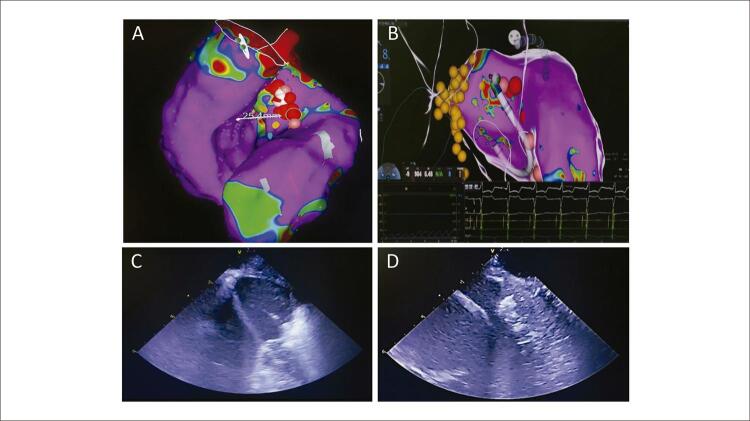
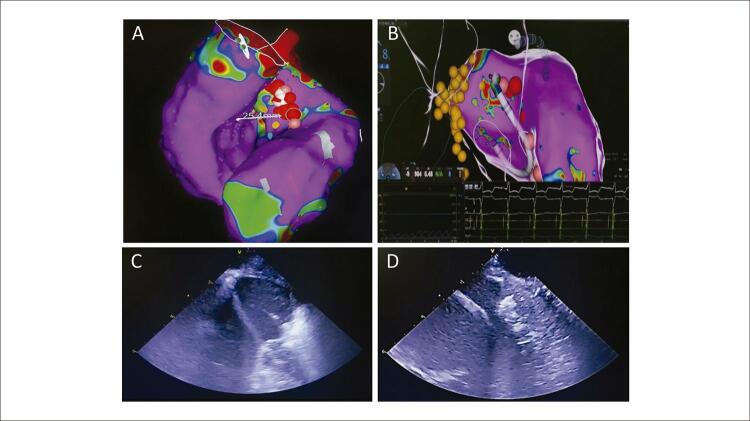
Septal Ablation with Radiofrequency Catheters Guided by Echocardiography for Treatment of Patients with Obstructive Hypertrophic Cardiomyopathy: Initial Experience.Arq Bras Cardiol. 2022 May;118(5):861-872. doi: 10.36660/abc.20200732. Arq Bras Cardiol. 2022. PMID: 35137775 Free PMC article. English, Portuguese.
References
Referências
-
- Valdigem BP, Correia EB, Moreira DAR, Bihan DL, Pinto IMF, Abizaid AAC, et al. Septal Ablation with Radiofrequency Catheters Guided by Echocardiography for Treatment of Patients with Obstructive Hypertrophic Cardiomyopathy: Initial Experience. 10.36660/abc.20200732.Arq Bras Cardiol. 2022;118(5):861–872. - PMC - PubMed
-
- Okumura Y, Watanabe I, Iso K, Nagashima K, Sonoda K, Sasaki N, et al. Clinical Utility of Automated Ablation Lesion Tagging Based on Catheter Stability Information (VisiTag Module of the CARTO 3 System) with Contact Force-Time Integral During Pulmonary Vein Isolation for Atrial Fibrillation. 10.1007/s10840-016-0156-z.J Interv Card Electrophysiol. 2016;47(2):245–252. - PubMed
-
- Lawrenz T, Lawin D, Radke K, Stellbrink C. Acute and Chronic Effects of Endocardial Radiofrequency Ablation of Septal Hypertrophy in HOCM. 10.1111/jce.15203.J Cardiovasc Electrophysiol. 2021;32(10):2617–2624. - PubMed
-
- Cooper RM, Shahzad A, Hasleton J, Digiovanni J, Hall MC, Todd DM, et al. Radiofrequency Ablation of the Interventricular Septum to Treat Outflow Tract Gradients in Hypertrophic Obstructive Cardiomyopathy: A Novel Use of CARTOSound® Technology to Guide Ablation. 10.1093/europace/euv302.Europace. 2016;18(1):113–120. - PubMed
-
- Crossen K, Jones M, Erikson C. Radiofrequency Septal Reduction in Symptomatic Hypertrophic Obstructive Cardiomyopathy. 10.1016/j.hrthm.2016.04.018.Heart Rhythm. 2016;13(9):1885–1890. - PubMed
References
-
- Lawrenz T, Lawin D, Radke K, Stellbrink C. Acute and Chronic Effects of Endocardial Radiofrequency Ablation of Septal Hypertrophy in HOCM. 10.1111/jce.15203.J Cardiovasc Electrophysiol. 2021;32(10):2617–2624. - PubMed
Publication types
MeSH terms
LinkOut - more resources
Full Text Sources