Review
. 2022 Oct 20;10(10):627.
doi: 10.3390/toxics10100627.

Statins and Male Fertility: Is There a Cause for Concern?

Affiliations
Review

Statins and Male Fertility: Is There a Cause for Concern?

Temidayo S Omolaoye et al. Toxics. .

Abstract

The well-known 3-hydroxyl 3-methyl glutaryl-Coenzyme A reductase inhibitors, called statins, have been the main medication used in the treatment of hypercholesterolemia and some cases of cardiovascular diseases. The effectiveness of this drug in controlling cholesterol production is impeccable, however, patients often complain of a variety of side effects, such as myalgia, muscle atrophy, and in some cases, rhabdomyolysis. Not only has the use of statins caused the aforementioned side effects, but they are also shown to cause testicular discomfort, erectile dysfunction, altered semen parameters, and modified steroid hormone production. These reported adverse effects on male fertility are not generally agreed upon, as some have shown the use to be beneficial. Hence, this makes the aftermath effect of statin use on male fertility debatable and controversial. The negative effects have been associated with imbalanced or reduced steroid hormones, which are necessary for proper spermatogenesis and other sexual functions. Meanwhile, the beneficial effects are related to statin's anti-inflammatory and cardioprotective properties. These contradictory findings are in part due to the different age of users, concentrations of statins, the type and duration of treatment, and the underlying disease and/or comorbidities. Therefore, the current study aims to analyze the literature and gather evidence as to the effects of statin on male sexual health and reproductive parameters, and subsequently give recommendations for the direction of future studies.

Keywords: atorvastatin; fluvastatin; lovastatin; male fertility; pravastatin; rosuvastatin; simvastatin; statins; steroid hormones; testicular dysfunction.


Conflict of interest statement

The authors declare no conflict of interest.

Figures
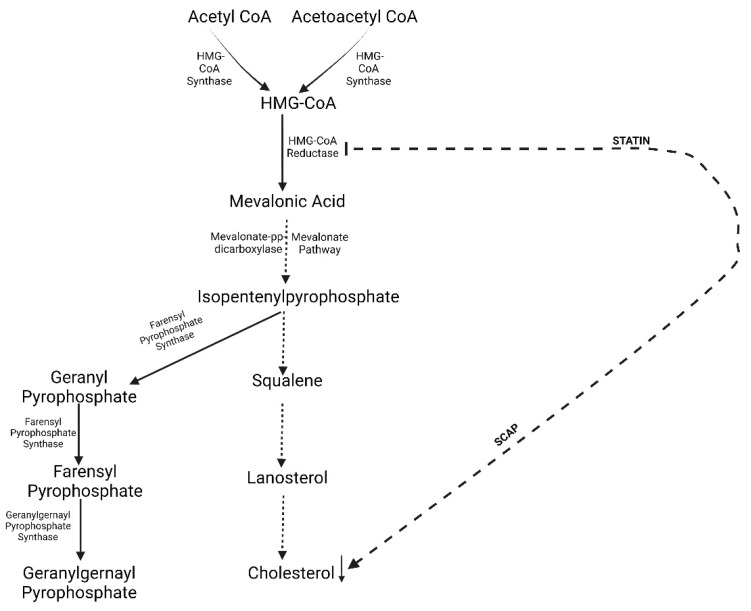
Figure 1
Figure 1
The mechanism of the action of statin. Acetyl CoA or Acetoacetyl CoA are converted to HMG-CoA by HMG-CoA synthase and HMG-CoA is converted to mevalonic acid by HMG-CoA reductase. This latter step is crucial in the formation of cholesterol. To mediate the formation of cholesterol, statins inhibit the enzyme HMG-CoA reductase. HMG-CoA reductase synthesis is regulated by the steroid regulatory element binding proteins (SREBP). The binding of SCAP to SREBP activates HMG-CoA reductase. Therefore, if SCAP is inhibited, then HMG-CoA reductase will be inhibited and will consequently inhibit cholesterol synthesis. Cholesterol is also able to mediate its own availability by either inhibiting or activating SCAP. ↓ = decrease.
Figure 2
Figure 2
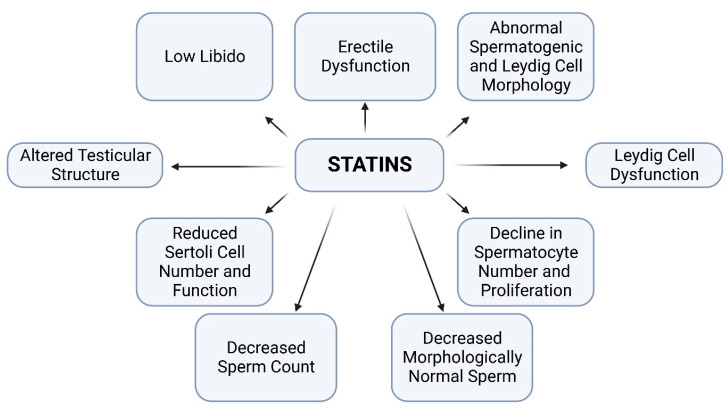
The summarized effects of statins on male sexual health and reproductive parameters. It is important to note that not all studies on the different forms of statins reported these adverse effects.
Figure 3
Figure 3
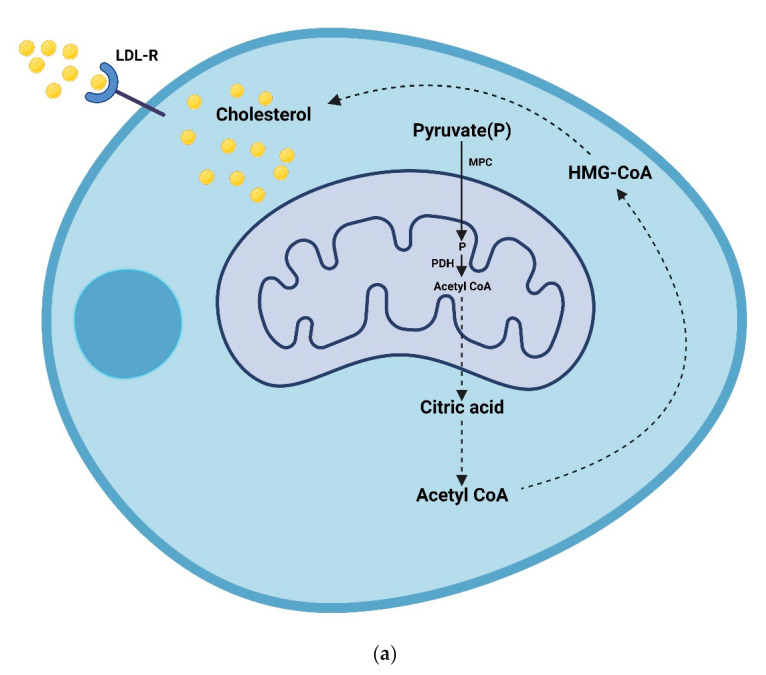
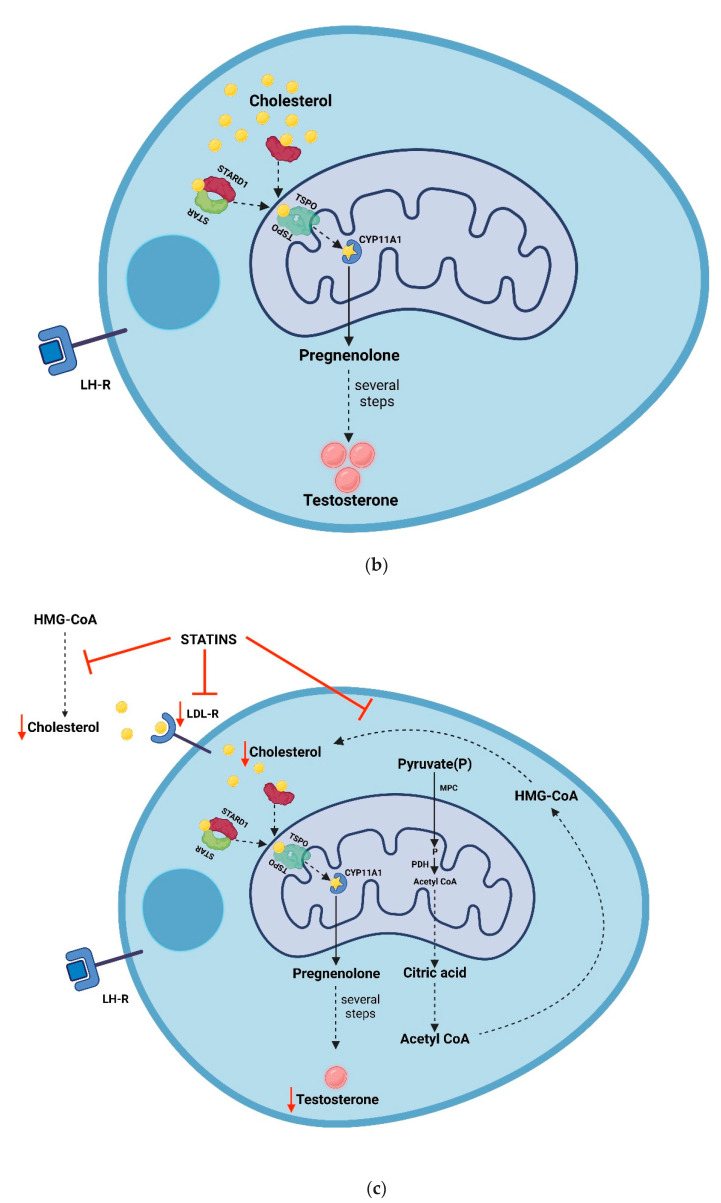
The mechanisms through which statin may impact male fertility. (a). Cholesterol bioavailability in a Leydig cell; (b). Testosterone synthesis in a Leydig cell; (c) Routes through which statins affect male reproduction. The Leydig cell can absorb cholesterol from the blood via low density lipoprotein- receptors (LDL-R) and are also capable of de novo cholesterol synthesis. The de novo synthesis of cholesterol starts with pyruvate being generated from diverse cytosolic sources. Entry of pyruvate into the mitochondrial matrix is mediated by the mitochondrial pyruvate carrier (MPC). In the matrix, pyruvate is converted into acetyl CoA or oxaloacetate by pyruvate dehydrogenase (PDH). The acetyl CoA produced is converted to citric acid outside the matrix. Upon the initiation of statin metabolism, there is a decrease in the circulating LDL-cholesterol and the total amount of cholesterol transported to the Leydig cell is reduced. Additionally, the incapability of the LDL-R to aid the transport into the Leydig cell will further tamper with the bioavailability of cholesterol in these cells, thus making the Ledig cell solely dependent on the de novo synthesis of cholesterol. Since the unretained statins are redistributed to other organs including the testes, then, it is possible that the de novo cholesterol synthesis is also inhibited. Hence, there will be little or no bioavailability of cholesterol for testosterone synthesis. Subsequently, the lack of or decrease in testosterone will lead to male sexual dysfunctions and altered reproductive parameters. TSPO (mitochondrial translocator protein 18); STAR (cytosolic steroidogenic acute regulatory protein); STARD1 (START domain-containing 1); ACBD3 (acyl-coenzyme A binding domain-containing 3); CYP11A1 (cytochrome p450 family 11 subfamily A polypeptide 1); MPC (mitochondrial pyruvate carrier); LH-R (luteinizing hormone receptor); PDH (pyruvate dehydrogenase); and HMG-CoA (3 hydro 3 methyl glutaryl co enzyme A).
Figure 3
Figure 3
The mechanisms through which statin may impact male fertility. (a). Cholesterol bioavailability in a Leydig cell; (b). Testosterone synthesis in a Leydig cell; (c) Routes through which statins affect male reproduction. The Leydig cell can absorb cholesterol from the blood via low density lipoprotein- receptors (LDL-R) and are also capable of de novo cholesterol synthesis. The de novo synthesis of cholesterol starts with pyruvate being generated from diverse cytosolic sources. Entry of pyruvate into the mitochondrial matrix is mediated by the mitochondrial pyruvate carrier (MPC). In the matrix, pyruvate is converted into acetyl CoA or oxaloacetate by pyruvate dehydrogenase (PDH). The acetyl CoA produced is converted to citric acid outside the matrix. Upon the initiation of statin metabolism, there is a decrease in the circulating LDL-cholesterol and the total amount of cholesterol transported to the Leydig cell is reduced. Additionally, the incapability of the LDL-R to aid the transport into the Leydig cell will further tamper with the bioavailability of cholesterol in these cells, thus making the Ledig cell solely dependent on the de novo synthesis of cholesterol. Since the unretained statins are redistributed to other organs including the testes, then, it is possible that the de novo cholesterol synthesis is also inhibited. Hence, there will be little or no bioavailability of cholesterol for testosterone synthesis. Subsequently, the lack of or decrease in testosterone will lead to male sexual dysfunctions and altered reproductive parameters. TSPO (mitochondrial translocator protein 18); STAR (cytosolic steroidogenic acute regulatory protein); STARD1 (START domain-containing 1); ACBD3 (acyl-coenzyme A binding domain-containing 3); CYP11A1 (cytochrome p450 family 11 subfamily A polypeptide 1); MPC (mitochondrial pyruvate carrier); LH-R (luteinizing hormone receptor); PDH (pyruvate dehydrogenase); and HMG-CoA (3 hydro 3 methyl glutaryl co enzyme A).

References

    1. Ference B.A., Ginsberg H.N., Graham I., Ray K.K., Packard C.J., Bruckert E., Hegele R.A., Krauss R.M., Raal F.J., Schunkert H., et al. Low-density lipoproteins cause atherosclerotic cardiovascular disease. 1. Evidence from genetic, epidemiologic, and clinical studies. A consensus statement from the European Atherosclerosis Society Consensus Panel. Eur. Heart J. 2017;38:2459–2472. doi: 10.1093/eurheartj/ehx144. - DOI - PMC - PubMed
    1. Navarese E.P., Buffon A., Andreotti F., Kozinski M., Welton N., Fabiszak T., Caputo S., Grzesk G., Kubica A., Swiatkiewicz I., et al. Meta-analysis of impact of different types and doses of statins on new-onset diabetes mellitus. Am. J. Cardiol. 2013;111:1123–1130. doi: 10.1016/j.amjcard.2012.12.037. - DOI - PubMed
    1. Fraser L.R. The “switching on” of mammalian spermatozoa: Molecular events involved in promotion and regulation of capacitation. Mol. Reprod. Dev. 2010;77:197–208. doi: 10.1002/mrd.21124. - DOI - PubMed
    1. Kim N., Nakamura H., Masaki H., Kumasawa K., Hirano K.I., Kimura T. Effect of lipid metabolism on male fertility. Biochem. Biophys. Res. Commun. 2017;485:686–692. doi: 10.1016/j.bbrc.2017.02.103. - DOI - PubMed
    1. Littlefield N., Beckstrand R.L., Luthy K.E. Statins’ effect on plasma levels of Coenzyme Q10 and improvement in myopathy with supplementation. J. Am. Assoc. Nurse Pract. 2014;26:85–90. doi: 10.1002/2327-6924.12046. - DOI - PubMed

LinkOut - more resources