. 2022 Oct 11;14(10):696.
doi: 10.3390/toxins14100696.

Evaluation of a Novel Synthetic Peptide Derived from Cytolytic Mycotoxin Candidalysin

Affiliations

Evaluation of a Novel Synthetic Peptide Derived from Cytolytic Mycotoxin Candidalysin

Pedro Henrique de Oliveira Cardoso et al. Toxins (Basel). .

Abstract

The importance of neuroinflammation in neurology is becoming increasingly apparent. In addition to neuroinflammatory diseases such as multiple sclerosis, the role of neuroinflammation has been identified in many non-inflammatory neurological disorders such as stroke, epilepsy, and cancer. The immune response within the brain involves the presence of CNS resident cells; mainly glial cells, such as microglia, the CNS resident macrophages. We evaluated the peptide Ca-MAP1 bioinspired on the C. albicans immature cytolytic toxin candidalysin to develop a less hemolytic peptide with anti-neuroinflammatory, antibacterial, and cytotoxic activity against tumor cells. In silico and in vitro studies were performed at various concentrations. Ca-MAP1 exhibits low hemolytic activity at lower concentrations and was not cytotoxic to MRC-5 and BV-2 cells. Ca-MAP1 showed activity against Acinetobacter baumannii, Escherichia coli ATCC, E. coli KPC, Klebsiella pneumoniae ATCC, Pseudomonas aeruginosa, and Staphylococcus aureus ATCC. Furthermore, Ca-MAP1 exhibits anti-neuroinflammatory activity in the BV-2 microglia model, with 93.78% inhibition of nitrate production at 18.1 µM. Ca-MAP1 presents cytotoxic activity against tumor cell line NCI-H292 at 36.3 μM, with an IC50 of 38.4 µM. Ca-MAP1 demonstrates results that qualify it to be evaluated in the next steps to promote the control of infections and provide an alternative antitumor therapy.

Keywords: Candida albicans; drug design; multiactivity peptide; neuroinflammation; peptide toxin.


Conflict of interest statement

The authors declare no conflict of interest.

Figures
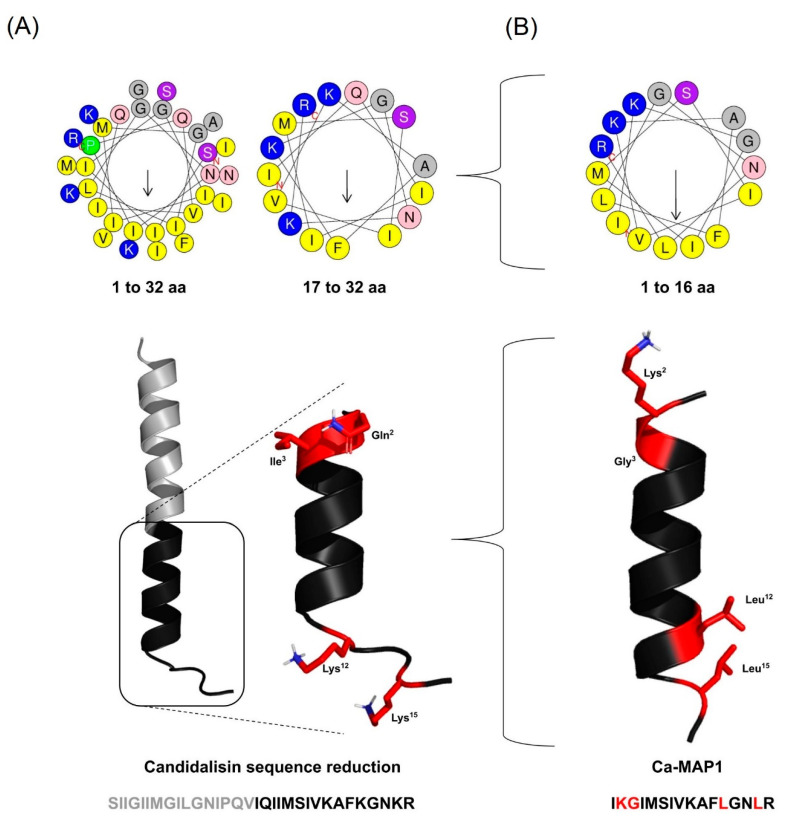
Figure 1
Figure 1
The strategy of rational design of the Ca-MAP1 peptide derivate from candidalysin: (A) Three-dimensional structure of candidalysin and reduced sequence portion of candidalysin with AMP physical-chemical characteristics with primary sequence and helical wheel projections; (B) Ca-MAP1 three-dimensional structure with primary sequence and helical wheel projection. The black amino acid residues in the three-dimensional structure are conserved, and the red is the changed amino acids. Legend: Positively charged amino acid residues are blue, negatively charged are red, hydrophobic aliphatic or aromatic are yellow/gray, and uncharged polar ones are pink/purple. The arrows within the diagram represent the hydrophobic moment.
Figure 2
Figure 2
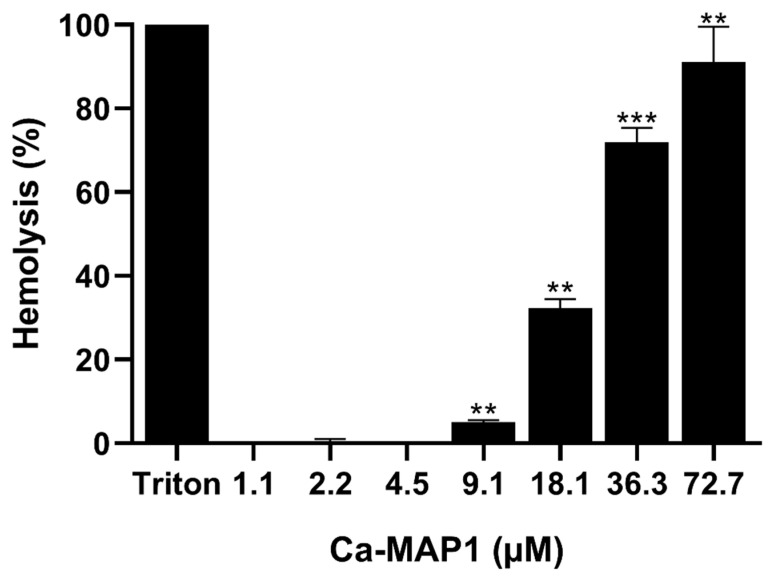
The hemolytic percentage from murine erythrocytes challenged with the Ca-MAP1 peptide in different micromolar concentrations. All experiments were performed in triplicate. Values of p ≤ 0.01 and p ≤ 0.0001 represent ** and ***, respectively. The p values were compared with cells treated with control.
Figure 3
Figure 3
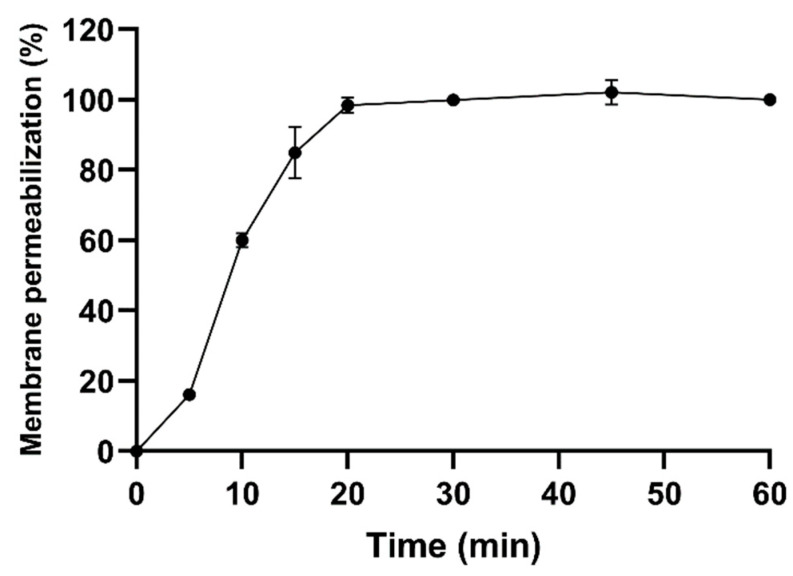
Effect on the permeabilization of E. coli bacterial membrane by Ca-MAP1 peptide over time, assed with Sytox Green dye assay. Three independent experiments were performed, in triplicate.
Figure 4
Figure 4
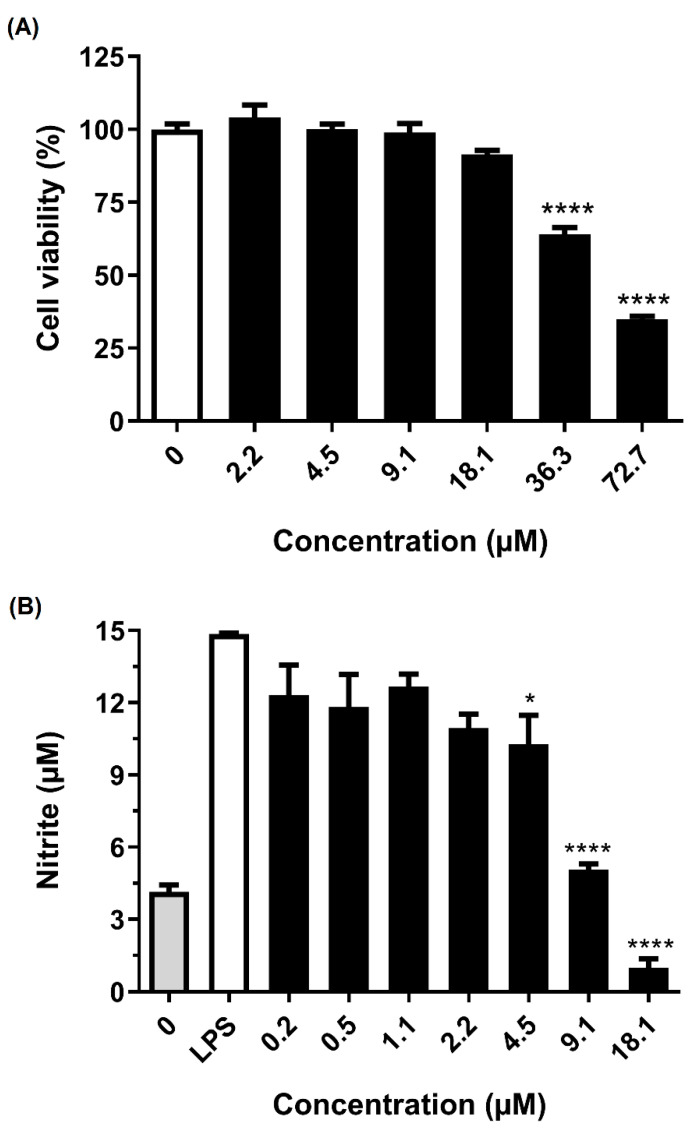
Effect of Ca-MAP1 peptide on (A) cellular viability of murine microglia BV-2 cell line and (B) NO production on BV-2 cell line stimulated with E. coli LPS. Three independent experiments were performed, in triplicate. Values are mean ± P.D.M. of three repetitions. Values of p ≤ 0.05 and p ≤ 0.0001 represent * and ****, respectively. The p values were compared with cells treated with control.
Figure 5
Figure 5
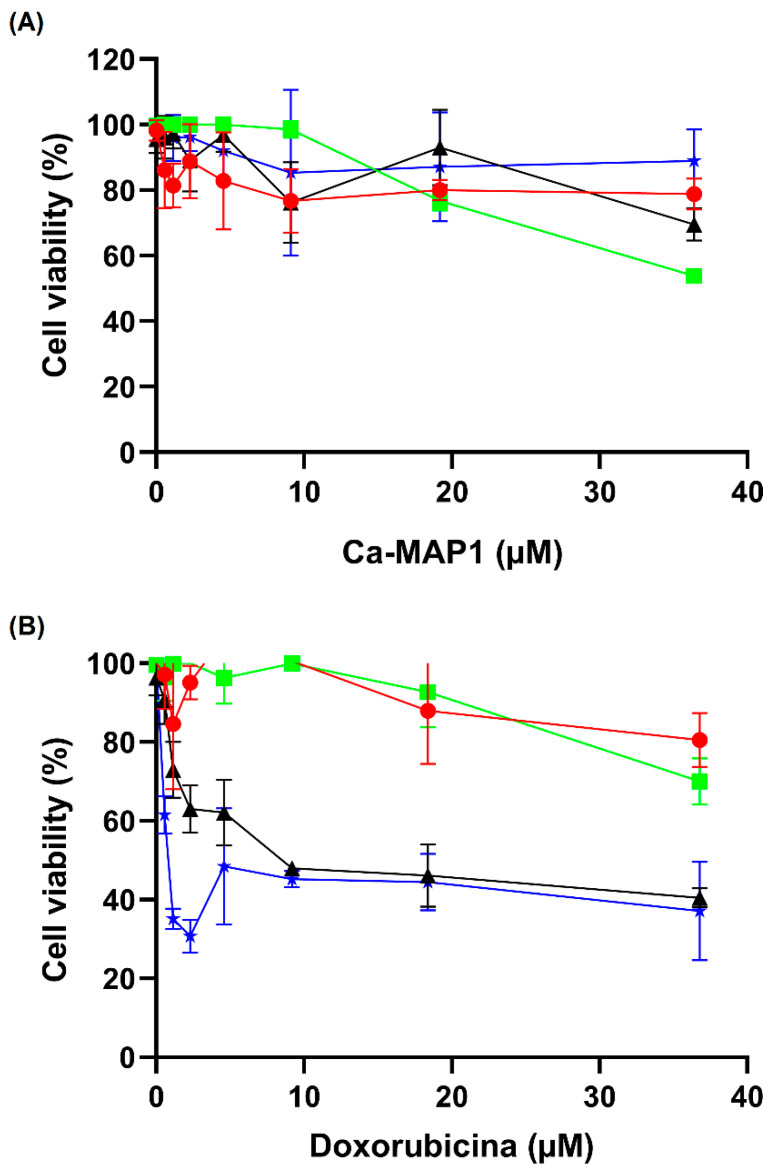
The cytotoxic effect of (A) Ca-MAP1 and (B) doxorubicin on the cell viability of cancer cell lines RD, HeLa, and NCI-H292, and the normal healthy MRC-5 cell line was evaluated by the MTT method. All experiments were performed in triplicate. Values are means ± P.D.M. of three repetitions. p > 0.0001 compared with cells treated with the control vehicle. Legend: Red circle = MRC-5, Green square = NCI-H292, Black triangle = RD, Blue star = HeLa.
Figure 6
Figure 6
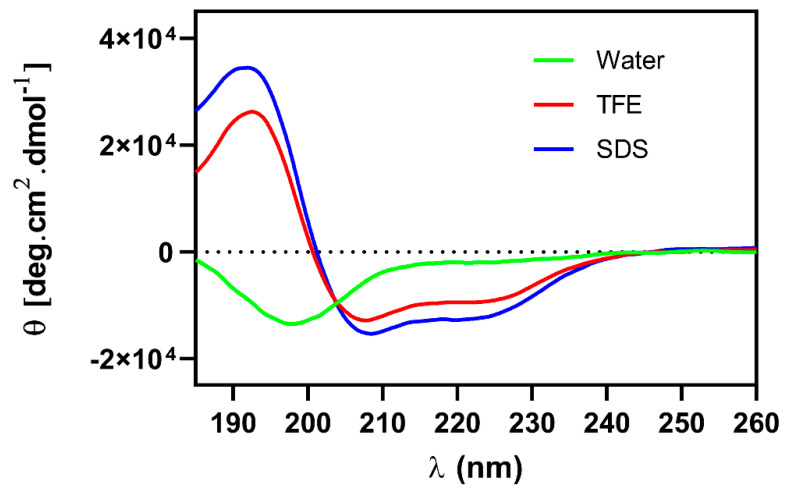
Circular dichroism analysis spectrum of the secondary structure of Ca-MAP1 peptide in the presence of water, TFE (50%), and SDS (30 mM), with a spectrum ranging from 185 nm to 260 nm.
Figure 7
Figure 7
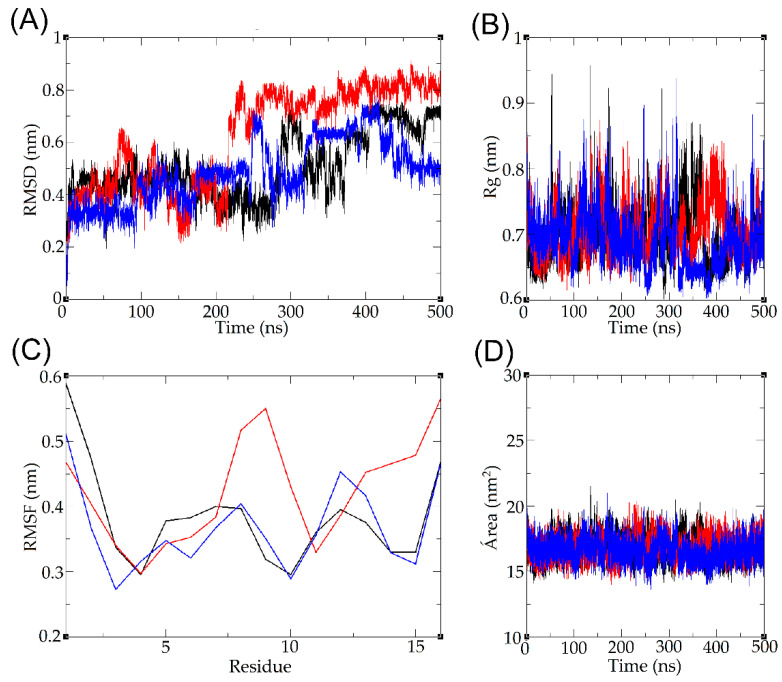
Molecular dynamics simulation result of Ca-MAP1 peptide in water, highlighting (A) root mean square deviation, (B) spin radius, (C) root mean square fluctuation, and (D) solvent accessible surface. The colors represent the triplicate of each parameter.

References

    1. Boleti A.P.D.A., Flores T.M.D.O., Moreno S.E., dos Anjos L., Mortari M.R., Migliolo L. Neuroinflammation: An Overview of Neurodegenerative and Metabolic Diseases and of Biotechnological Studies. Neurochem. Int. 2020;136:104714. doi: 10.1016/j.neuint.2020.104714. - DOI - PubMed
    1. Yong H.Y.F., Rawji K.S., Ghorbani S., Xue M., Yong V.W. The Benefits of Neuroinflammation for the Repair of the Injured Central Nervous System. Cell. Mol. Immunol. 2019;16:540–546. doi: 10.1038/s41423-019-0223-3. - DOI - PMC - PubMed
    1. Liao D., Xiang D., Dang R., Xu P., Wang J., Han W., Fu Y., Yao D., Cao L., Jiang P. Neuroprotective Effects of Dl-3-n-Butylphthalide against Doxorubicin-Induced Neuroinflammation, Oxidative Stress, Endoplasmic Reticulum Stress, and Behavioral Changes. Oxid. Med. Cell. Longev. 2018;2018:9125601. doi: 10.1155/2018/9125601. - DOI - PMC - PubMed
    1. Boleti A.P.D.A., Frihling B.E.F., Silva P.S.E., Cardoso P.H.D.O., de Moraes L.F.R.N., Rodrigues T.A.A., Biembengute M.E.F., Koolen H.H.F., Migliolo L. Biochemical Aspects and Therapeutic Mechanisms of Cannabidiol in Epilepsy. Neurosci. Biobehav. Rev. 2022;132:1214–1228. doi: 10.1016/j.neubiorev.2020.09.027. - DOI - PubMed
    1. Batista C.R., Gomes G.F., Candelario-Jalil E., Fiebich B.L., de Oliveira A.C. Lipopolysaccharide-Induced Neuroinflammation as a Bridge to Understand Neurodegeneration. Int. J. Mol. Sci. 2019;20:2293. doi: 10.3390/ijms20092293. - DOI - PMC - PubMed

Publication types

LinkOut - more resources