


COVID-19 Severity and Thrombo-Inflammatory Response Linked to Ethnicity
- PMID: 36289811
- PMCID: PMC9599040
- DOI: 10.3390/biomedicines10102549
COVID-19 Severity and Thrombo-Inflammatory Response Linked to Ethnicity
Abstract
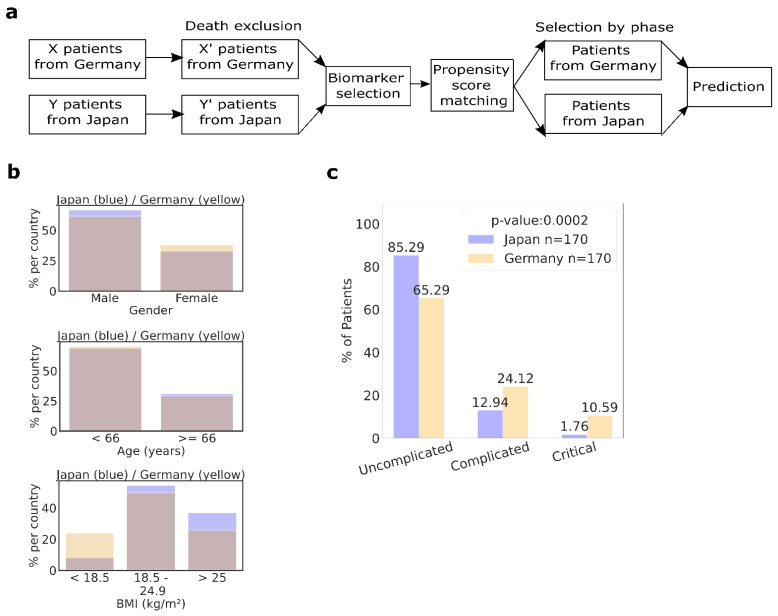
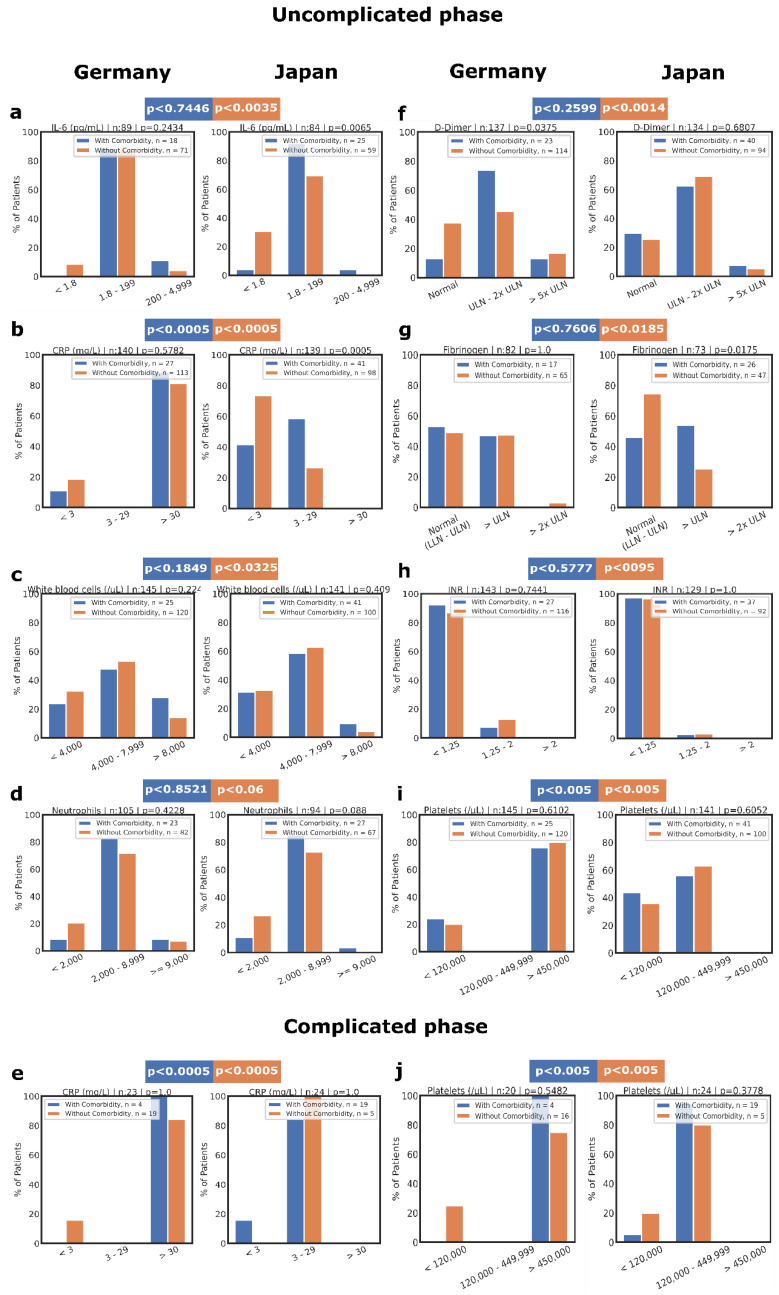
Although there is strong evidence that SARS-CoV-2 infection is associated with adverse outcomes in certain ethnic groups, the association of disease severity and risk factors such as comorbidities and biomarkers with racial disparities remains undefined. This retrospective study between March 2020 and February 2021 explores COVID-19 risk factors as predictors for patients' disease progression through country comparison. Disease severity predictors in Germany and Japan were cardiovascular-associated comorbidities, dementia, and age. We adjusted age, sex, body mass index, and history of cardiovascular disease comorbidity in the country cohorts using a propensity score matching (PSM) technique to reduce the influence of differences in sample size and the surprisingly young, lean Japanese cohort. Analysis of the 170 PSM pairs confirmed that 65.29% of German and 85.29% of Japanese patients were in the uncomplicated phase. More German than Japanese patients were admitted in the complicated and critical phase. Ethnic differences were identified in patients without cardiovascular comorbidities. Japanese patients in the uncomplicated phase presented a suppressed inflammatory response and coagulopathy with hypocoagulation. In contrast, German patients exhibited a hyperactive inflammatory response and coagulopathy with hypercoagulation. These differences were less pronounced in patients in the complicated phase or with cardiovascular diseases. Coagulation/fibrinolysis-associated biomarkers rather than inflammatory-related biomarkers predicted disease severity in patients with cardiovascular comorbidities: platelet counts were associated with severe illness in German patients. In contrast, high D-dimer and fibrinogen levels predicted disease severity in Japanese patients. Our comparative study indicates that ethnicity influences COVID-19-associated biomarker expression linked to the inflammatory and coagulation (thrombo-inflammatory) response. Future studies will be necessary to determine whether these differences contributed to the less severe disease progression observed in Japanese COVID-19 patients compared with those in Germany.
Keywords: COVID-19 disease severity; PSM; biomarker; cardiovascular disease; coagulation; comorbidities; ethnicity; inflammation; race.
Conflict of interest statement
The authors declare no conflict of interest.
Figures
References
-
- Mathur R., Rentsch C.T., Morton C.E., Hulme W.J., Schultze A., MacKenna B., Eggo R.M., Bhaskaran K., Wong A.Y.S., Williamson E.J., et al. Ethnic differences in SARS-CoV-2 infection and COVID-19-related hospitalisation, intensive care unit admission, and death in 17 million adults in England: An observational cohort study using the OpenSAFELY platform. Lancet. 2021;397:1711–1724. doi: 10.1016/S0140-6736(21)00634-6. - DOI - PMC - PubMed
-
- Go R.C., Nyirenda T., Bojarian M., Hosseini D.K., Kim K., Rahim M., Paleoudis E.G., Go A.C., Han Z., Sperber S.J., et al. Racial/ethnic disparities on inflammation and response to methylprednisolone in severe COVID-19 pneumonia. BMC Infect. Dis. 2022;22:254. doi: 10.1186/s12879-022-07237-1. - DOI - PMC - PubMed
Grants and funding
LinkOut - more resources
Full Text Sources
Miscellaneous
