


Alzheimer's Disease and SARS-CoV-2: Pathophysiological Analysis and Social Context
- PMID: 36291338
- PMCID: PMC9599687
- DOI: 10.3390/brainsci12101405
Alzheimer's Disease and SARS-CoV-2: Pathophysiological Analysis and Social Context
Abstract
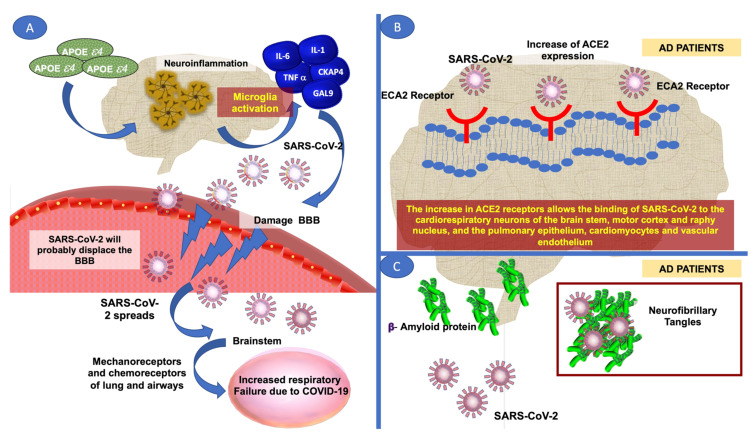
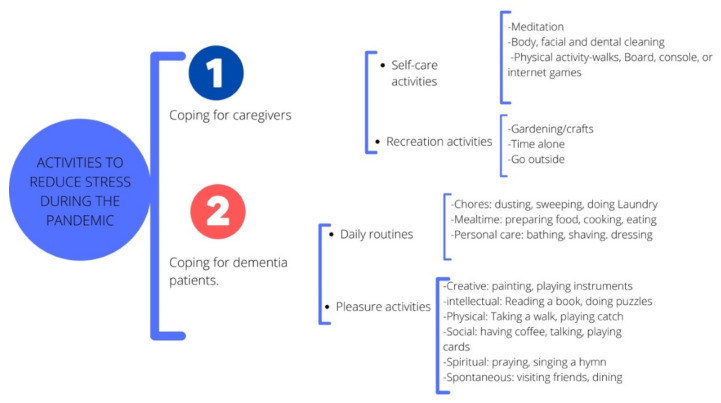
The COVID-19 pandemic has proven to be a challenge for healthcare systems, especially in terms of the care of patients with Alzheimer's disease (AD). Age is one of the major risk factors for severe forms of COVID-19, most probably due to the presence of comorbidities and inflammations. It is known that SARS-CoV-2 invades nerve endings and olfactory nerves through the binding of the spike protein to the angiotensin-converting enzyme 2 (ACE2) receptor. This interaction triggers an inflammatory cascade that results in cognitive impairment. In turn, the isoform of apolipoprotein-E4 (APOE-4ε) in AD is a risk factor for increased neuroinflammation through microglia activation, increased oxidative stress, and neurodegeneration. AD and SARS-CoV-2 are associated with increases in levels of inflammatory markers, as well as increases in levels of APOE-4ε, ACE2 and oxidative stress. Thus, there is a synergistic relationship between AD and SARS-CoV-2. In addition, the social isolation and other health measures resulting from the pandemic have led to a higher level of anxiety and depression among AD patients, a situation which may lead to a decline in cognitive function. Therefore, there is a need to develop strategies for keeping the patient calm but active.
Keywords: Alzheimer’s disease; COVID-19; SARS-CoV-2; inflammation; neurodegeneration; social behavior; social support.
Conflict of interest statement
The authors declare no conflict of interest.
Figures
References
-
- Garzón S.J., Camacho M., Tapiero J.A., Reina K.D. Características cognitivas y oculares en enfermedad de Alzheimer. Nova. 2018;16:101–114. doi: 10.22490/24629448.2693. - DOI
-
- Kumar A., Sidhu J., Goyal A., Tsao J.W. StatPearls. StatPearls Publishing; Treasure Island, FL, USA: 2022. Alzheimer Disease. - PubMed
-
- Barthelson K., Pederson S.M., Newman M., Lardelli M. Brain transcriptome analysis reveals subtle effects on mitochondrial function and iron homeostasis of mutations in the SORL1 gene implicated in early onset familial Alzheimer’s disease. Mol. Brain. 2020;13:142. doi: 10.1186/s13041-020-00681-7. - DOI - PMC - PubMed
Publication types
LinkOut - more resources
Full Text Sources
Miscellaneous
