


The Management of Toe Walking in Children with Autism Spectrum Disorder: "Cast and Go"
- PMID: 36291413
- PMCID: PMC9600566
- DOI: 10.3390/children9101477
The Management of Toe Walking in Children with Autism Spectrum Disorder: "Cast and Go"
Abstract
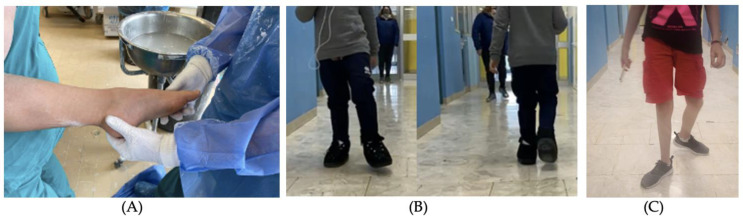
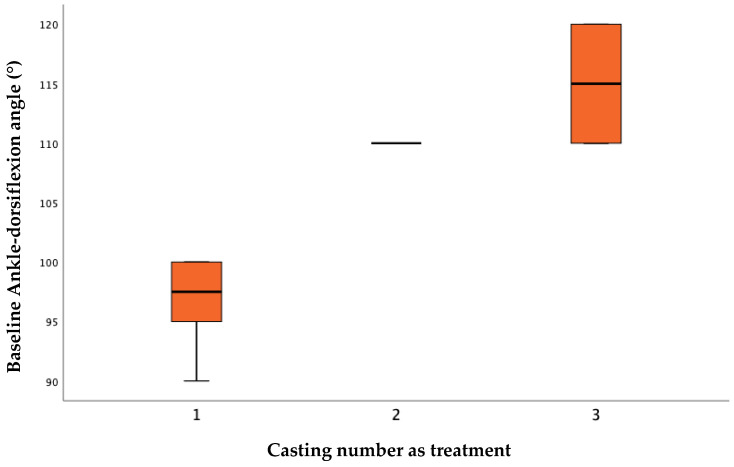
Background: Toe walking is associated with autism spectrum disorders (ASD). Correction of this “behavior” is a health challenge. The toe walker is affected by the contact refusal with the outside world: touching the ground as little as possible, trying to avoid any contact. A structured equines foot is a possible consequence. Method: We present the “Cast and Go” protocol, used in 22 idiopathic toe walker children with ASD treated from 2015 to 2020. The treatment was performed by a single senior experienced doctor with botulinum injection, ankle casts and rehabilitative therapies. All patients underwent pre- and post-treatment clinical evaluation using ankle dorsiflexion angle and casting number as treatment. We aimed to identify the intervention with the shortest acquisition time for the management of toe walking. Results: Our findings demonstrated the baseline ankle dorsiflexion angle influenced the casting number (p < 0.01) and male patients had a higher baseline ankle dorsiflexion angle than female patients (p < 0.01). No adverse events were observed. Conclusions: These findings suggested that the “Cast and Go” protocol could be a promising, dynamic and effective practice for toe walking disease in ASD patients.
Keywords: autism; botulinum toxin; serial casting; toe walking.
Conflict of interest statement
The authors declare no conflict of interest.
Figures
References
LinkOut - more resources
Full Text Sources
Miscellaneous
