


Decision Conflicts in Clinical Care during COVID-19: A Multi-Perspective Inquiry
- PMID: 36292361
- PMCID: PMC9602416
- DOI: 10.3390/healthcare10101914
Decision Conflicts in Clinical Care during COVID-19: A Multi-Perspective Inquiry
Abstract
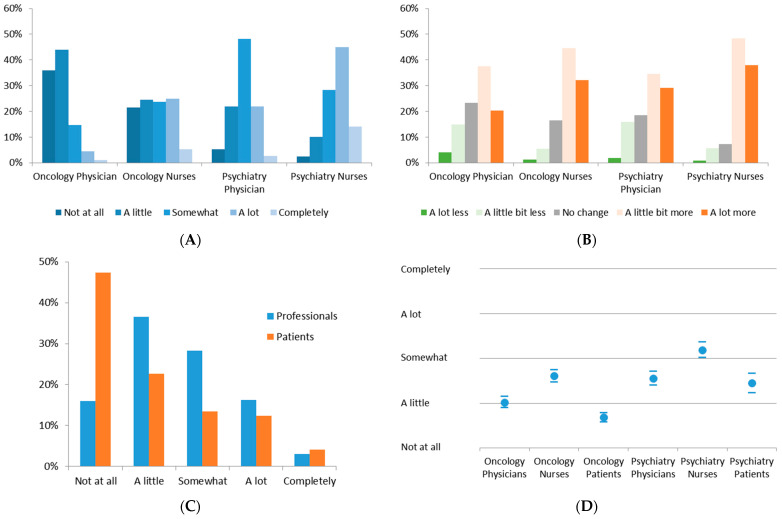
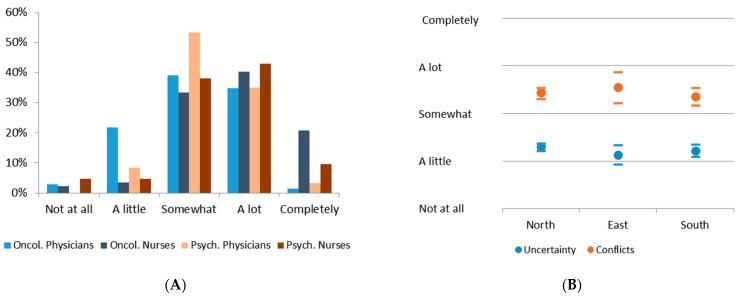
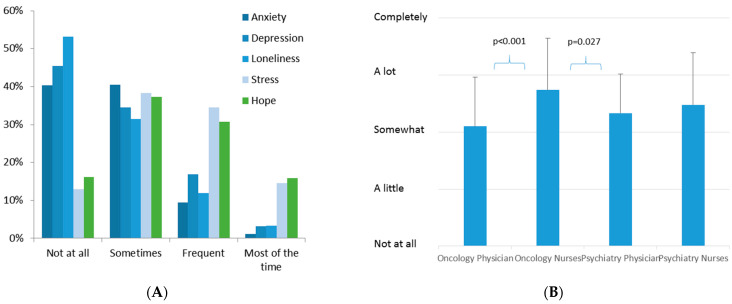
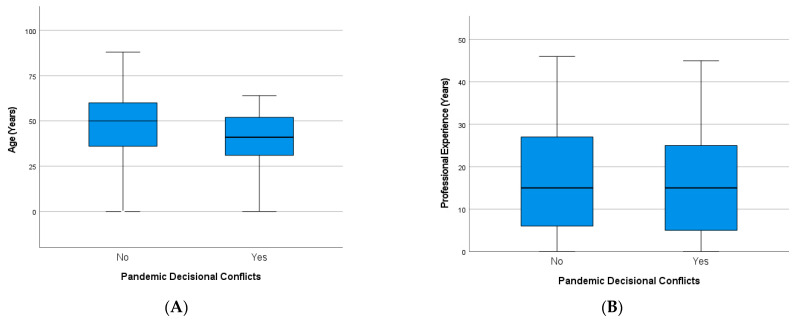
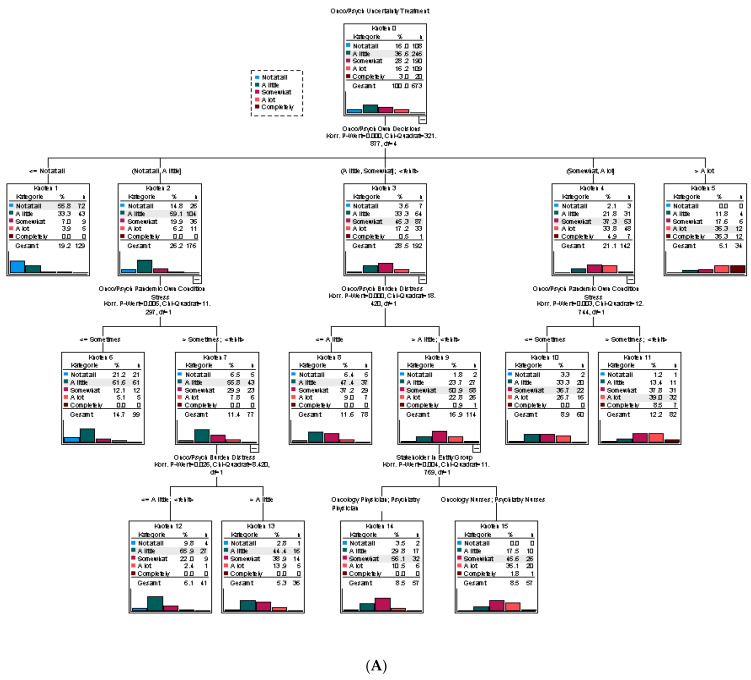
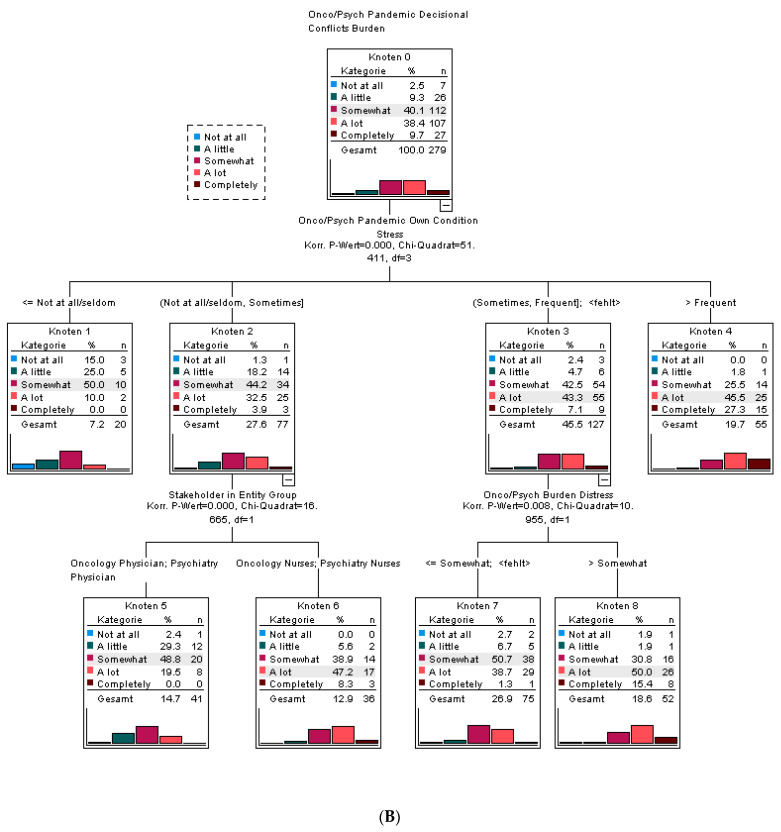
Background: The early COVID-19-pandemic was characterized by changes in decision making, decision-relevant value systems and the related perception of decisional uncertainties and conflicts resulting in decisional burden and stress. The vulnerability of clinical care professionals to these decisional dilemmas has not been characterized yet. Methods: A cross-sectional questionnaire study (540 patients, 322 physicians and 369 nurses in 11 institutions throughout Germany) was carried out. The inclusion criterion was active involvement in clinical treatment or decision making in oncology or psychiatry during the first year of COVID-19. The questionnaires covered five decision dimensions (conflicts and uncertainty, resources, risk perception, perception of consequences for clinical processes, and the perception of consequences for patients). Data analysis was performed using ANOVA, Pearson rank correlations, and the Chi²-test, and for inferential analysis, nominal logistic regression and tree classification were conducted. Results: Professionals reported changes in clinical management (27.5%) and a higher workload (29.2%), resulting in decisional uncertainty (19.2%) and decisional conflicts (22.7%), with significant differences between professional groups (p < 0.005), including anxiety, depression, loneliness and stress in professional subgroups (p < 0.001). Nominal regression analysis targeting “Decisional Uncertainty” provided a highly significant prediction model (LQ p < 0.001) containing eight variables, and the analysis for “Decisional Conflicts” included six items. The classification rates were 64.4% and 92.7%, respectively. Tree analysis confirmed three levels of determinants. Conclusions: Decisional uncertainty and conflicts during the COVID-19 pandemic were independent of the actual pandemic load. Vulnerable professional groups for the perception of a high number of decisional dilemmas were characterized by individual perception and the psychological framework. Coping and management strategies should target vulnerability, enable the handling of the individual perception of decisional dilemmas and ensure information availability and specific support for younger professionals.
Keywords: COVID-19; decision conflicts; moral distress; oncology; psychiatry; uncertainty.
Conflict of interest statement
The authors declare no conflict of interest.
Figures
References
-
- Deml M.J., Minnema J., Dubois J., Senn O., Streit S., Rachamin Y., Jungo K.T. The impact of the COVID-19 pandemic on the continuity of care for at-risk patients in Swiss primary care settings: A mixed-methods study. Soc. Sci. Med. 2022;298:114858. doi: 10.1016/j.socscimed.2022.114858. - DOI - PMC - PubMed
-
- Koren O., Abu Rajab S., Barbour M., Shachar M., Shahar A., Zubidat K., Slim W., Igbariya D., Rozner E., Turgeman Y., et al. The impact of anxiety level on decision to seek medical care of non-COVID cardiac patients during the pandemic outbreak—single-center experience in Israel. Rev. Cardiovasc. Med. 2022;23:50. doi: 10.31083/j.rcm2302050. - DOI - PubMed
Grants and funding
LinkOut - more resources
Full Text Sources
