


mTOR as a Potential Target for the Treatment of Microbial Infections, Inflammatory Bowel Diseases, and Colorectal Cancer
- PMID: 36293326
- PMCID: PMC9603867
- DOI: 10.3390/ijms232012470
mTOR as a Potential Target for the Treatment of Microbial Infections, Inflammatory Bowel Diseases, and Colorectal Cancer
Abstract
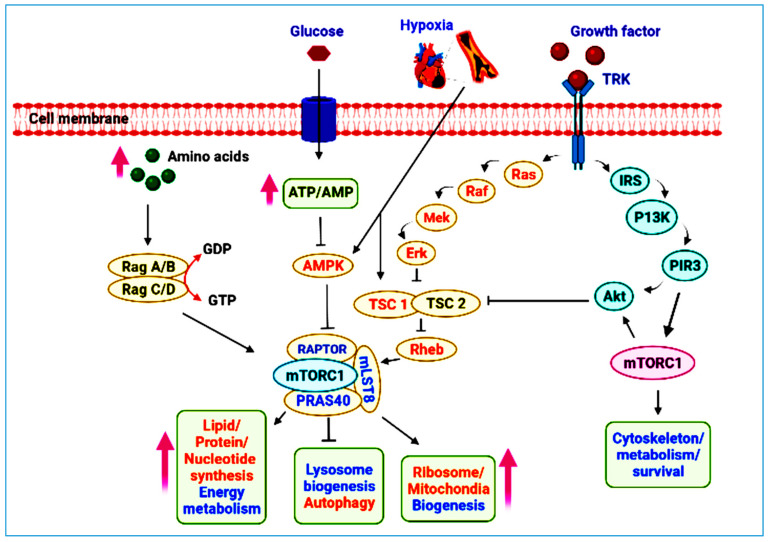
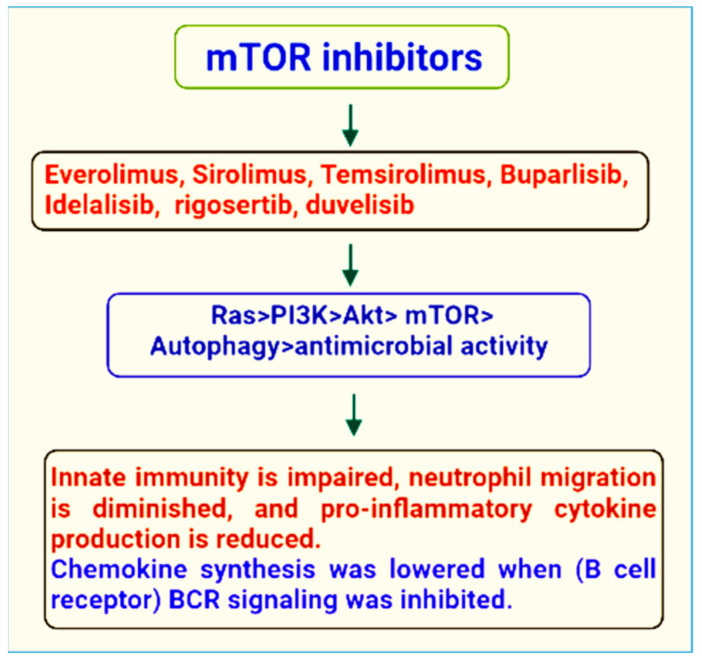
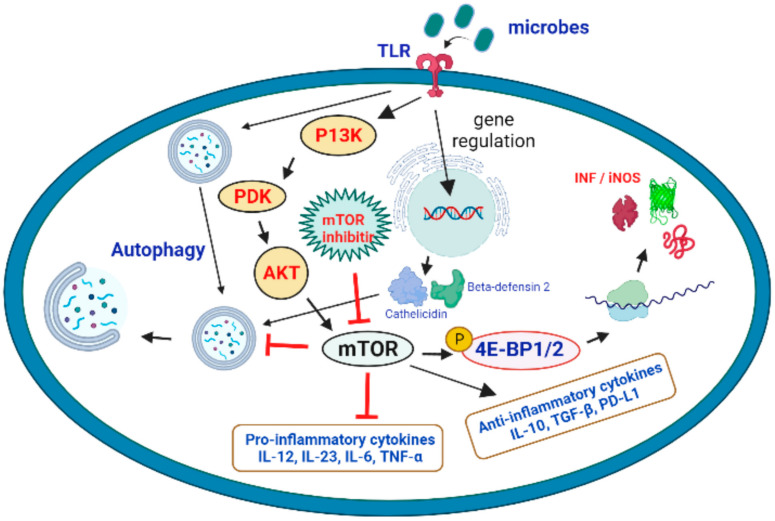
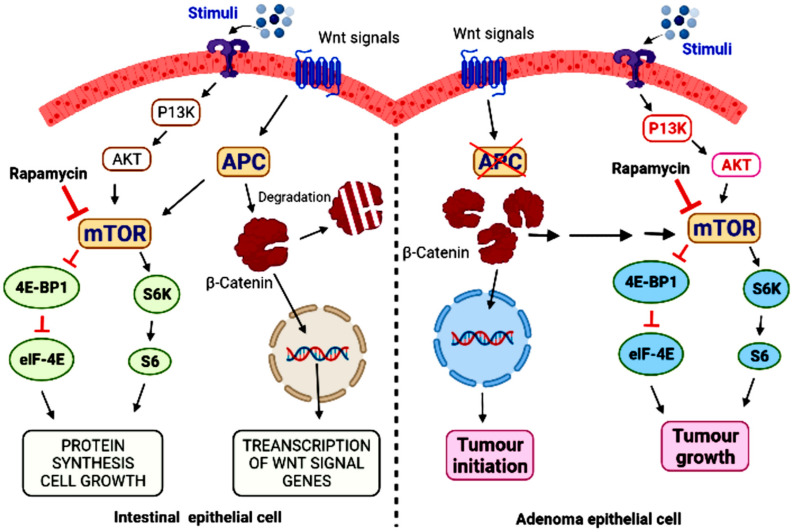
The mammalian target of rapamycin (mTOR) is the major controller of a number of important cellular activities, including protein synthesis, cell expansion, multiplication, autophagy, lysosomal function, and cellular metabolism. When mTOR interacts with specific adaptor proteins, it forms two complexes, mTOR complex 1 (mTORC1) and mTOR complex 2 (mTORC2). The mTOR signaling system regulates gene transcription and protein manufacturing to control proliferation of cell, differentiation of immune cell, and tumor metabolism. Due to its vital role in case of microbial infections, inflammations and cancer development and progression, mTOR has been considered as a key therapeutic target for the development of targeted medication. As autophagy dysfunction is linked to changes in both innate and adaptive immune responses, bacterial clearance defects, and goblet and Paneth cell malfunction, all of these changes are linked to inflammatory bowel diseases (IBD) and colorectal cancer (CRC) pathogenesis. Preclinical and clinical data have shown that the inhibition and induction of autophagy have significant potential to be translated into the clinical applications. In IBD and several CRC models, mTORC1 inhibitors have been found effective. In the recent years, a number of novel mTOR inhibitors have been investigated in clinical trials, and a number of drugs have shown considerably enhanced efficacy when combined with mTOR inhibitors. The future developments in the mTOR targeting medications can benefit patients in individualized therapy. Advanced and innovative medicines that are more effective and have lower drug resistance are still in high demand. New findings could be relevant in medicine development, pharmacological modification, or future mTOR inhibitor research. Therefore, the goal of this review is to present a comprehensive account of current developments on the mTOR pathway and its inhibitors, with an emphasis on the management of microbial infections, the treatment of inflammatory bowel disease, and the management of colon cancer.
Keywords: colorectal cancer (CRC); inflammatory bowel diseases (IBD); mammalian target of rapamycin (mTOR).
Conflict of interest statement
The authors have declared no conflict of interest.
Figures
References
-
- Pignataro G., Capone D., Polichetti G., Vinciguerra A., Gentile A., Di Renzo G., Annunziato L. Neuroprotective, immunosuppressant and antineoplastic properties of mTOR inhibitors: Current and emerging therapeutic options. Curr. Opin. Pharmacol. 2011;11:378–394. doi: 10.1016/j.coph.2011.05.003. - DOI - PubMed
Publication types
MeSH terms
Substances
Grants and funding
LinkOut - more resources
Full Text Sources
Medical
Research Materials
Miscellaneous
