


Molecular Dissection of TDP-43 as a Leading Cause of ALS/FTLD
- PMID: 36293362
- PMCID: PMC9604209
- DOI: 10.3390/ijms232012508
Molecular Dissection of TDP-43 as a Leading Cause of ALS/FTLD
Abstract
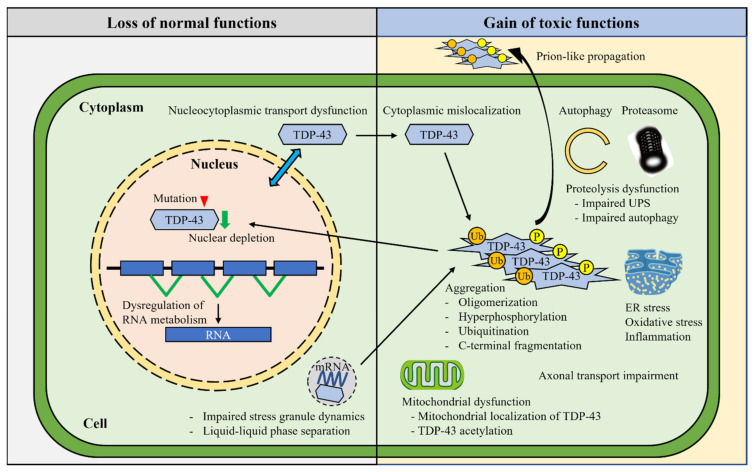
TAR DNA binding protein 43 (TDP-43) is a DNA/RNA binding protein involved in pivotal cellular functions, especially in RNA metabolism. Hyperphosphorylated and ubiquitinated TDP-43-positive neuronal cytoplasmic inclusions are identified in the brain and spinal cord in most cases of amyotrophic lateral sclerosis (ALS) and a substantial proportion of frontotemporal lobar degeneration (FTLD) cases. TDP-43 dysfunctions and cytoplasmic aggregation seem to be the central pathogenicity in ALS and FTLD. Therefore, unraveling both the physiological and pathological mechanisms of TDP-43 may enable the exploration of novel therapeutic strategies. This review highlights the current understanding of TDP-43 biology and pathology, describing the cellular processes involved in the pathogeneses of ALS and FTLD, such as post-translational modifications, RNA metabolism, liquid-liquid phase separation, proteolysis, and the potential prion-like propagation propensity of the TDP-43 inclusions.
Keywords: ALS; FTLD; RNA metabolism; TDP-43; aggregation; neurodegenerative diseases; phase separation.
Conflict of interest statement
The authors declare no conflict of interest.
Figures

References
-
- Arai T., Hasegawa M., Akiyama H., Ikeda K., Nonaka T., Mori H., Mann D., Tsuchiya K., Yoshida M., Hashizume Y., et al. TDP-43 is a component of ubiquitin-positive tau-negative inclusions in frontotemporal lobar degeneration and amyotrophic lateral sclerosis. Biochem. Biophys. Res. Commun. 2006;351:602–611. doi: 10.1016/j.bbrc.2006.10.093. - DOI - PubMed
Publication types
MeSH terms
Substances
Grants and funding
LinkOut - more resources
Full Text Sources
Medical
Miscellaneous
