


The Molecular Mechanisms of Liver Fibrosis and Its Potential Therapy in Application
- PMID: 36293428
- PMCID: PMC9604031
- DOI: 10.3390/ijms232012572
The Molecular Mechanisms of Liver Fibrosis and Its Potential Therapy in Application
Abstract
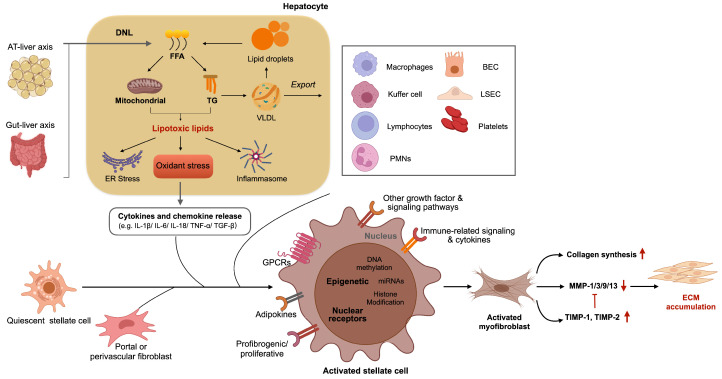
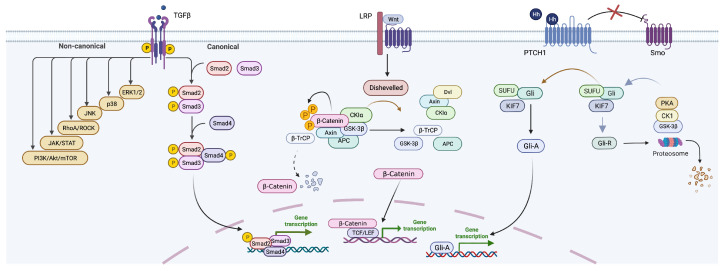
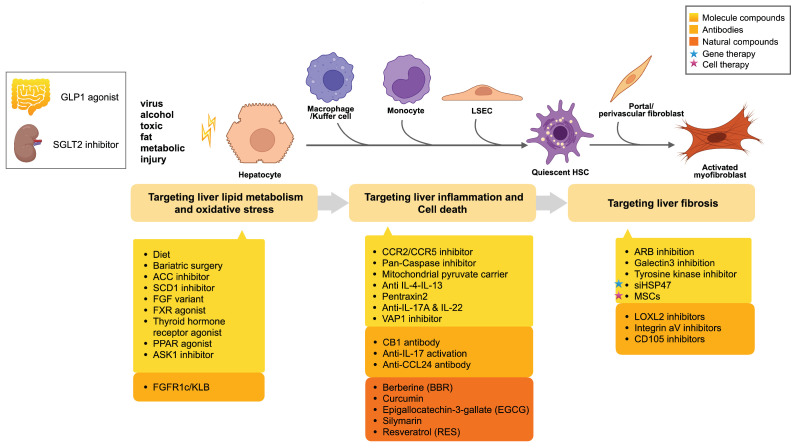
Liver fibrosis results from repeated and persistent liver damage. It can start with hepatocyte injury and advance to inflammation, which recruits and activates additional liver immune cells, leading to the activation of the hepatic stellate cells (HSCs). It is the primary source of myofibroblasts (MFs), which result in collagen synthesis and extracellular matrix protein accumulation. Although there is no FDA and EMA-approved anti-fibrotic drug, antiviral therapy has made remarkable progress in preventing or even reversing the progression of liver fibrosis, but such a strategy remains elusive for patients with viral, alcoholic or nonalcoholic steatosis, genetic or autoimmune liver disease. Due to the complexity of the etiology, combination treatments affecting two or more targets are likely to be required. Here, we review the pathogenic mechanisms of liver fibrosis and signaling pathways involved, as well as various molecular targets for liver fibrosis treatment. The development of efficient drug delivery systems that target different cells in liver fibrosis therapy is also summarized. We highlight promising anti-fibrotic events in clinical trial and preclinical testing, which include small molecules and natural compounds. Last, we discuss the challenges and opportunities in developing anti-fibrotic therapies.
Keywords: antifibrotic compounds; cellular signaling pathways; drug delivery system; liver fibrosis; natural compounds.
Conflict of interest statement
The authors declare no conflict of interest.
Figures
References
Publication types
MeSH terms
Substances
LinkOut - more resources
Full Text Sources
Medical
Research Materials
