


The Project "Colourful Means Healthy" as an Educational Measure for the Prevention of Diet-Related Diseases: Investigating the Impact of Nutrition Education for School-Aged Children on Their Nutritional Knowledge
- PMID: 36293887
- PMCID: PMC9603396
- DOI: 10.3390/ijerph192013307
The Project "Colourful Means Healthy" as an Educational Measure for the Prevention of Diet-Related Diseases: Investigating the Impact of Nutrition Education for School-Aged Children on Their Nutritional Knowledge
Abstract
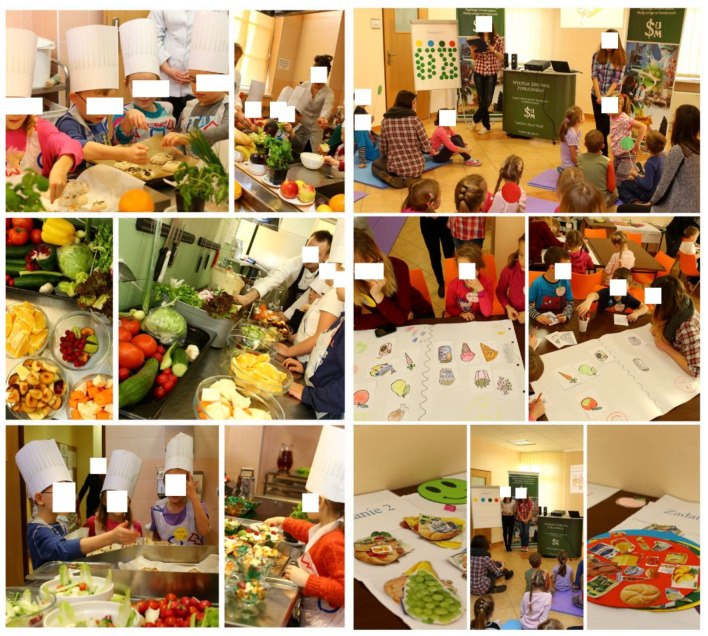
Methods: An educational project called Cooking and Educational Workshops "Colourful means healthy" was conducted at the Department of Dietetics of the Faculty of Public Health in Bytom of the Medical University of Silesia in Katowice, Poland, between 1 July 2017 and 30 June 2019. The participants/recipients of the project were second-grade primary schoolchildren (317 pupils aged 7-9 years).
Objective: The aim of this article is to assess the change in knowledge of the principles of healthy eating among children aged 7-9 years following the nutritional education we carried out as part of the "Colourful means healthy" project. As part of project evaluation, the participating children were asked to rate selected food products in terms of their influence on human health (healthy vs. unhealthy).
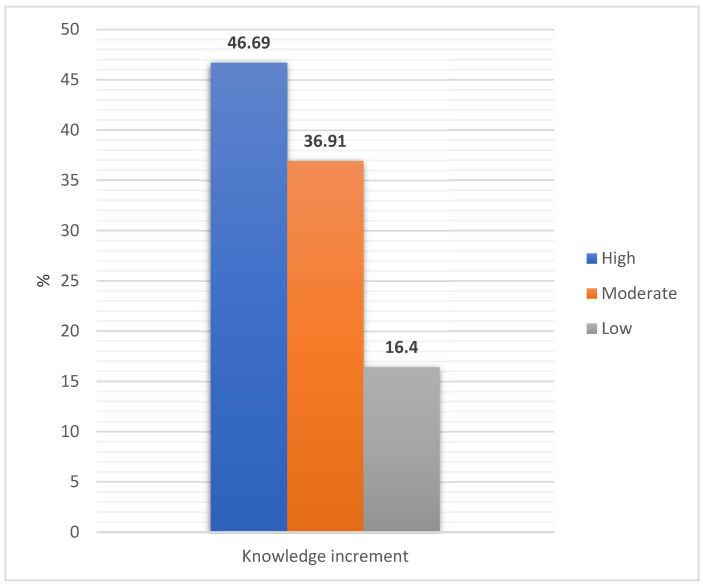
Results: There was a statistically significant difference between the percentage of correct answers provided by the pupils before and after nutrition education. Thus, one may conclude that conducting an educational programme caused the participants' nutrition knowledge to increase.
Conclusion: The present study demonstrated the potential of nutrition education in the form of cooking and educational workshops in terms of increasing nutrition knowledge. As such, workshops like these can be a useful measure for improving eating habits and eliminating dietary errors in the study population. However, future research is needed in order to verify whether such cooking and educational workshops can produce beneficial and lasting changes in dietary habits over the long term.
Keywords: children; children’s diet; diet-related diseases; healthy eating; nutrition education.
Conflict of interest statement
The authors declare no conflict of interest.
Figures
References
-
- Górecka D., Otyłość I.N., Cz I. Problem współczesnej cywilizacji. Przemysł Spożywczy. 2012;66:16–20.
-
- Obesity and overweight, WHO. [(accessed on 16 September 2022)]. Available online: www.who.int/news-room/fact-sheets/detail/obesity-and-overweight.
-
- Caldeira S.L., Bonsmann S.S.G., Bakogianni I. Public Procurement of Food for Health: Technical Report on the School Setting. Publications Office of the European Union; Luxembourg: 2017. [(accessed on 28 January 2020)]. Available online: www.ec.europa.eu/jrc/en/publication/public-procurement-food-health-techn....
-
- [(accessed on 28 January 2020)]. Available online: www.rp.pl/Zdrowie-/180519381-Nasze-dzieci-tyja-na-potege-Czy-uda-sie-odw....
-
- Caldeira S.L., de Carvalho R.N., Bonsmann S.S.G. Mapping and Zooming in on Childhood Obesity. Publications Office of the European Union; Luxembourg: 2018. [(accessed on 28 January 2020)]. Available online: http://publications.jrc.ec.europa.eu/repository/handle/JRC112190.
Publication types
MeSH terms
LinkOut - more resources
Full Text Sources
Research Materials
