


Depressive Pseudodementia with Reversible AD-like Brain Hypometabolism: A Case Report and a Review of the Literature
- PMID: 36294804
- PMCID: PMC9605211
- DOI: 10.3390/jpm12101665
Depressive Pseudodementia with Reversible AD-like Brain Hypometabolism: A Case Report and a Review of the Literature
Abstract
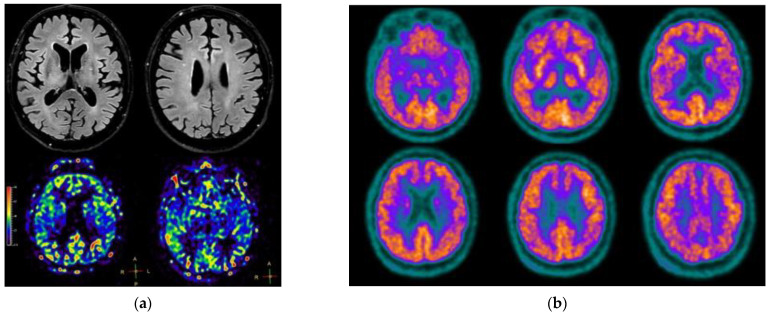
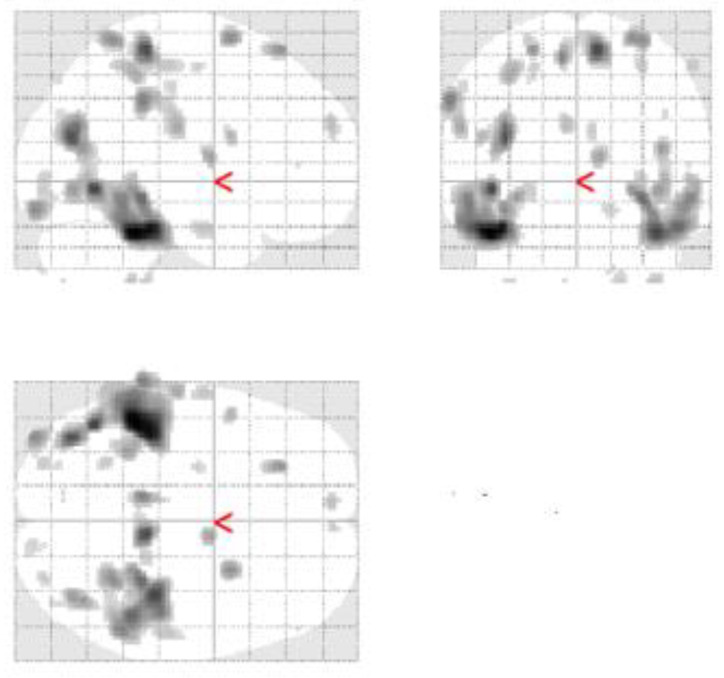
Recent European guidelines recommend using brain FDG-PET to differentiate between Alzheimer's disease (AD) and depressive pseudodementia (DP), with specific hypometabolism patterns across the former group, and typically normal or frontal hypometabolism in the latter. We report the case of a 74 years-old man with DP (MMSE 16/30), whose FDG-PET visual rating and semiquantitative analysis closely mimicked the typical AD pattern, showing severe hypometabolism in bilateral precuneus, parietal and temporal lobes, and sparing frontal areas, suggesting the diagnosis of moderate AD. Shortly after starting antidepressant polytherapy, he underwent formal NPS testing, which revealed moderate impairment of episodic memory and mild impairment on executive and visuospatial tests, judged consistent with neurodegenerative dementia and concomitant depression. Over the following two years, he improved dramatically: repeated NPS assessment did not show significant deficits, and FDG-PET showed restoration of cerebral metabolism. The confirmation of PET findings via semiquantitative analysis, and their reversion to normality with antidepressant treatment, proved the non-neurodegenerative origin of the initial AD-like FDG-PET abnormalities. We review similar cases and provide a comprehensive analysis of their implications, concluding that reversible FDG-PET widespread hypometabolism might represent a biomarker of pseudodementia. Therefore, we suggest caution when interpreting FDG-PET scans of depressed patients with cognitive impairment.
Keywords: Alzheimer’s disease; FDG-PET; case report; depression; pseudodementia; reversible hypometabolism.
Conflict of interest statement
The authors declare no conflict of interest.
Figures

References
-
- Auning E., Selnes P., Grambaite R., Šaltyte Benth J., Haram A., Løvli Stav A., Bjørnerud A., Hessen E., Hol P.K., Muftuler løndalen A., et al. Neurobiological correlates of depressive symptoms in people with subjective and mild cognitive impairment. Acta Psychiatr. Scand. 2015;131:139–147. doi: 10.1111/acps.12352. - DOI - PubMed
-
- Marano C.M., Workman C.I., Lyman C.H., Kramer E., Hermann C.R., Ma Y., Dhawan V., Chaly T., Eidelberg D., Smith G.S. The relationship between fasting serum glucose and cerebral glucose metabolism in late-life depression and normal aging. Psychiatry Res. Neuroimaging. 2014;222:84–90. doi: 10.1016/j.pscychresns.2014.01.009. - DOI - PMC - PubMed
-
- Emsell L., Vanhaute H., Vansteelandt K., De Winter F.L., Christiaens D., Van den Stock J., Vandenberghe R., Van Laere K., Sunaert S., Bouckaert F., et al. An optimized MRI and PET based clinical protocol for improving the differential diagnosis of geriatric depression and Alzheimer’s disease. Psychiatry Res. Neuroimaging. 2022;320:111443. doi: 10.1016/j.pscychresns.2022.111443. - DOI - PubMed
Publication types
LinkOut - more resources
Full Text Sources
