Review
. 2022 Sep 20;58(10):1314.
doi: 10.3390/medicina58101314.

Proximal Femoral Fractures in the Elderly: A Few Things to Know, and Some to Forget

Affiliations
Review

Proximal Femoral Fractures in the Elderly: A Few Things to Know, and Some to Forget

Nicola Maffulli et al. Medicina (Kaunas). .

Abstract

Hip fractures are a leading cause of hospitalisation in elderly patients, representing an increasing socioeconomic problem arising from demographic changes, considering the increased number of elderly people in our countries. Adequate peri-operative treatment is essential to decrease mortality rates and avoid complications. Modern management should involve a coordinated multidisciplinary approach, early surgery, pain treatment, balanced fluid therapy, and prevention of delirium, to improve patients' functional and clinical outcomes. The operative treatment for intertrochanteric and subtrochanteric fractures is intramedullary nail or sliding/dynamic hip screw (DHS) on the basis of the morphology of the fracture. In the case of neck fractures, total hip replacement (THR) or hemiarthroplasty are recommended. However, several topics remain debated, such as the optimum thromboprophylaxis to reduce venous thromboembolism or the use of bone cement. Postoperatively, patients can benefit from early mobilisation and geriatric multidisciplinary care. However, during the COVID-19 pandemic, a prolonged time to operation with a subsequent increased complication rate have burdened frail and elderly patients with hip fractures. Future studies are needed with the aim to investigate better strategies to improve nutrition, postoperative mobility, to clarify the role of home-based rehabilitation, and to identify the ideal analgesic treatment and adequate tools in case of patients with cognitive impairment.

Keywords: COVID-19; elderly; hip; nailing; proximal hip fracture.


Conflict of interest statement

The authors declare no conflict of interest.

Figures
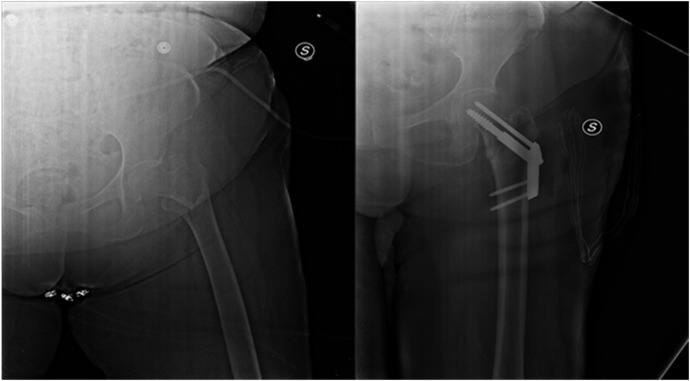
Figure 1
Figure 1
Dynamic hip screw (DHS), pre and post operation of hip fracture using a particular type of DHS, named Anteversa Plate.
Figure 2
Figure 2
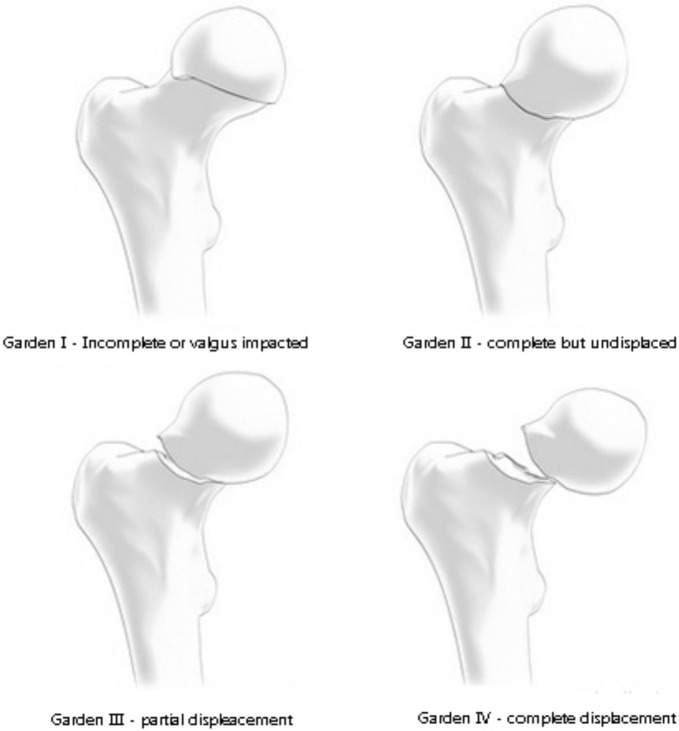
Garden classification.
Figure 3
Figure 3
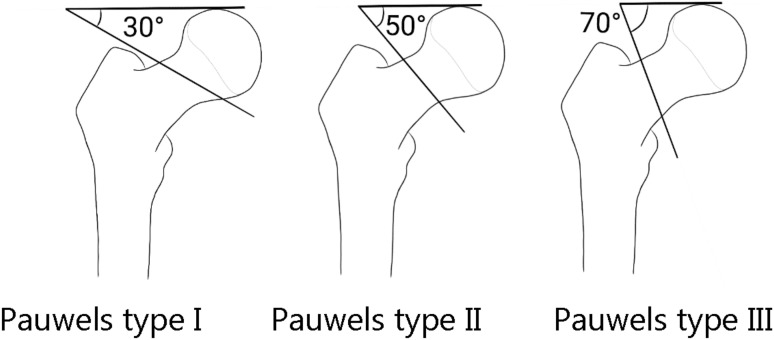
Pauwels classification.
Figure 4
Figure 4
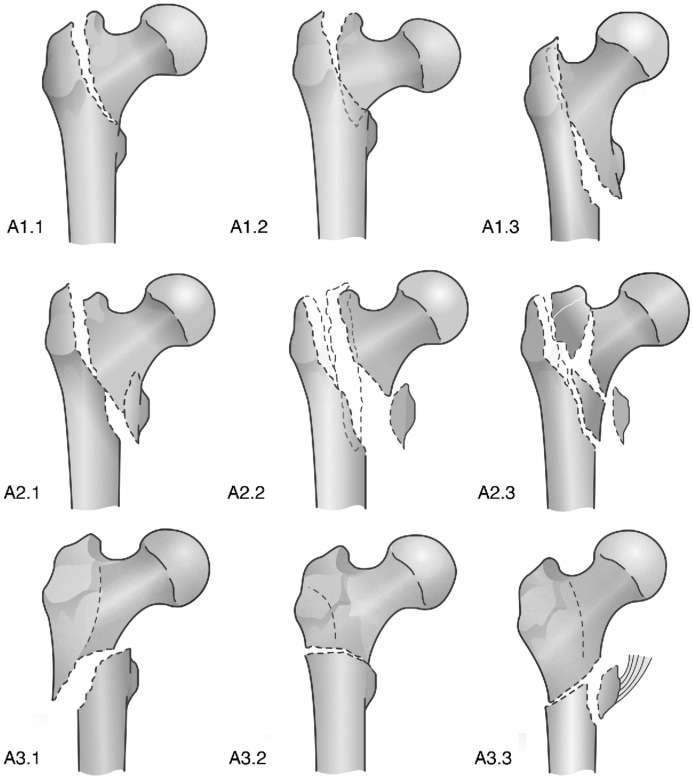
AO/OTA classification and subclassification.
Figure 5
Figure 5
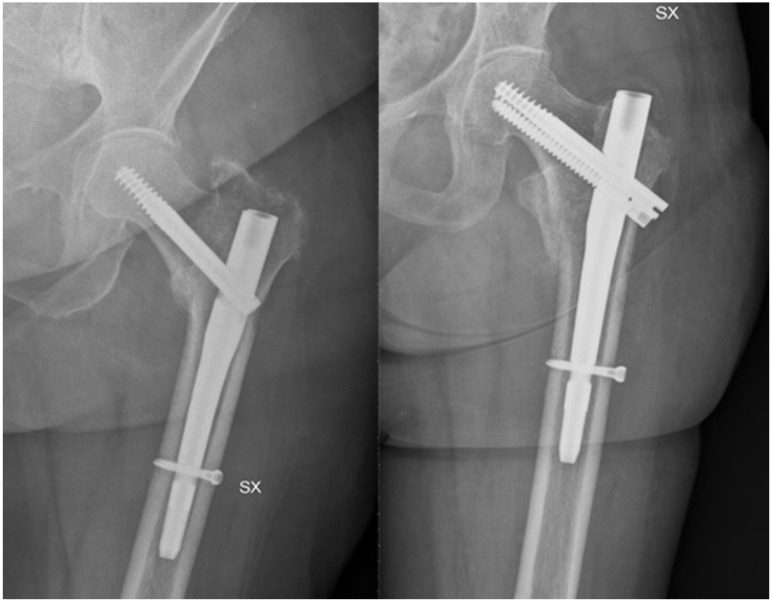
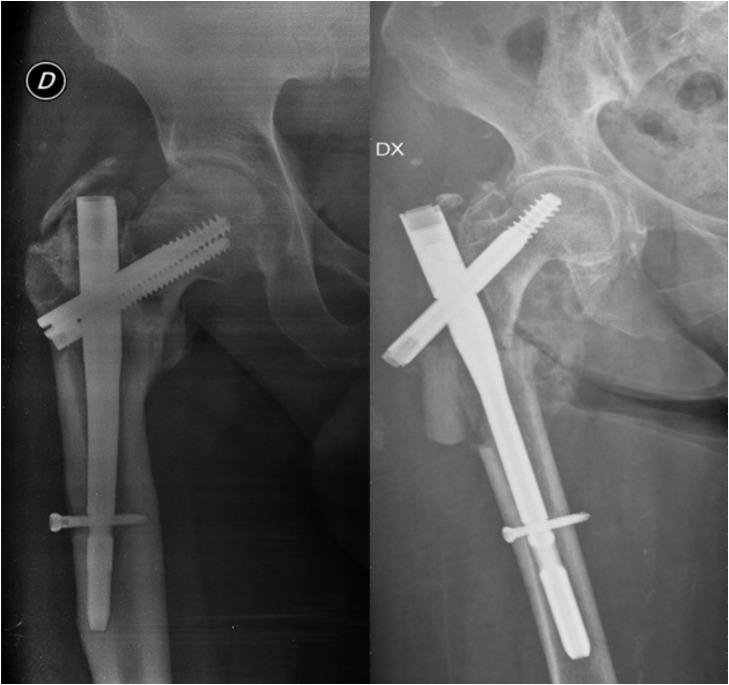
Hip fracture nailing using two different devices characterised by one or two cephalic screws.
Figure 6
Figure 6
Failure examples of hip fracture fixation using nail devices.
Figure 7
Figure 7
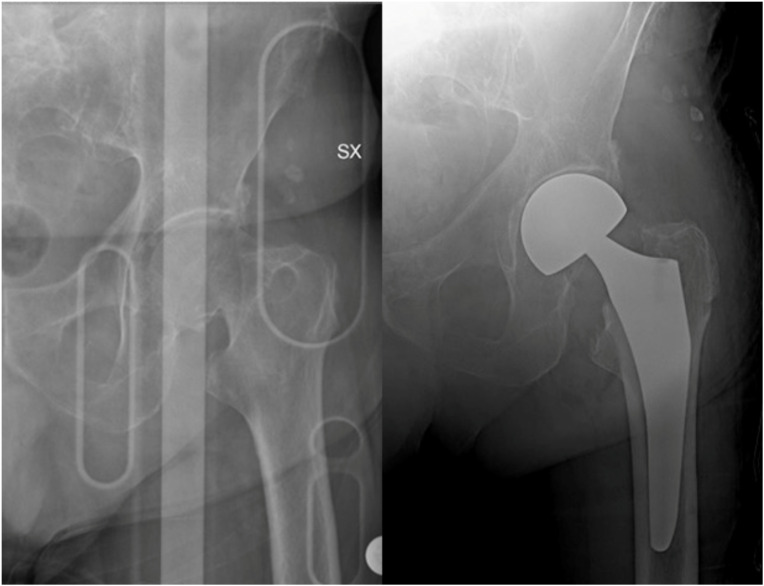
Treatment of fracture of neck of the femur using a hemiarthroplasty.
Figure 8
Figure 8
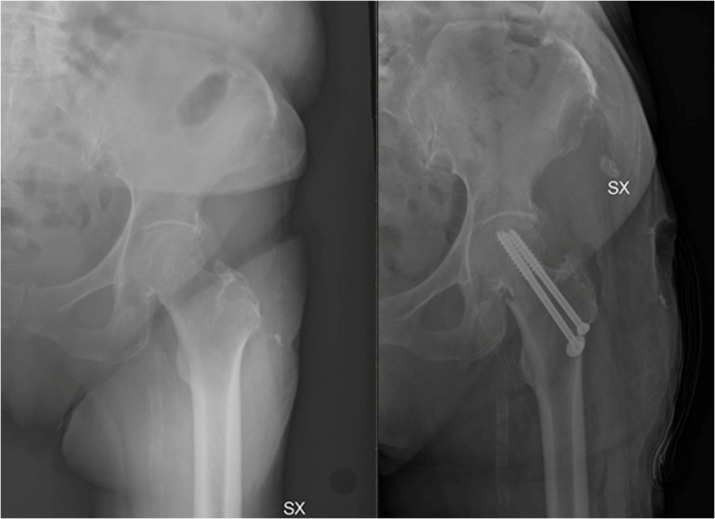
In young patients with non-displaced fractures or as a salvage option, two or three partially threaded canulated screws can be used.
Figure 9
Figure 9
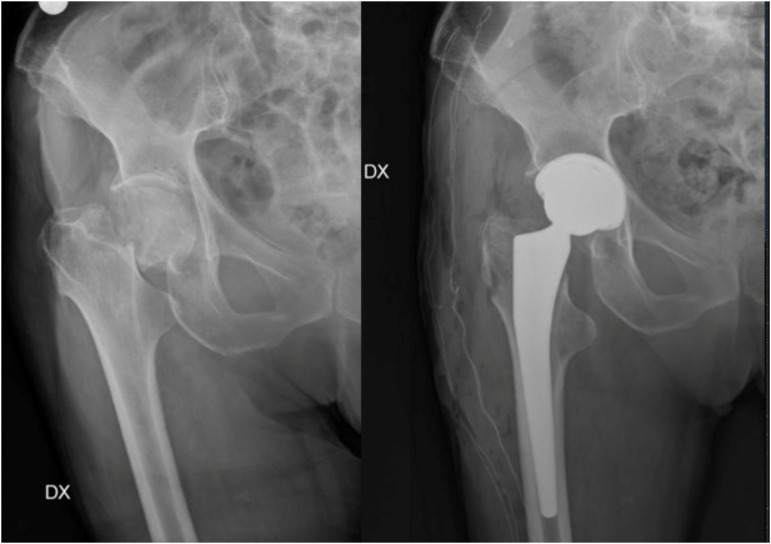
In case of healthy and active patients, with high functional requirements and lower biological age, total hip arthroplasty is the treatment of choice.

References

    1. Johnell O., Kanis J.A. An estimate of the worldwide prevalence, mortality and disability associated with hip fracture. Osteoporos. Int. 2004;15:897–902. doi: 10.1007/s00198-004-1627-0. - DOI - PubMed
    1. Aicale R., Maffulli N. Greater rate of cephalic screw mobilisation following proximal femoral nailing in hip fractures with a tip-apex distance (TAD) and a calcar referenced TAD greater than 25 mm. J. Orthop. Surg. Res. 2018;13:106. doi: 10.1186/s13018-018-0814-1. - DOI - PMC - PubMed
    1. Cooper C., Campion G., Melton L.J. Hip fractures in the elderly: A world-wide projection. Osteoporos. Int. 1992;2:285–289. doi: 10.1007/BF01623184. - DOI - PubMed
    1. Roberts S.E., Goldacre M.J. Time trends and demography of mortality after fractured neck of femur in an English population, 1968–1998: Database study. BMJ. 2003;327:771–775. doi: 10.1136/bmj.327.7418.771. - DOI - PMC - PubMed
    1. Griffin X.L., Parsons N., Achten J., Fernandez M., Costa M.L. Recovery of health-related quality of life in a United Kingdom hip fracture population. The Warwick Hip Trauma Evaluation—A prospective cohort study. Bone Jt. J. 2015;97-B:372–382. doi: 10.1302/0301-620X.97B3.35738. - DOI - PubMed