


The Beneficial Effects of Bariatric-Surgery-Induced Weight Loss on Renal Function
- PMID: 36295869
- PMCID: PMC9608617
- DOI: 10.3390/metabo12100967
The Beneficial Effects of Bariatric-Surgery-Induced Weight Loss on Renal Function
Abstract
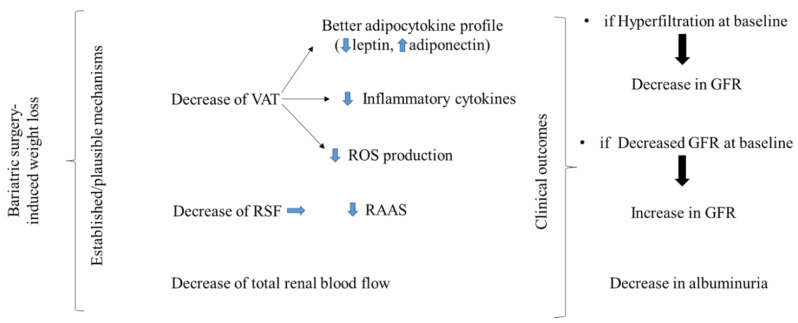
Obesity represents an independent risk factor for the development of chronic kidney disease (CKD), leading to specific histopathological alterations, known as obesity-related glomerulopathy. Bariatric surgery is the most effective means of inducing and maintaining sustained weight loss. Furthermore, in the context of bariatric-surgery-induced weight loss, a reduction in the proinflammatory state and an improvement in the adipokine profile occur, which may also contribute to the improvement of renal function following bariatric surgery. However, the assessment of renal function in the context of obesity and following marked weight loss is difficult, since the formulas adopted to estimate glomerular function use biomarkers whose production is dependent on muscle mass (creatinine) or adipose tissue mass and inflammation (cystatin-c). Thus, following bariatric surgery, the extent to which reductions in plasma concentrations reflect the actual improvement in renal function is not clear. Despite this limitation, the available literature suggests that in patients with hyperfiltration at baseline, GFR is reduced following bariatric surgery, whereas GFR is increased in patients with decreased GFR at baseline. These findings are also confirmed in the few studies that have used measured rather than estimated GFR. Albuminuria is also decreased following bariatric surgery. Moreover, bariatric surgery seems superior in achieving the remission of albuminuria and early CKD than the best medical treatment. In this article, we discuss the pathophysiology of renal complications in obesity, review the mechanisms through which weight loss induces improvements in renal function, and provide an overview of the renal outcomes following bariatric surgery.
Keywords: bariatric surgery; obesity; renal function; renal metabolism; renal perfusion; renal sinus fat.
Conflict of interest statement
The authors declare no conflict of interest.
Figures
References
Publication types
LinkOut - more resources
Full Text Sources
