


Different Types of Non-Starch Polysaccharides Alter the Growth, Intestinal Flora and Serum Metabolite Profile of Grass Carp, Ctenopharyngodon idella
- PMID: 36295905
- PMCID: PMC9609856
- DOI: 10.3390/metabo12101003
Different Types of Non-Starch Polysaccharides Alter the Growth, Intestinal Flora and Serum Metabolite Profile of Grass Carp, Ctenopharyngodon idella
Abstract
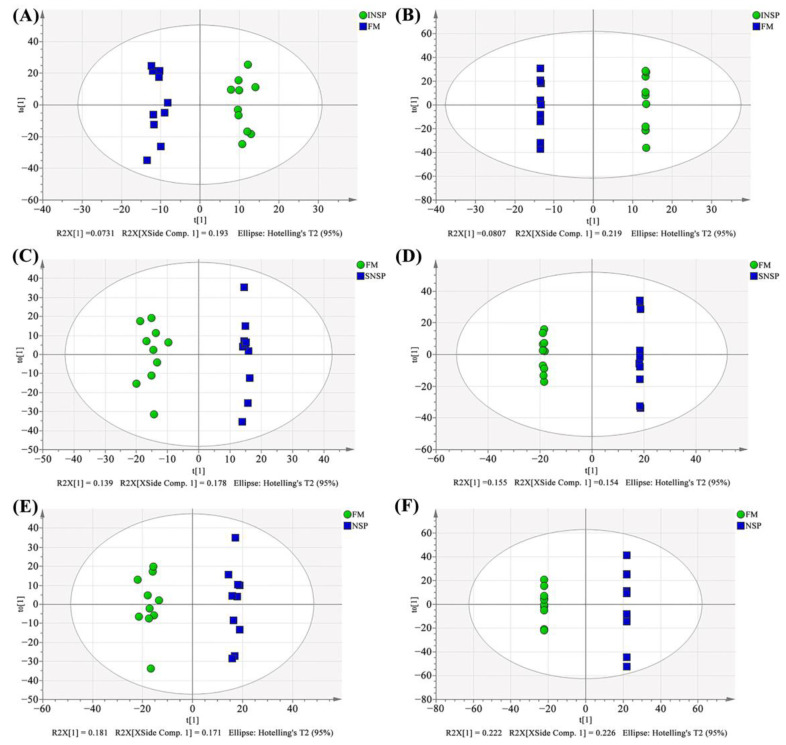
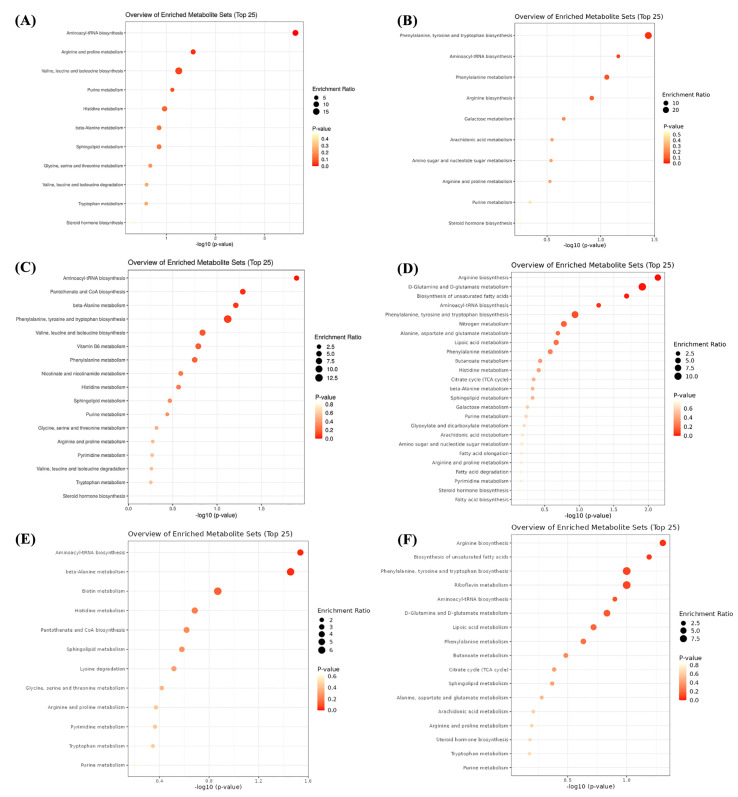
Dietary non-starch polysaccharides (NSPs) broadly influence fish intestinal flora and physiological metabolism, but limited information is available on grass carp (Ctenopharyngodon idella). This study investigated the effects of different types of NSPs on the growth, nutrient metabolism status, gut microbiota, and serum metabolome of grass carp. Fish were fed with diets containing 4.4% insoluble NSPs (INSP), 9.24% soluble NSPs (SNSP), 13.64% NSPs (4.4% INSP + 9.24% SNSP, NSP) and non NSPs (FM), respectively, for 9 weeks. Results showed that dietary SNSP decreased protein efficiency ratio and serum protein content, but increased feed coefficient ratio, feed intake, plasma blood urea nitrogen content, and plasma aspartate aminotransferase activity (AST); conversely, dietary INSP decreased plasma AST activity. Dietary INSP and SNSP increased serum free cholesterol content. Dietary NSPs altered the abundance of dominant bacteria and serum metabolite profiles. The differential metabolites between groups were significantly enriched in amino acid synthesis and metabolic pathways. In conclusion, dietary INSP exhibited a growth-promoting effect compared to SNSP. Dietary INSP is beneficial for improving nutrient metabolism and intestinal health. Moreover, dietary NSPs may regulate the physiological metabolism and feeding behavior of grass carp by altering amino acid synthesis and metabolism.
Keywords: antioxidant capacity; blood biochemistry; grass carp; microbiota; serum metabolome.
Conflict of interest statement
The authors all declare that they have no known competing financial interests in this work.
Figures


References
-
- Deng J., Zhang X., Sun Y., Mi H., Zhang L. Effects of different types of non-starch polysaccharides on growth, digestive enzyme activity, intestinal barrier function and antioxidant activity of rainbow trout (Oncorhynchus mykiss) Aqua. Rep. 2021;21:100864. doi: 10.1016/j.aqrep.2021.100864. - DOI
-
- Ren S., Cai C., Cui G., Ni Q., Jiang R., Su X., Wang Q., Chen W., Zhang J., Wu P., et al. High dosages of pectin and cellulose cause different degrees of damage to the livers and intestines of Pelteobagrus fulvidraco. Aquaculture. 2020;514:734445. doi: 10.1016/j.aquaculture.2019.734445. - DOI
-
- Kuz’mina V.V. Influence of age on digestive enzyme activity in some freshwater teleosts. Aquaculture. 1996;148:25–37. doi: 10.1016/S0044-8486(96)01370-1. - DOI
-
- Sinha A.K., Kumar V., Makkar H.P.S., De Boeck G., Becker K. Non-starch polysaccharides and their role in fish nutrition—A review. Food Chem. 2011;127:1409–1426. doi: 10.1016/j.foodchem.2011.02.042. - DOI
-
- Cai C., Ren S., Cui G., Ni Q., Li X., Meng Y., Meng Z., Zhang J., Su X., Chen H., et al. Short-term stress due to dietary pectin induces cholestasis, and chronic stress induces hepatic steatosis and fibrosis in yellow catfish, Pelteobagrus fulvidraco. Aquaculture. 2020;516:734607. doi: 10.1016/j.aquaculture.2019.734607. - DOI
Grants and funding
LinkOut - more resources
Full Text Sources
Research Materials
