


Haptoglobin-Conjugated Gold Nanoclusters as a Nanoantibiotic to Combat Bacteremia
- PMID: 36296784
- PMCID: PMC9611519
- DOI: 10.3390/nano12203596
Haptoglobin-Conjugated Gold Nanoclusters as a Nanoantibiotic to Combat Bacteremia
Abstract
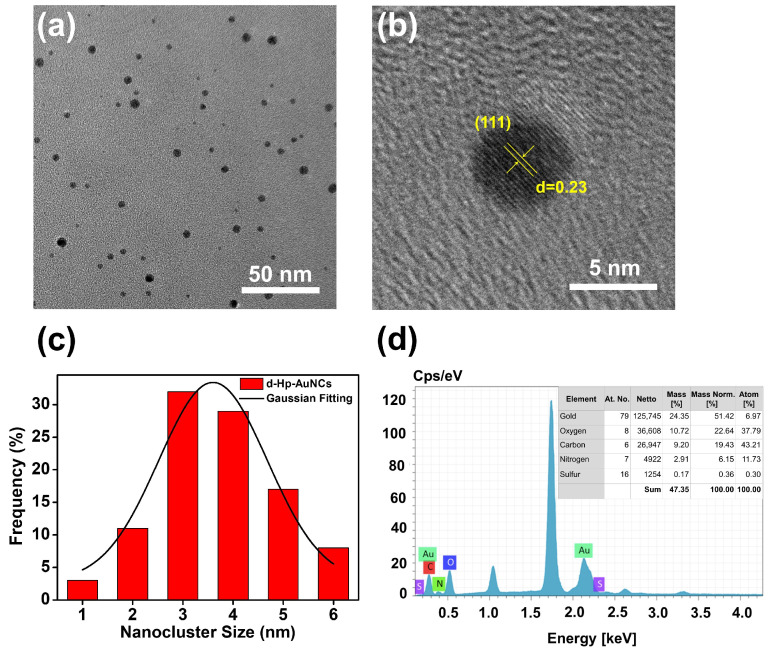
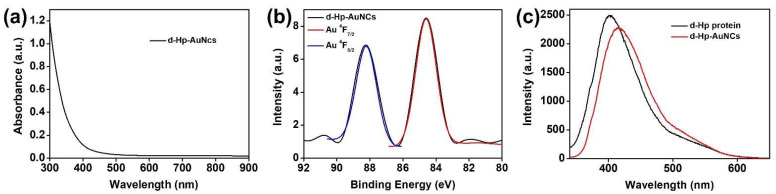
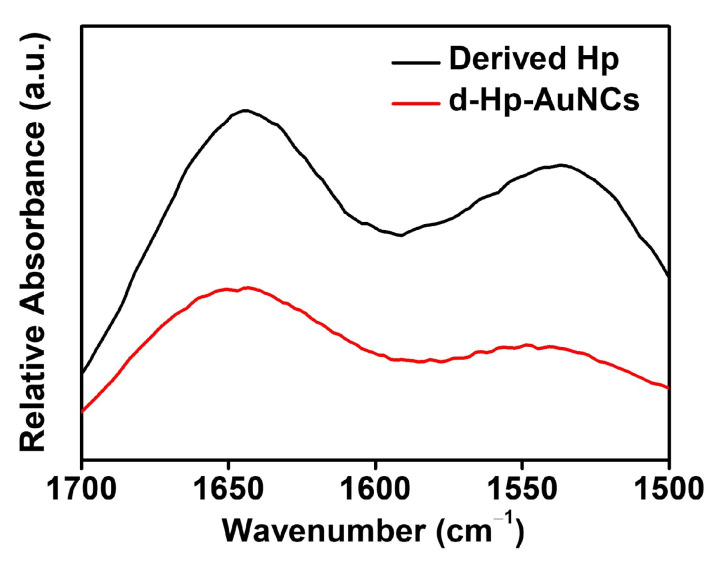
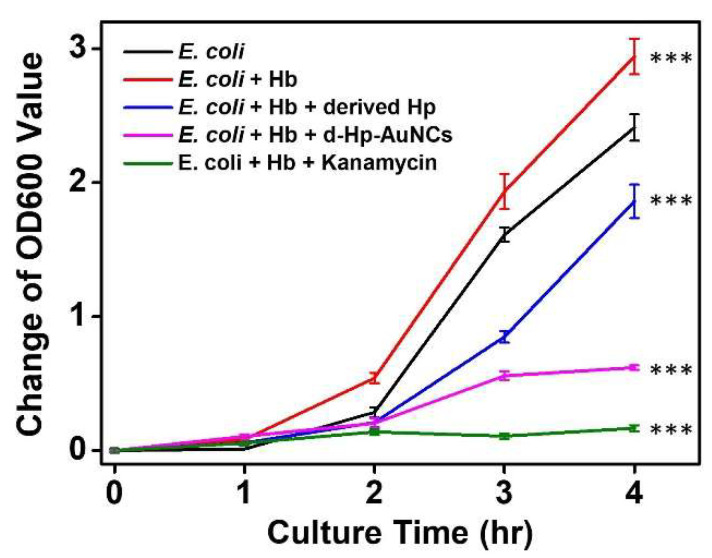
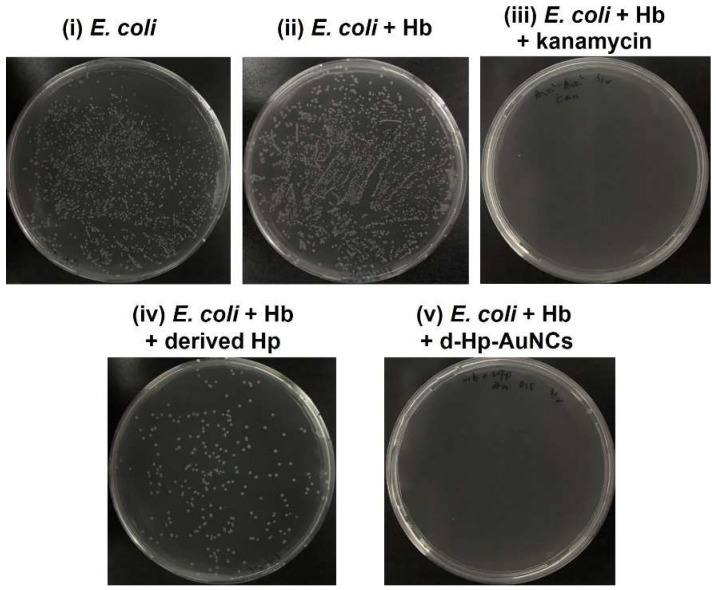
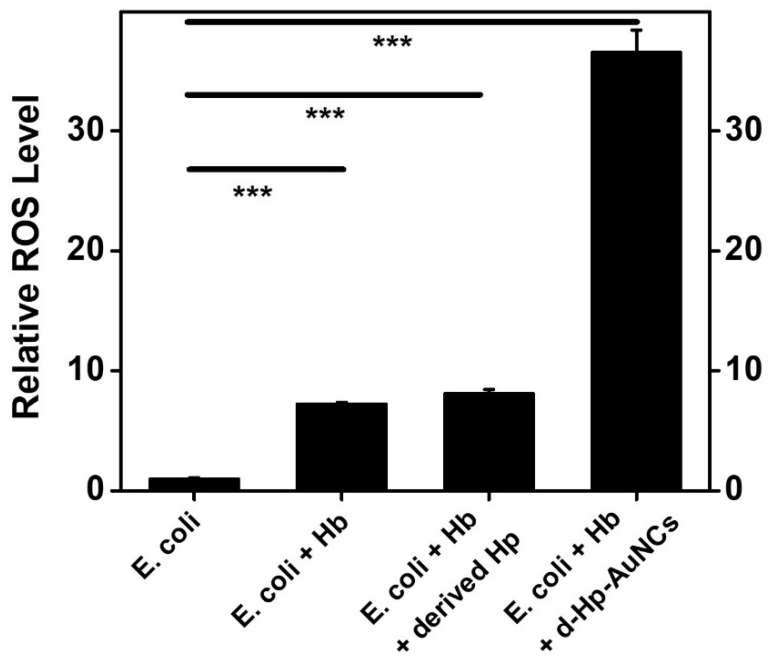
Gold nanoclusters have revealed great potential as nanoantibiotics due to their superior chemical and physical characteristics. In this study, a peptide with 83 amino acids derived from haptoglobin was utilized as a surface ligand to synthesize gold nanoclusters via a facile hydrothermal approach. Characterization of the structural and optical properties demonstrated the successful synthesis of derived haptoglobin-conjugated gold nanoclusters. The spherical derived haptoglobin-conjugated gold nanoclusters exhibited a (111) plane of cubic gold and an ultra-small size of 3.6 ± 0.1 nm. The optical properties such as ultraviolet-visible absorption spectra, X-ray photoelectron spectroscopy spectra, fluorescence spectra, and Fourier transform infrared spectra also validated the successful conjugation between the derived haptoglobin peptide and the gold nanoclusters surface. The antibacterial activity, reactive oxygen species production, and antibacterial mechanisms of derived haptoglobin-conjugated gold nanoclusters were confirmed by culturing the bacterium Escherichia coli with hemoglobin to simulate bacteremia. The surface ligand of the derived haptoglobin peptide of derived haptoglobin-conjugated gold nanoclusters was able to conjugate with hemoglobin to inhibit the growth of Escherichia coli. The derived haptoglobin-conjugated gold nanoclusters with an ultra-small size also induced reactive oxygen species production, which resulted in the death of Escherichia coli. The superior antibacterial activity of derived haptoglobin-conjugated gold nanoclusters can be attributed to the synergistic effect of the surface ligand of the derived haptoglobin peptide and the ultra-small size. Our work demonstrated derived haptoglobin-conjugated gold nanoclusters as a promising nanoantibiotic for combating bacteremia.
Keywords: antibacterial activity; bacteremia; gold nanoclusters; haptoglobin; hemoglobin; nanoantibiotics; reactive oxygen species.
Conflict of interest statement
The authors declare no conflict of interest.
Figures
References
-
- Kadri S.S., Adjemian J., Lai Y.L., Spaulding A.B., Ricotta E., Prevots D.R., Palmore T.N., Rhee C., Klompas M., Dekker J.P., et al. Difficult-to-treat resistance in gram-negative bacteremia at 173 us hospitals: Retrospective cohort analysis of prevalence, predictors, and outcome of resistance to all first-line agents. Clin. Infect. Dis. 2018;67:1803–1814. doi: 10.1093/cid/ciy378. - DOI - PMC - PubMed
-
- Kwong T.N.Y., Wang X.S., Nakatsu G., Chow T.C., Tipoe T., Dai R.Z.W., Tsoi K.K.K., Wong M.C.S., Tse G., Chan M.T.V., et al. Association between bacteremia from specific microbes and subsequent diagnosis of colorectal cancer. Gastroenterology. 2018;155:383–390. doi: 10.1053/j.gastro.2018.04.028. - DOI - PubMed
-
- De Lorgeril J., Lucasson A., Petton B., Toulza E., Montagnani C., Clerissi C., Vidal-Dupiol J., Chaparro C., Galinier R., Escoubas J.M., et al. Immune-suppression by oshv-1 viral infection causes fatal bacteraemia in pacific oysters. Nat. Commun. 2018;9:4215. doi: 10.1038/s41467-018-06659-3. - DOI - PMC - PubMed
-
- Darton T.C., Zhou L.Q., Blohmke C.J., Jones C., Waddington C.S., Baker S., Pollard A.J. Blood culture-pcr to optimise typhoid fever diagnosis after controlled human infection identifies frequent asymptomatic cases and evidence of primary bacteraemia. J. Infect. 2017;74:358–366. doi: 10.1016/j.jinf.2017.01.006. - DOI - PMC - PubMed
Grants and funding
LinkOut - more resources
Full Text Sources
