


Oral Supplementation with the Polyamine Spermidine Affects Hepatic but Not Pulmonary Lipid Metabolism in Lean but Not Obese Mice
- PMID: 36297003
- PMCID: PMC9611404
- DOI: 10.3390/nu14204318
Oral Supplementation with the Polyamine Spermidine Affects Hepatic but Not Pulmonary Lipid Metabolism in Lean but Not Obese Mice
Abstract
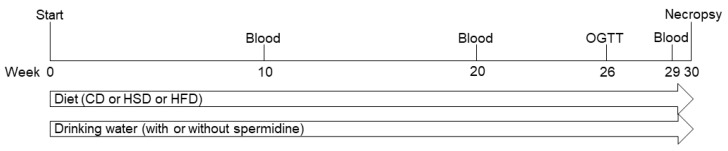
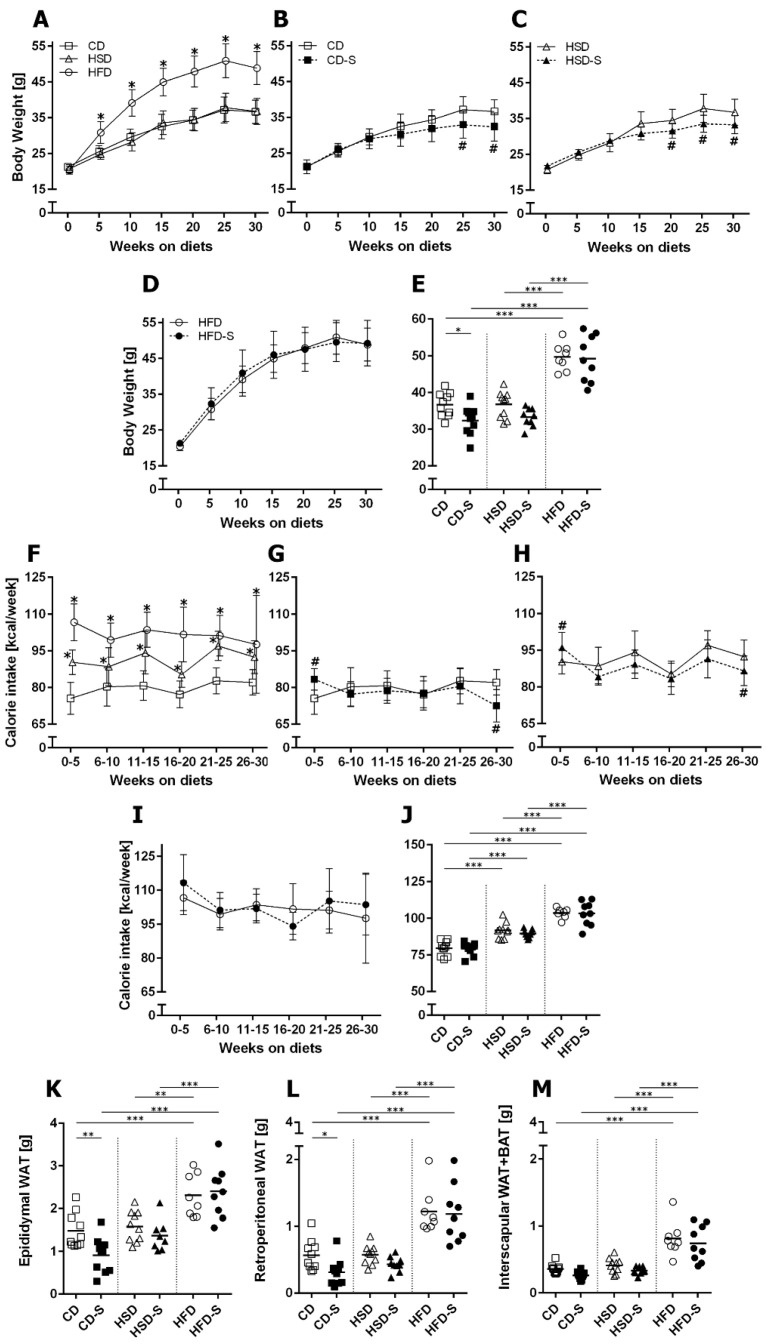
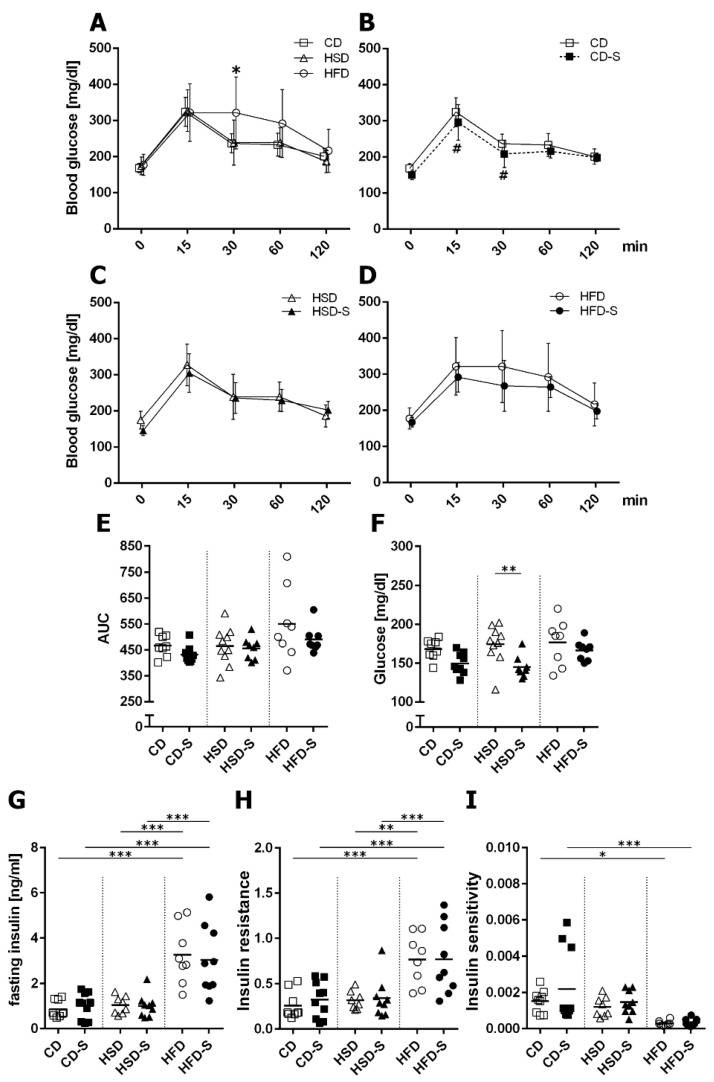
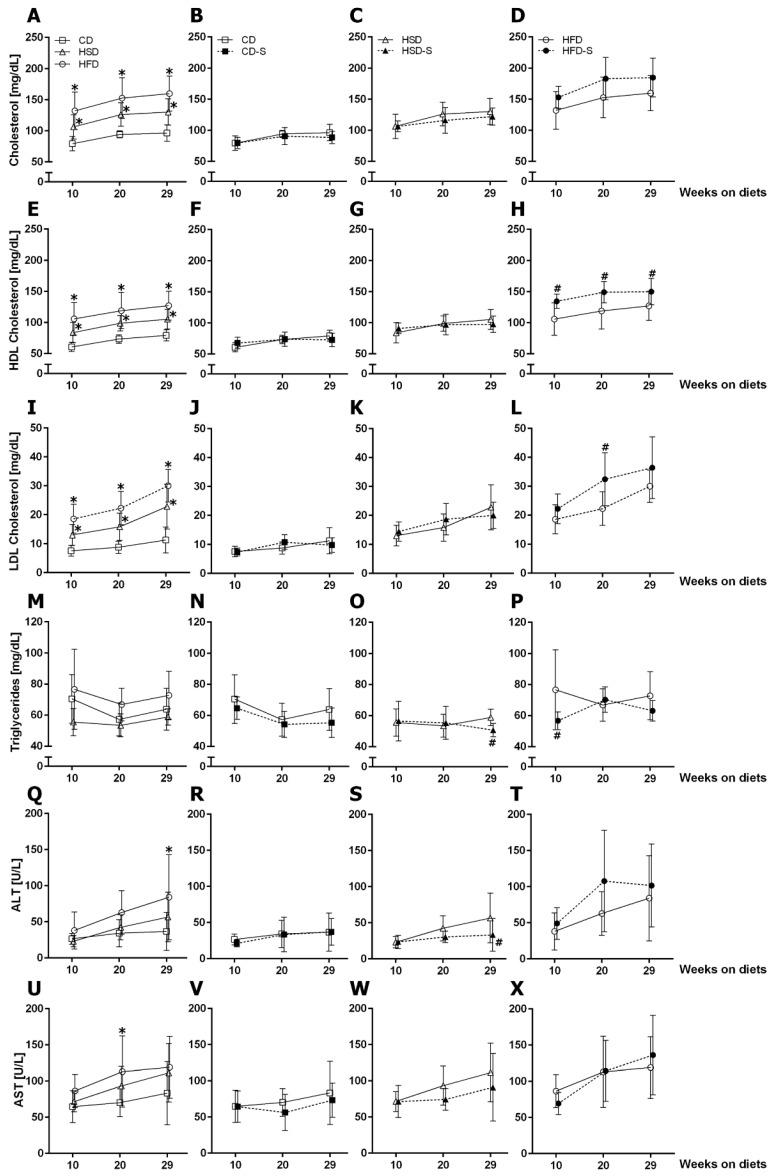
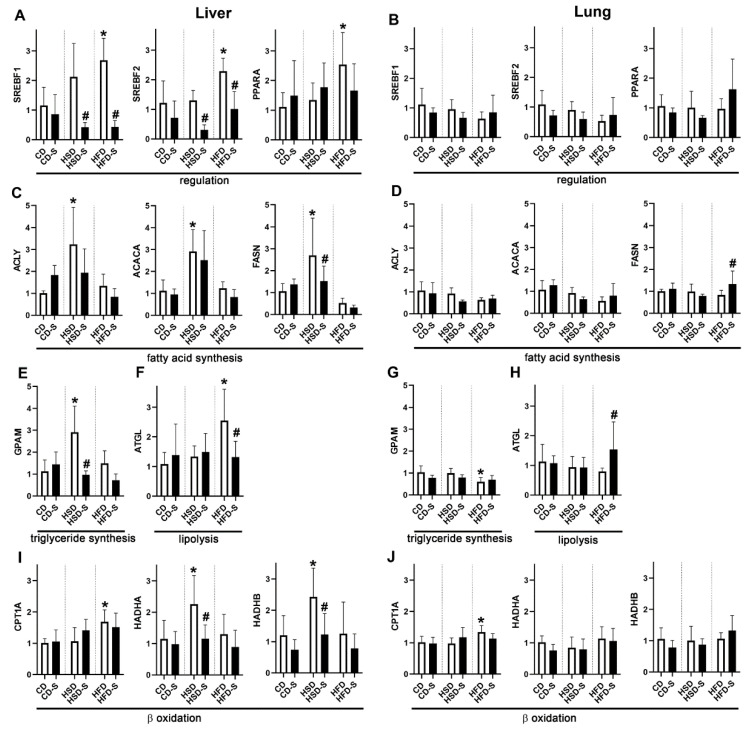
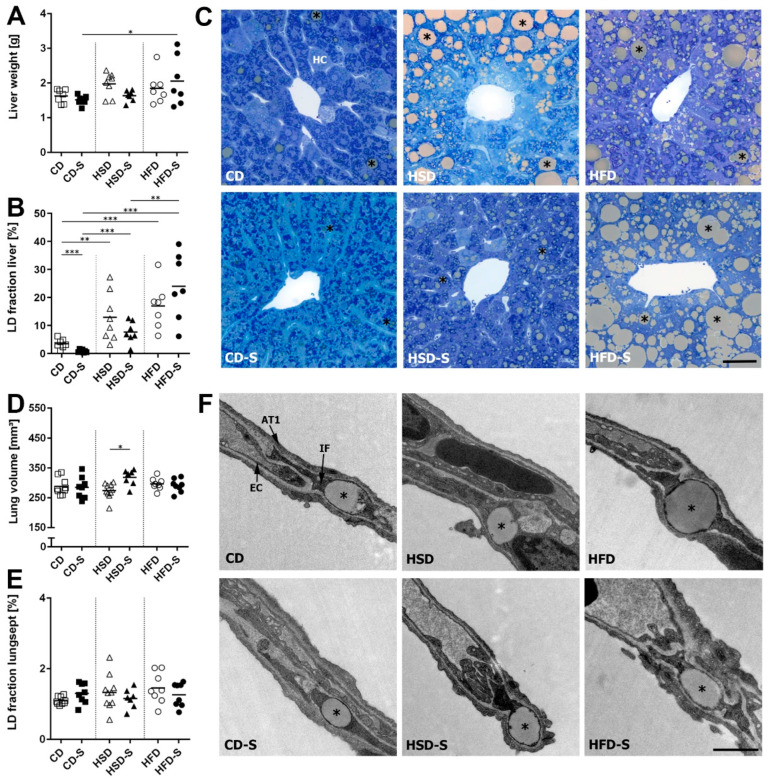
The polyamine spermidine is discussed as a caloric restriction mimetic and therapeutic option for obesity and related comorbidities. This study tested oral spermidine supplementation with regard to the systemic, hepatic and pulmonary lipid metabolism under different diet conditions. Male C57BL/6 mice were fed a purified control (CD), high sucrose (HSD) or high fat (HFD) diet with (-S) or without spermidine for 30 weeks. In CD-fed mice, spermidine decreased body and adipose tissue weights and reduced hepatic lipid content. The HSD induced hepatic lipid synthesis and accumulation and hypercholesterolemia. This was not affected by spermidine supplementation, but body weight and blood glucose were lower in HSD-S compared to HSD. HFD-fed mice showed higher body and fat depot weights, prediabetes, hypercholesterolemia and severe liver steatosis, which were not altered by spermidine. Within the liver, spermidine diminished hepatic expression of lipogenic transcription factors SREBF1 and 2 under HSD and HFD and affected the expression of other lipid-related enzymes. In contrast, diet and spermidine exerted only minor effects on pulmonary parameters. Thus, oral spermidine supplementation affects lipid metabolism in a diet-dependent manner, with significant reductions in body fat and weight under physiological nutrition and positive effects on weight and blood glucose under high sucrose intake, but no impact on dietary fat-related parameters.
Keywords: caloric restriction mimetic; diet-induced obesity; high fat diet; high sucrose diet; liver lipid metabolism; lung lipid metabolism; spermidine.
Conflict of interest statement
All authors declare no conflict of interest. The funders had no role in the design of the study; in the collection, analyses or interpretation of data; in the writing of the manuscript; or in the decision to publish the results.
Figures
References
-
- World Health Organization Fact Sheet 311: Obesity and Overweight. 2020. [(accessed on 12 September 2022)]. pp. 1–6. Available online: https://www.who.int/news-room/fact-sheets/detail/obesity-and-overweight.
MeSH terms
Substances
Grants and funding
LinkOut - more resources
Full Text Sources
Medical
