


Evolutionary Aspects of Hypericin Productivity and Endogenous Phytohormone Pools Evidenced in Hypericum Species In Vitro Culture Model
- PMID: 36297777
- PMCID: PMC9609395
- DOI: 10.3390/plants11202753
Evolutionary Aspects of Hypericin Productivity and Endogenous Phytohormone Pools Evidenced in Hypericum Species In Vitro Culture Model
Abstract
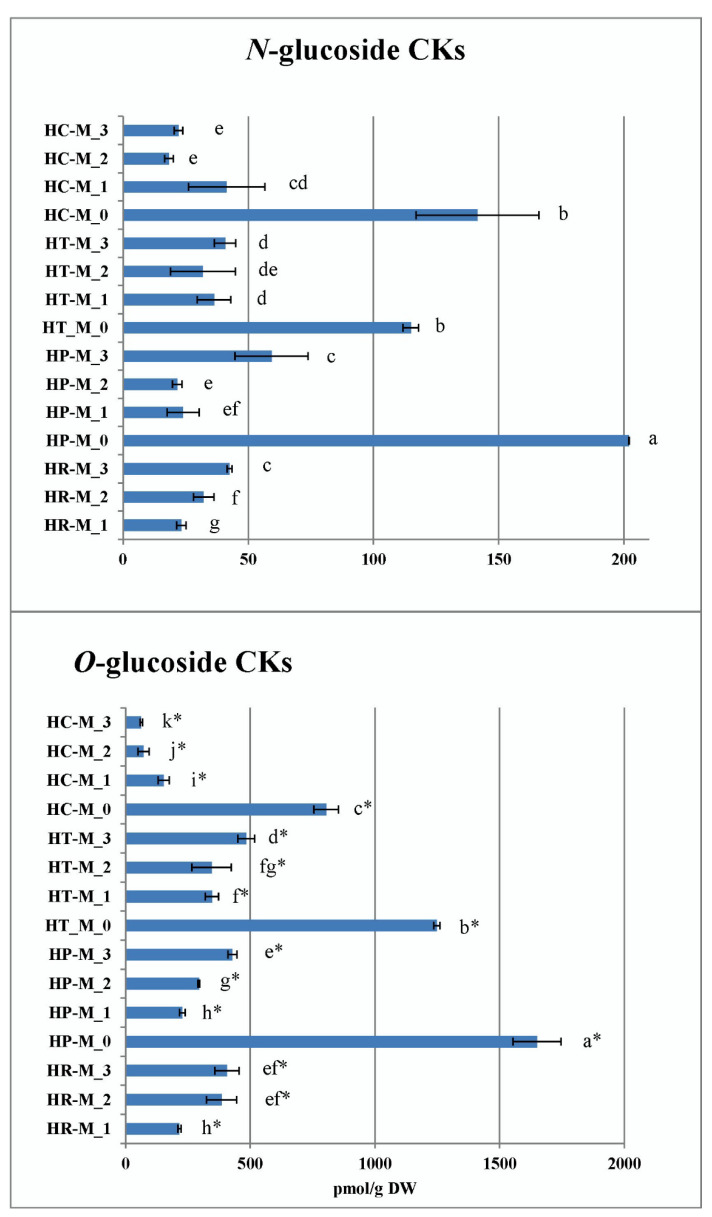
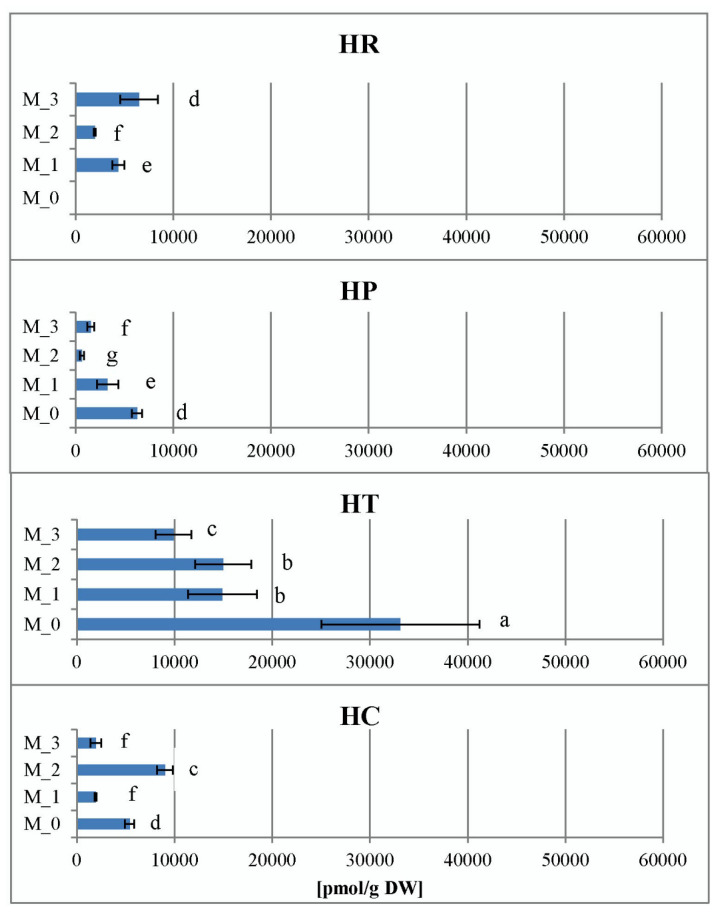
Shoot cultures of hypericin non-producing H. calycinum L. (primitive Ascyreia section), hypericin-producing H. perforatum L., H. tetrapterum Fries (section Hypericum) and H. richeri Vill. (the evolutionarily most advanced section Drosocarpium in our study) were developed and investigated for their growth, development, hypericin content and endogenous phytohormone levels. Hypericins in wild-growing H. richeri significantly exceeded those in H. perforatum and H. tetrapterum. H. richeri also had the highest hypericin productivity in vitro in medium supplemented with 0.2 mg/L N6-benzyladenine and 0.1 mg/L indole-3-butyric acid and H. tetrapterum-the lowest one in all media modifications. In shoot culture conditions, the evolutionarily oldest H. calycinum had the highest content of salicylic acid and total jasmonates in some of its treatments, as well as dominance of the storage form of abscisic acid (ABA-glucose ester) and lowest cytokinin ribosides and cytokinin O-glucosides as compared with the other three species. In addition, the evolutionarily youngest H. richeri was characterized by the highest total amount of cytokinin ribosides. Thus, both evolutionary development and the hypericin production capacity seemed to interact closely with the physiological parameters of the plant organism, such as endogenous phytohormones, leading to the possible hypothesis that hypericin productivity may have arisen in the evolution of Hypericum as a means to adapt to environmental changes.
Keywords: Hypericum evolution; endogenous phytohormones; hypericin; in vitro culture; wild habitats.
Conflict of interest statement
The authors declare no conflict of interest.
Figures


References
-
- Danova K. Potential of the Balkan flora as a source of prospective Hypericum genotypes for the conventional and biotechnological delivery of phytopharmaceuticals. In: Davis H.R., editor. Hypericum: Botanical Sources, Medical Properties and Health Effects. Nova Science Publishers; New York, NY, USA: 2015. pp. 19–52. (Series Plant Science Research and Practices). Chapter 2.
-
- Vuko E., Dunkić V., Ruščić M., Nazlić M., Mandić N., Soldo B., Šprung M., Fredotović Ž. Chemical Composition and New Biological Activities of Essential Oil and Hydrosol of Hypericum perforatum L. ssp. veronense (Schrank) H. Lindb. Plants. 2021;10:1014. doi: 10.3390/plants10051014. - DOI - PMC - PubMed
Grants and funding
LinkOut - more resources
Full Text Sources
