


Rhabdomyolysis after COVID-19 Infection: A Case Report and Review of the Literature
- PMID: 36298810
- PMCID: PMC9611306
- DOI: 10.3390/v14102255
Rhabdomyolysis after COVID-19 Infection: A Case Report and Review of the Literature
Abstract
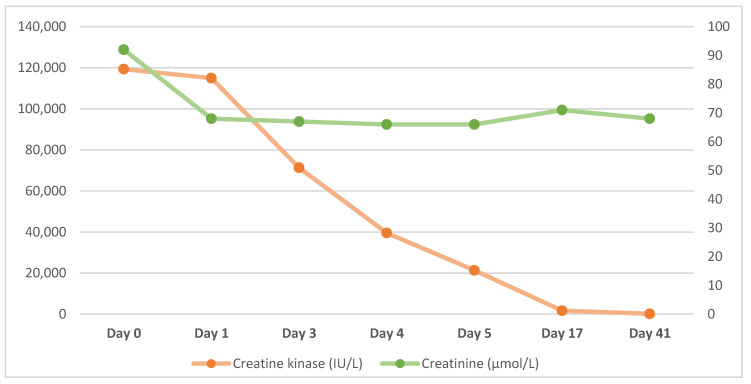
Rhabdomyolysis is a condition in which muscle breaks down potentially leading to renal dysfunction, and often occurs secondary to a precipitating factor. Viral or bacterial infections are common precipitants for initiating rhabdomyolysis. Recently, healthcare systems across the world have been challenged by a pandemic of Severe Acute Respiratory Syndrome Coronavirus 2 (SARS-CoV-2) causing 'coronavirus disease 2019' (COVID-19) disease. SARS-CoV-2 infection is recognized to cause respiratory and cardiovascular compromise, thromboembolic events, and acute kidney injury (AKI); however, it is not known whether it can precipitate rhabdomyolysis, with only a limited number of cases of SARS-CoV-2 infection preceding rhabdomyolysis reported to date. Here, we report the case of a 64-year-old woman who developed rhabdomyolysis shortly after SARS-CoV-2 infection and COVID-19. She initially presented with muscular pain, a creatine kinase level of 119,301 IU/L, and a mild rise in her creatinine level to 92 µmol/L, but successfully recovered with intravenous fluid support. We also review the literature to summarise previously reported cases of rhabdomyolysis precipitated by SARS-CoV-2, highlighting the need to consider this diagnosis in patients presenting with SARS-CoV-2 and myalgia.
Keywords: COVID-19 disease; SARS-CoV-2 infection; rhabdomyolysis; viral-induced rhabdomyolysis.
Conflict of interest statement
The authors declare no conflict of interest.
Figures
References
-
- Khan F.Y. Rhabdomyolysis: A review of the literature. Neth. J. Med. 2009;67:272–283. - PubMed
Publication types
MeSH terms
Substances
Grants and funding
LinkOut - more resources
Full Text Sources
Medical
Miscellaneous
